
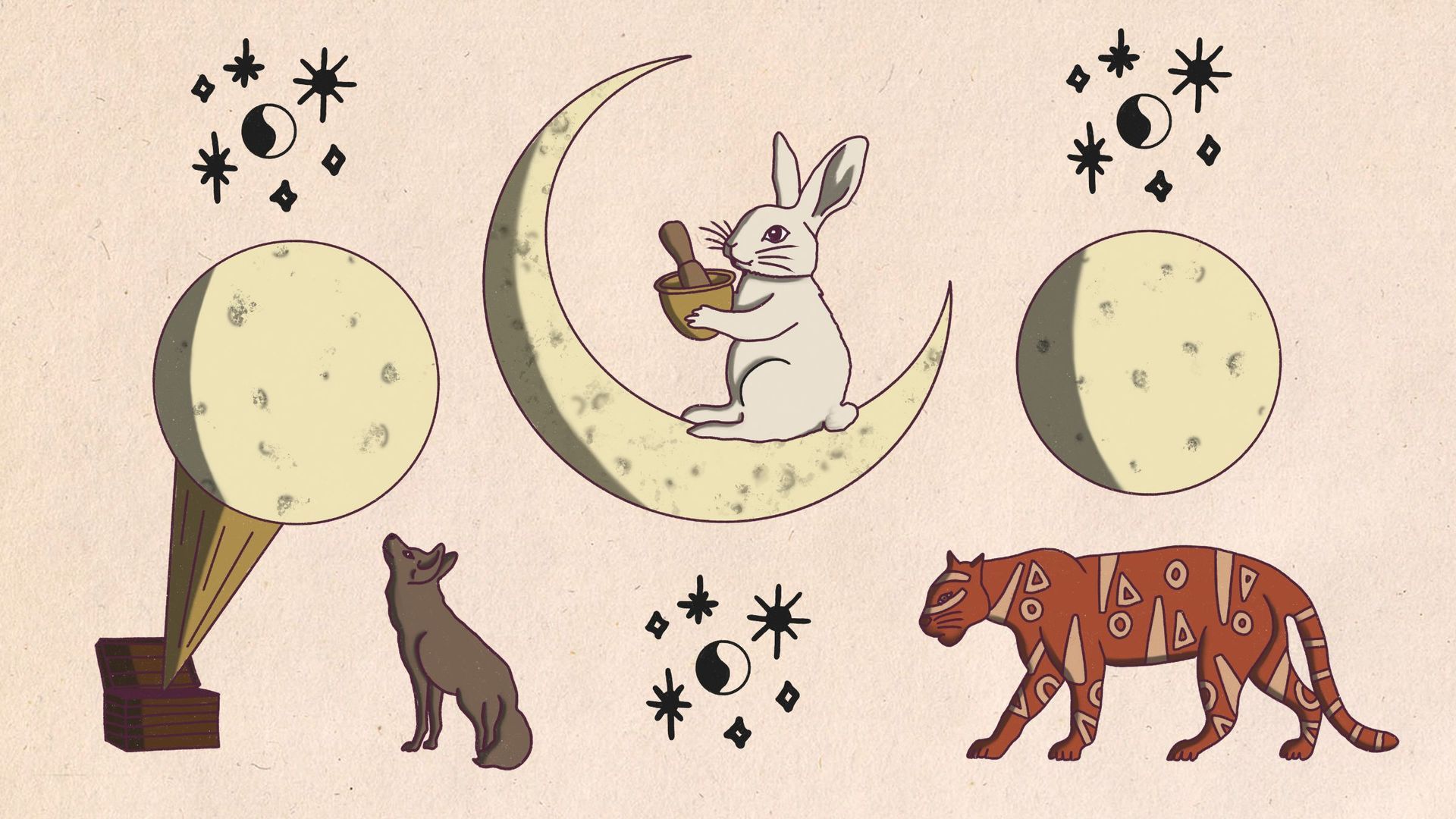
Animals associated with the moon in global mythology
In this article:
- The selfless hare and the moon (Buddhist mythology)
- The jade rabbit and the moon (Chinese mythology)
- The toad and the moon goddess (Chinese mythology)
- The hare, the moon and the origin of death (South African mythology)
- The rat who bit the moon (Fijian mythology)
- The native cat who ate the moon (Australian mythology)
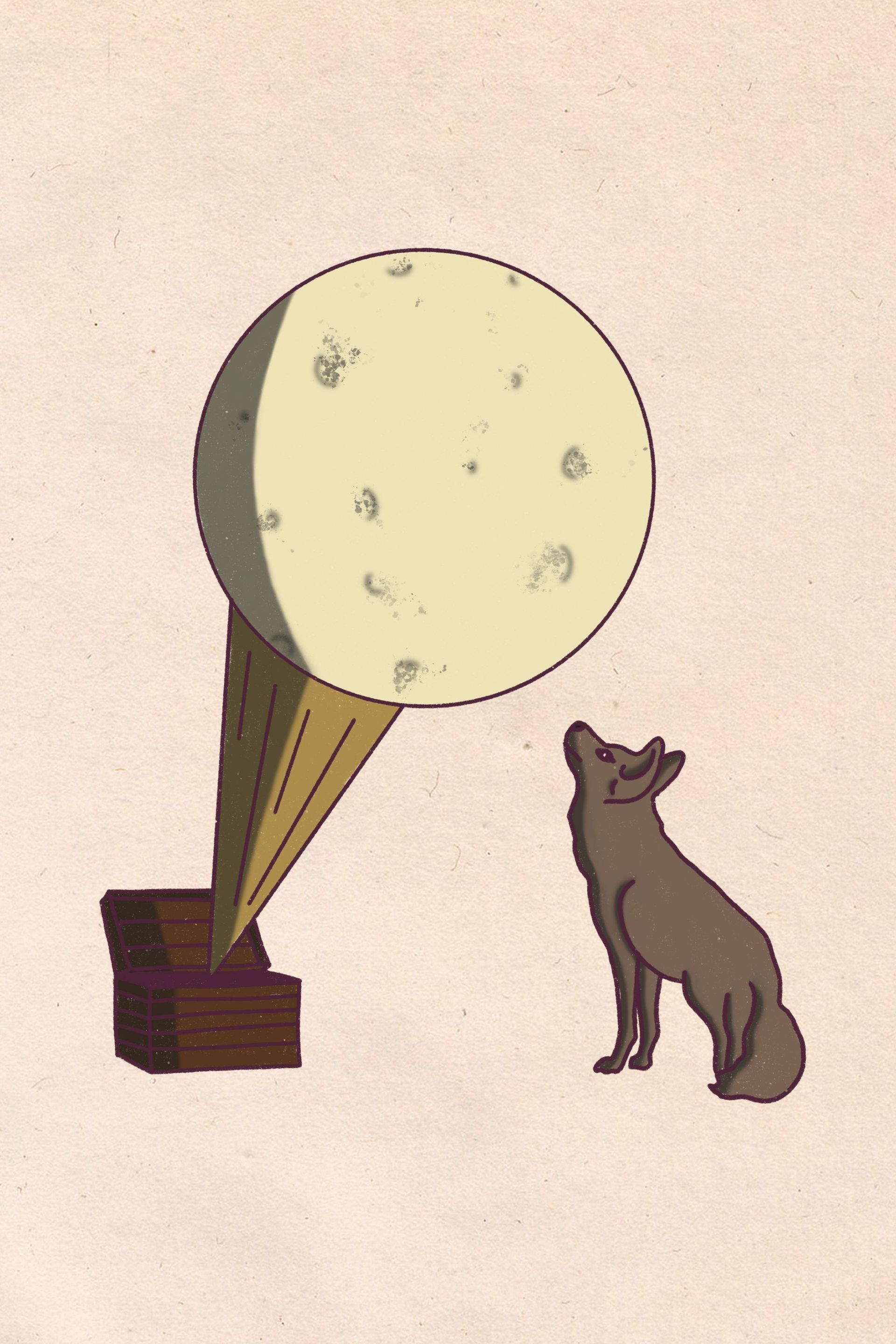
- The trickster coyote who stole the moon (Indigenous American mythology)
- The rabbit that dimmed the moon (Aztec mythology)
- Hati the wolf and the moon (Norse mythology)
The moon has been fascinating us since the dawn of time and with good reason. Its association with night time used to present a level of both fear and reverence for our ancient ancestors who believed strongly in the moon’s magical powers.
And like other parts of celestial folklore and mythology, there are plenty of stories that feature colorful characters. The man in the moon is one of the most famous moon stories but so many of the tales of moon folklore feature animals.
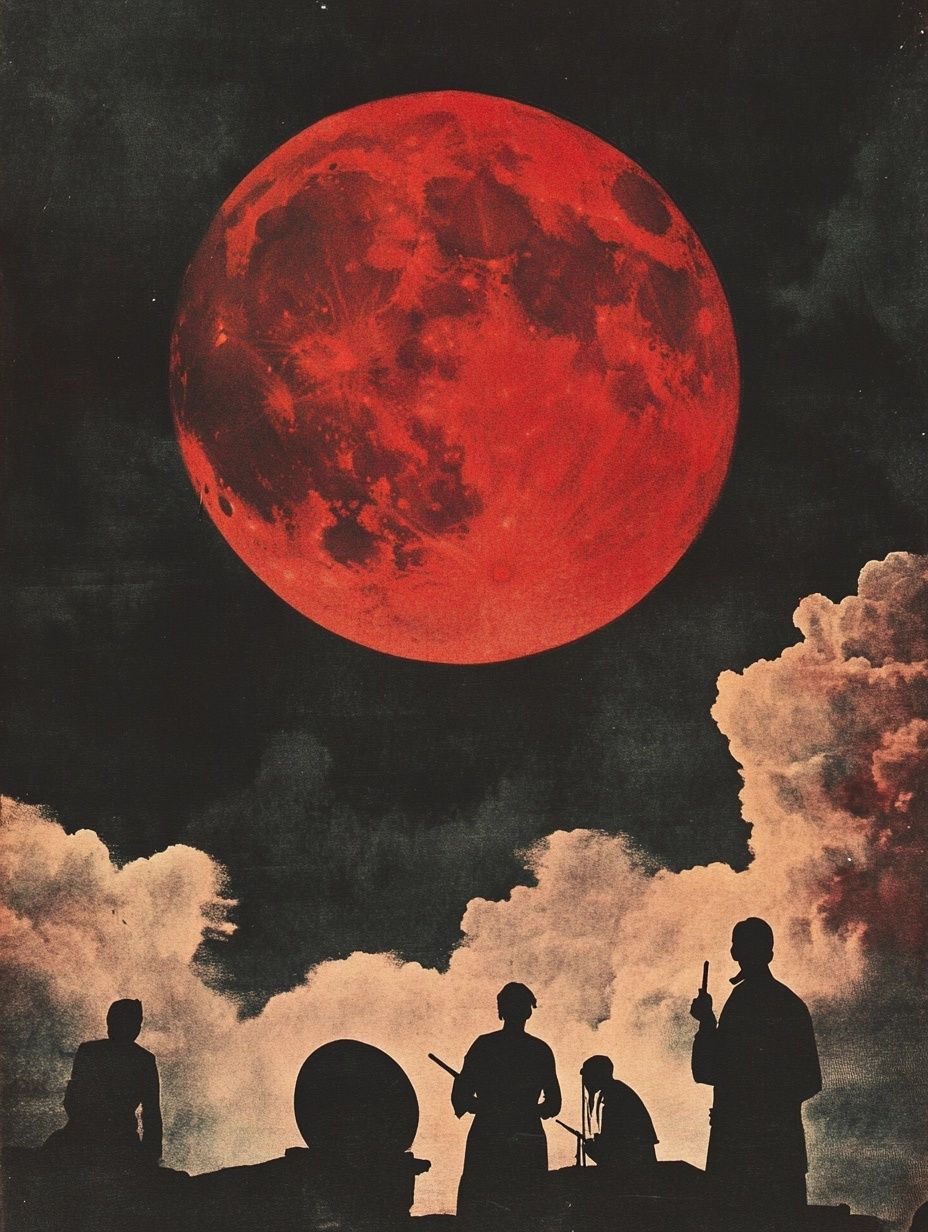
Some are better known than others but there are some more obscure ones too. For each one I’ve also added a discussion prompt that occurred to me as I was writing this article - feel free to borrow for educational purposes. The images in this article are also handdrawn by me - again, feel free to borrow for personal/educational purposes (but nothing commercial and please don't upload to any AI).
So without further ado, here are some of the stories of creatures most commonly connected with the moon around the world.
Published: 24th Nov 2026
Author: Sian H.
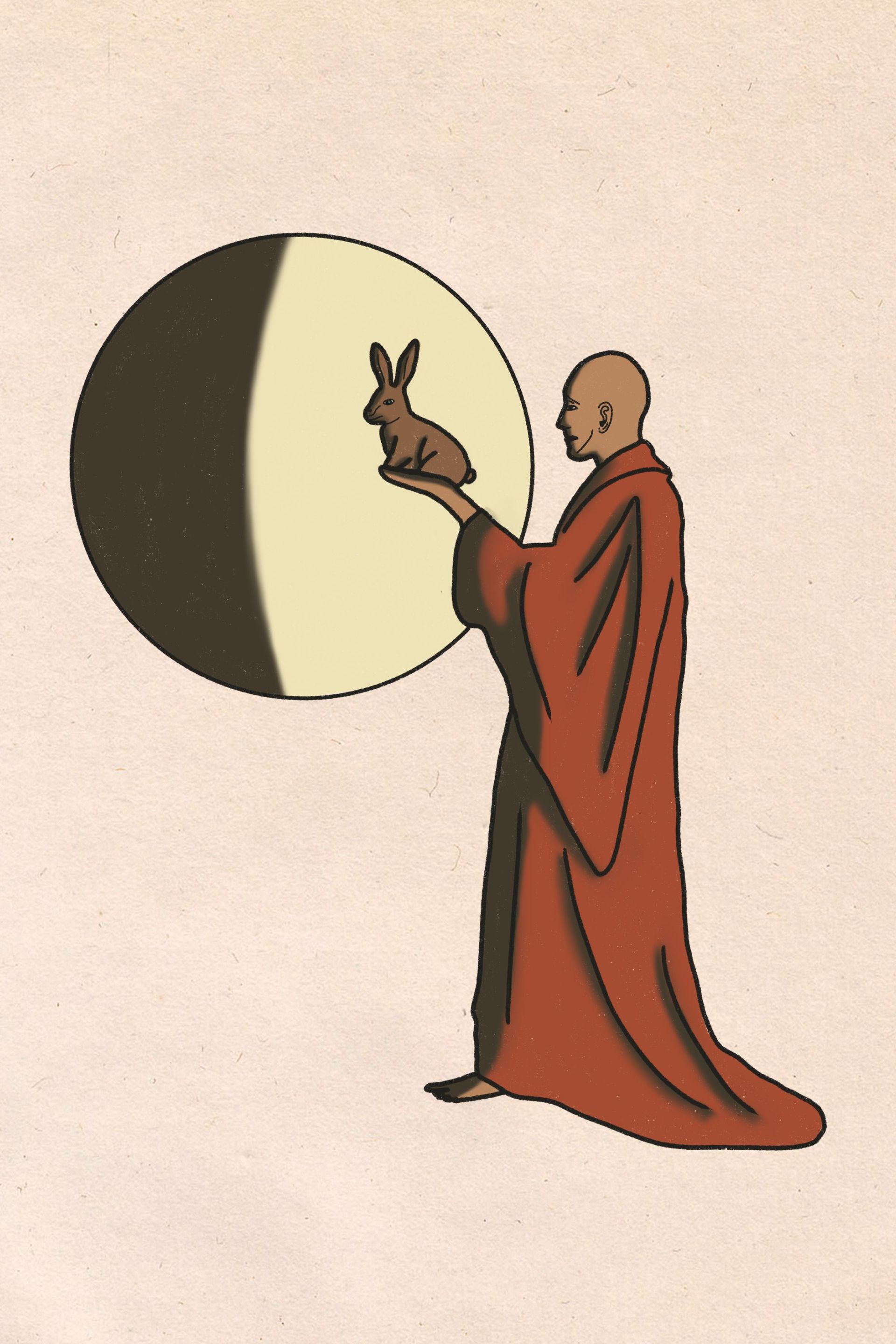
The selfless hare and the moon (Buddhist mythology)
In a forest, a wise hare and his three friends - a jackal, an otter and a monkey, lived together. The hare often taught them about living a virtuous life, especially through generosity.
One holy day, the four friends went to gather food for any beggar who might pass by. The otter found fish, the jackal found food he had left behind and the monkey gathered ripe mangoes.
However, the hare had only grass and, knowing it was unsuitable for a person, made a vow: he would offer his own body as food.
This promise of ultimate generosity caused the throne of the god Śakra (also known as Indra) to grow hot. Intrigued, he disguised himself as a hungry Brahmin (a wise man) to test the friends.
He first approached the otter, jackal and monkey, but politely refused their offerings. When he finally came to the hare, the hare, filled with joy, asked him to build a fire.
The hare shook himself three times to ensure no insects would be harmed, then leapt into the flames. But instead of burning, the flames felt cool. Śakra then revealed his true form and lifted the hare from the fire, untouched.
He told the hare that his selfless act was so profound it should be remembered forever. To honor the hare's compassion, Śakra drew the image of the hare on the face of the full moon.
The story concludes by identifying the four animals as previous births of the Buddha's most prominent disciples, with the wise hare being the Buddha himself in a previous life.
A Mythfolks thought and discussion prompt on this story:
The hare's story is about self-sacrifice for a stranger which, naturally, is extremely noble.
However, in our modern world that values self-care and personal boundaries, is the hare's act still considered a noble ideal? Where is the line is between giving generously and “helping the greater good” and protecting your own well-being?
The Jade rabbit and the moon (Chinese mythology)
In ancient China, a great archer named Hou Yi saved the world by shooting down nine out of ten suns that were scorching the Earth.
As a reward, the gods gave him a potent elixir of immortality. Hou Yi didn’t want to drink it, as he loved his wife, Chang'e and wanted to stay with her.
One day, while Hou Yi was away, a thief tried to steal the elixir. To protect it, Chang'e drank it herself. She immediately began to float upward, flying to the moon, which was the closest celestial body to Earth.
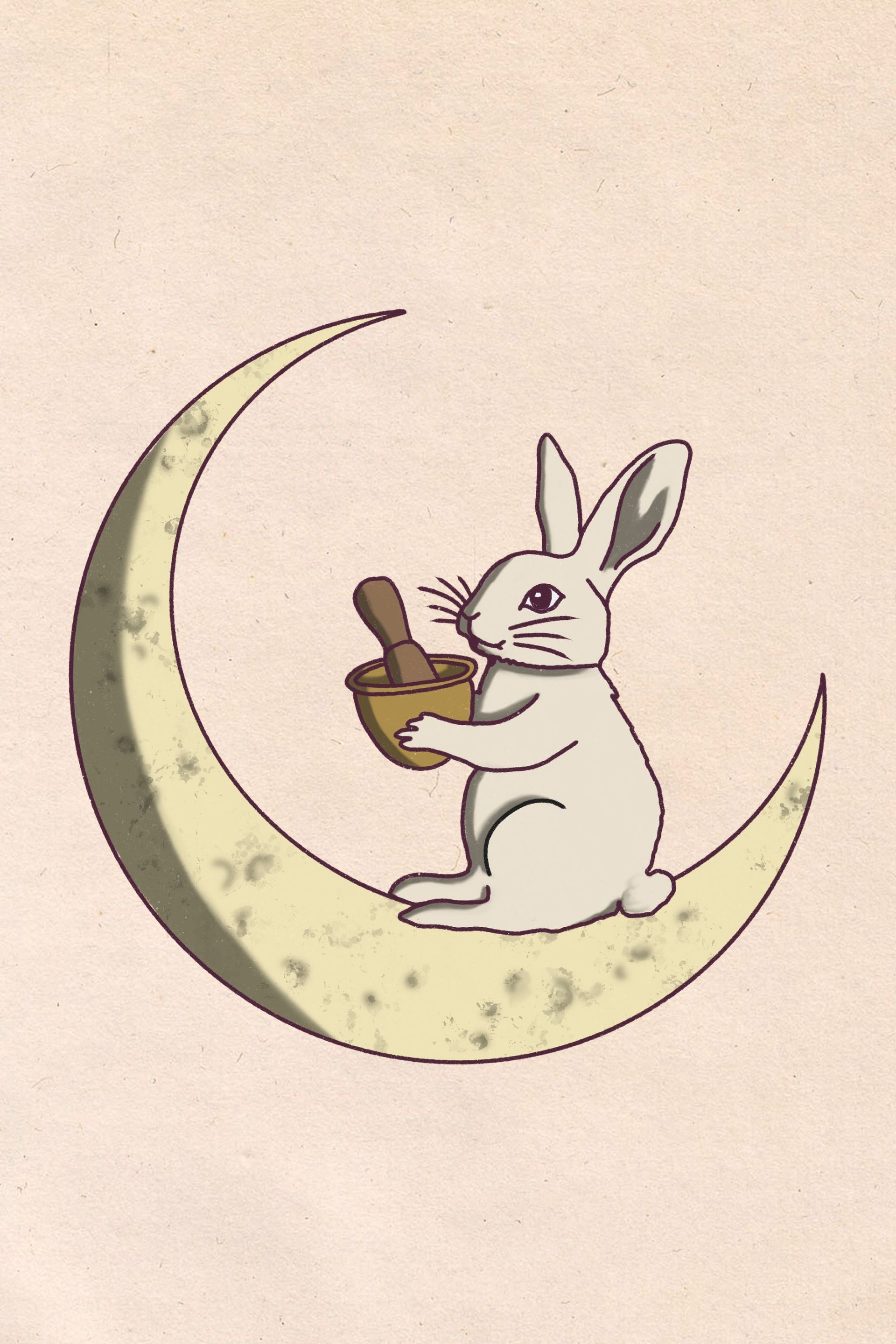
Chang'e wasn't alone on the moon. An ancient myth says that the Jade Rabbit lived there as a companion to the moon goddess.
The Jade Rabbit's eternal task is to pound ingredients in a mortar and pestle, creating the elixir of immortality for the gods.
In some versions of the story, Chang'e is said to also live in a palace on the moon and the rabbit's tireless work ensures her immortality and helps her survive in her new home.
Another version of this story is below, along with a prompt.
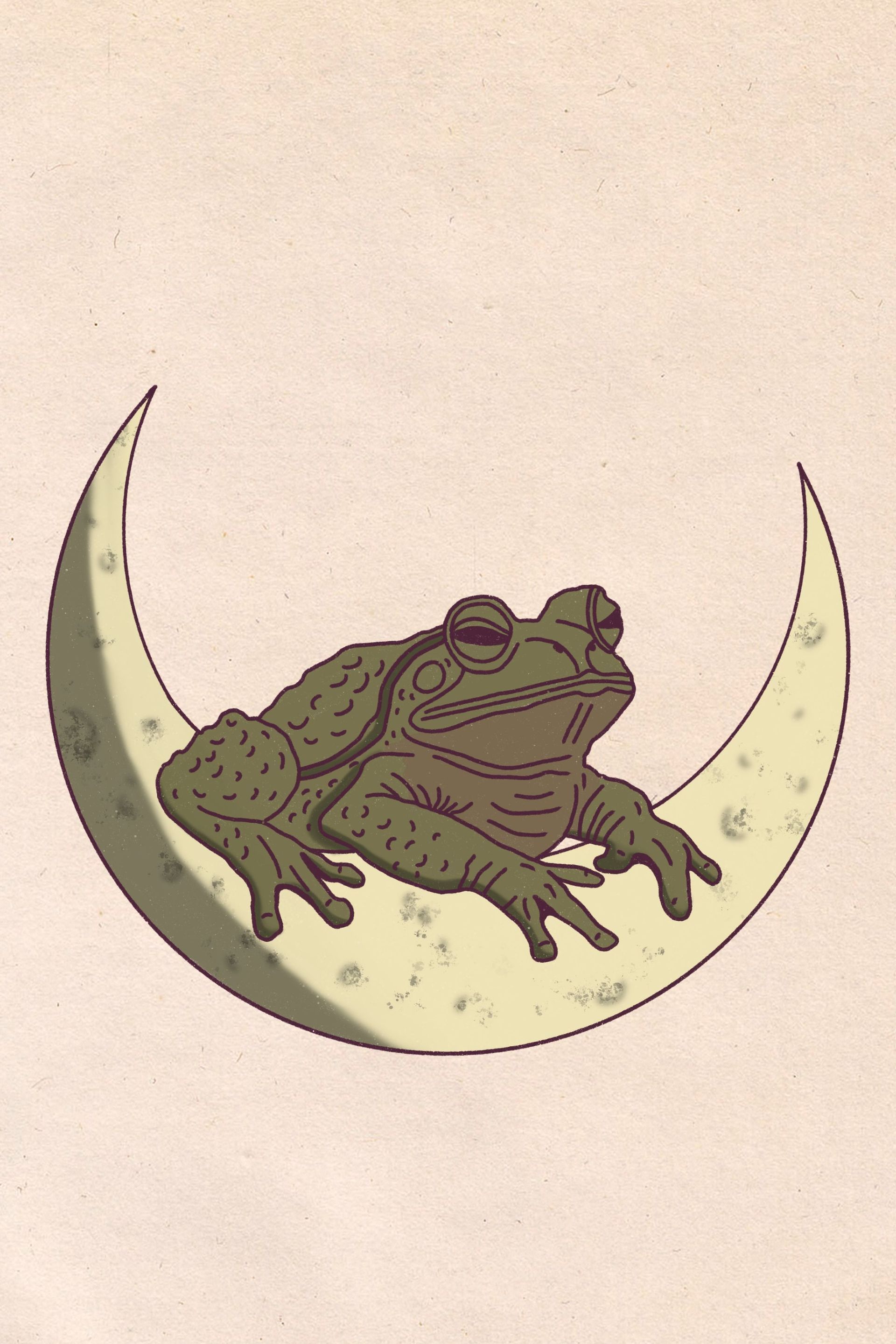
The toad and the moon goddess (Chinese mythology)
This story begins in the same way: the great archer Hou Yi is given the elixir of immortality, and his wife, Chang'e, drinks it. She immediately begins to float upward toward the heavens.
However, in this version, she drinks the elixir not to protect it but out of a selfish desire for immortality and flees her husband to do so. As a punishment for her greed, or from the loneliness and sadness she feels once she arrives, she is transformed into a three-legged toad.
This toad, known as Chan Chu, is now the eternal inhabitant of the moon.
A Mythfolks thought and discussion prompt on this story:
Immortality is a recurring theme in folklore, but like many tales of this kind, something that initially seems desirable can quickly reveal a darker side. In this story, immortality without companionship becomes less of a blessing and more of a punishment, with eternal life ultimately leading to loneliness.
What are some other things that might seem positive on the surface but, when achieved, reveal something negative about human nature or the desires themselves?
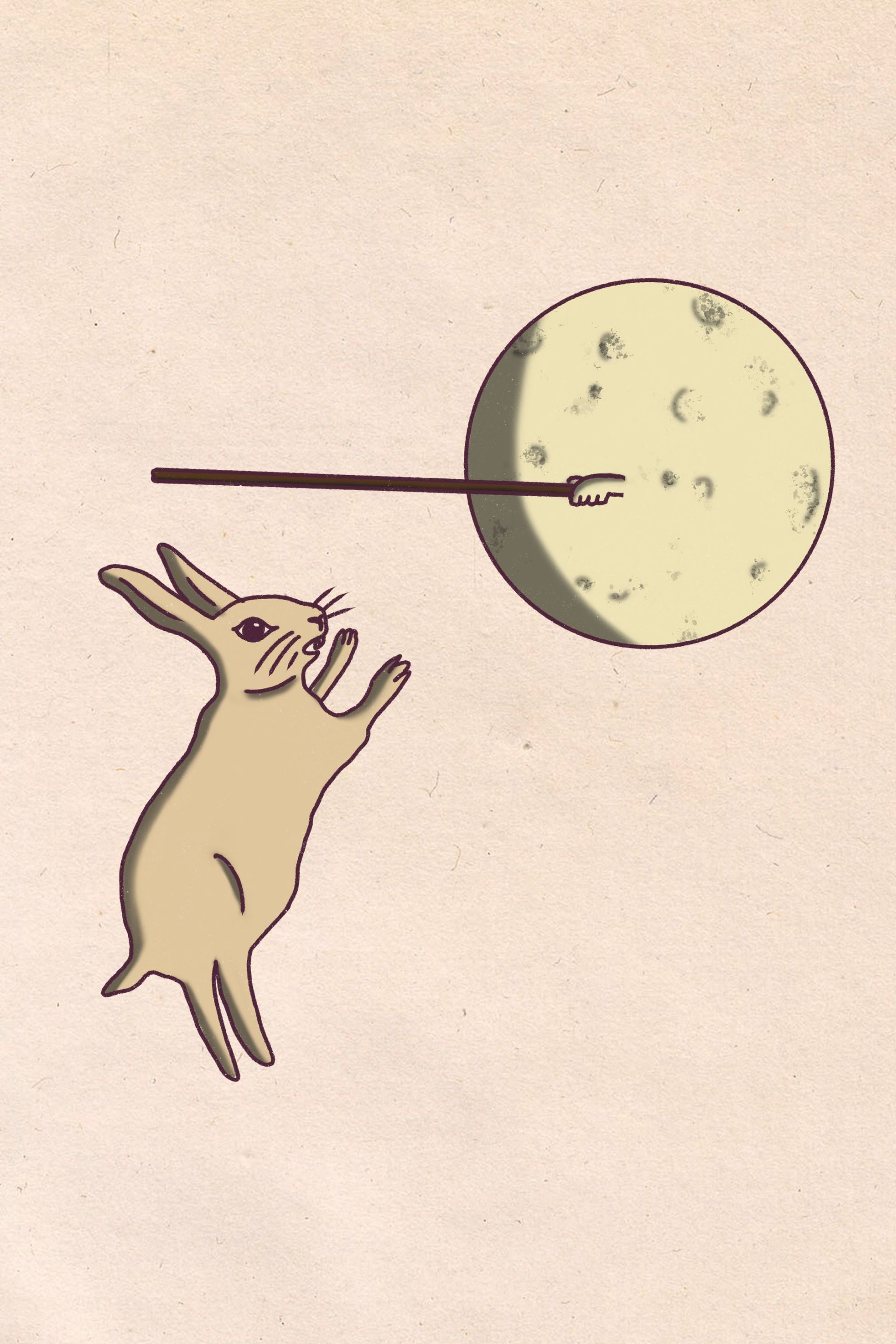
The hare, the moon & the origin of death (Khoikhoi, South African mythology)
Long ago, when humans were first created, they didn’t know about death.
The Moon wanted to send a message to humanity, so she called upon the hare. The Moon's message was one of immortality and was meant to convey that as the moon waxed and waned (i.e lived and died and lived again), so would humans follow a similar pattern - no details on exactly how this would work were given!.
The hare set off on his journey, but somewhere along the way, he either became confused or deliberately changed the message.
When he arrived at a village, he spoke to the humans and said "As I die and, dying, perish, so you shall die and utterly perish."
Upon hearing this, the Moon was furious. She was so angry with the hare for his carelessness that she burnt his lip with a hot stone (another version has her striking the hare's mouth with a stick) - this punishment detail provides a mythical reason for the distinctive appearance of the hare's lip.
From that day on, death became a permanent part of the human condition. In the Khoikhoi tradition, the hare was often seen as a symbol of cunning and mischief, but in this tale, he is also the bringer of human mortality.
A Mythfolks thought and discussion prompt on this story:
The hare is blamed for bringing death to humanity. But do you think it was due to an honest mistake or a deliberate act of duplicity? What does this story say about the importance of words?
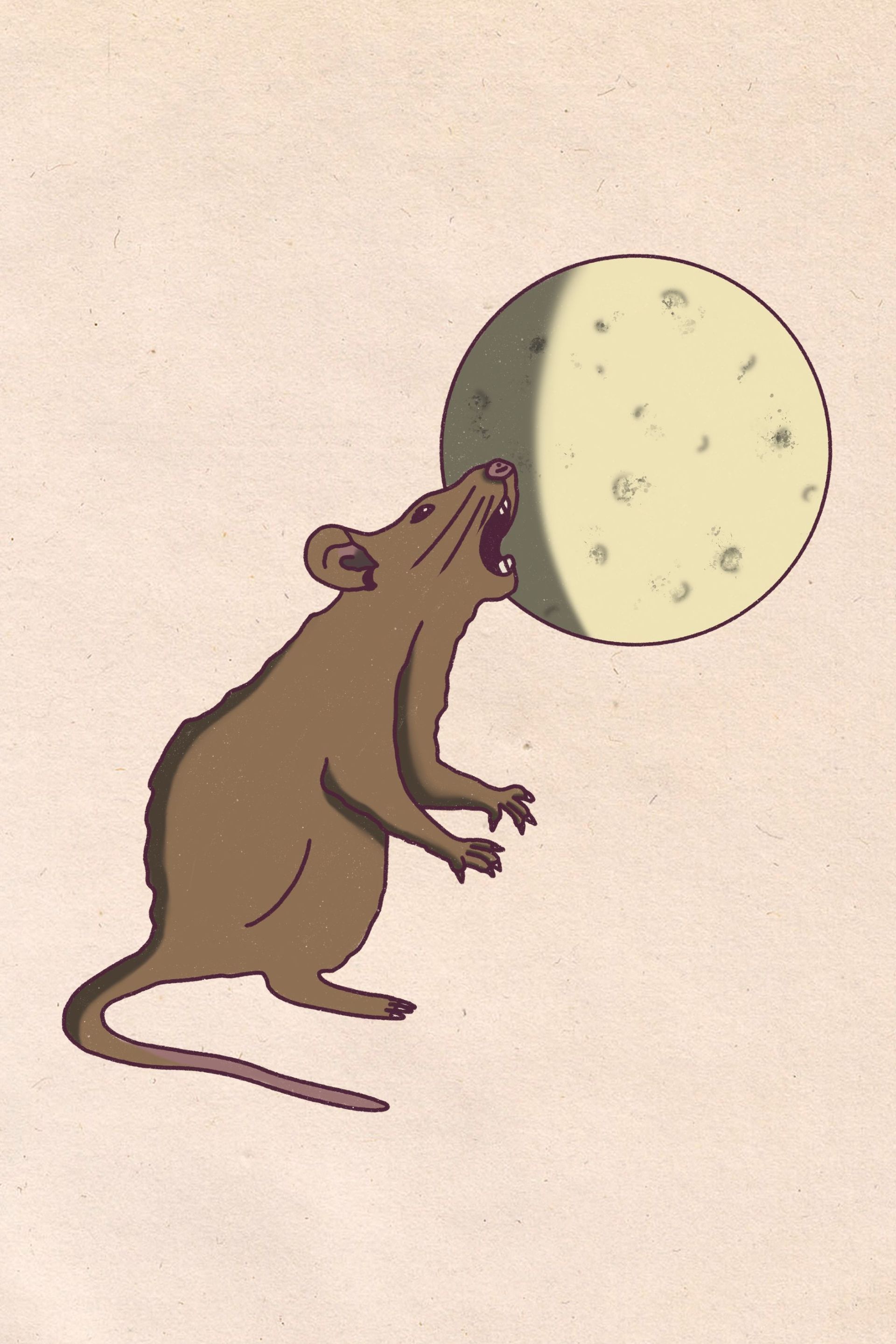
The rat who bit the moon (Fijian folklore)
The story begins with the moon god, Vula, who was once a handsome chief with a clear, perfect face. He was in a rivalry with a mischievous rat and one day the rat decided to climb to the heavens and face Vula directly.
A fight broke out between the two and in a fit of rage, the rat began to bite huge chunks out of the moon god's face. As the rat bit away at him, the pieces of the moon fell into the sky, becoming the stars.
After the rat's assault, the moon god was left as nothing but a crescent, a sliver of his former self. Over time, however, Vula began to heal and slowly grow back to his full, round shape, until his face was perfect again. But then the rat would return and begin biting him once more. The marks from the rat's teeth remained as dark spots on the moon's surface for all to see.
This eternal conflict between the rat and the moon explains the cycle of the moon's phases: it wanes as the rat bites away at it, and it waxes as it heals and grows back.
A Mythfolks thought and discussion prompt on this story:
The Fijian myth brings to mind the famous quote often attributed to Einstein: “Insanity is doing the same thing over and over again and expecting different results.” Why do people persist with approaches that repeatedly fail? What makes it so difficult to try a different approach when one is needed? Do we not recognise it or are we simply afraid?
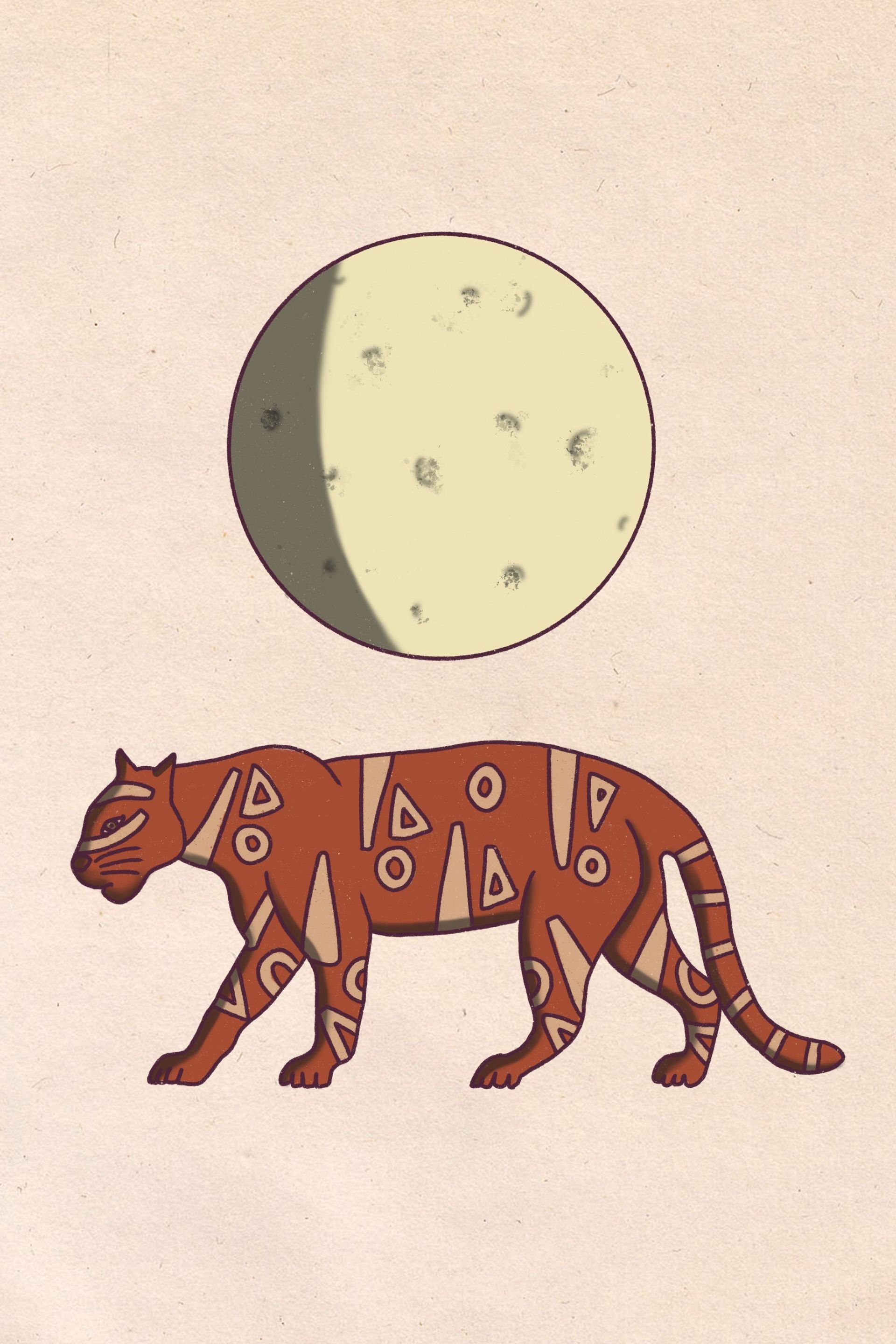
The native cat who ate the moon (Australian folklore)
In Australian Aborginal culture, there is a foundational concept called the Dreamtime, which is also commonly called, the Dreaming. Dreamtime tells many origination and creation stories and like all cultures, stories often come with variations across regions and Indigenous Nations.
In this moon myth, a native cat called Mityan falls in love with a wife of the king Unurgunite (often referred to as a lizard-like creature, and also called various different names).
Mityan tries to convince the woman to run away with him but is discovered by Unurgunite and drawn into a vicious fight. Mityan is defeated, and, unable to find safety anywhere on earth is cast into the night, forever destined to wander through the sky as the moon.
It’s said that the spots on the moon were a result of claw marks that occurred during the big fight.
A Mythfolks thought and discussion prompt on this story:
In this myth, Mityan is punished with an eternal chase for his wrongdoing. At what point does a consequence become a perpetual punishment, and can there ever be forgiveness in a story like this?
The trickster coyote who stole the moon (version attributed to Navajo, Salish & Nez Perce mythology)
In many traditions of the Indigenous peoples of North America, the world was originally in total darkness. The stars and the moon were not yet in the sky, and all the light that existed was kept in a sacred, woven box by the Kachina spirits, who were powerful beings that oversaw the world. The world was cold and all the animals lived in fear and confusion.
Coyote, a powerful and unpredictable trickster spirit, watched from the shadows. He saw the Kachinas guarding their box of light and knew that they were selfishly hoarding a great gift. Wanting light for his own selfish reasons - perhaps to hunt, or simply to see the world he lived in - he devised a plan. He challenged the Kachinas to a great dancing contest. While they were distracted by the music and their own vanity, Coyote snuck away and snatched the box.
As he ran away, the Kachinas realized they had been tricked and began to chase him. But Coyote, in his wild impatience, grew tired of holding the heavy box. He decided to open it just a little, to see what was inside.
But the light was too powerful, and it burst forth from the box. The moon shot into the sky, along with the millions of stars, bringing light to the world for the very first time. The Kachinas had lost their sacred treasure forever and the world was changed.
A Mythfolks thought and discussion prompt on this story:
Coyote's actions are often seen as selfish and chaotic, yet they lead to the creation of the world as we know it.
If someone achieves something good through selfish or reckless actions, should they be judged by their intentions or by the outcome?
The rabbit that dimmed the moon (Aztec mythology)
The gods gathered in the darkness at the sacred city of Teotihuacan to decide how to create a new sun and moon. They built a huge, sacred fire and chose two gods for the great sacrifice: the humble and sickly Nanahuatzin and the proud and wealthy Tecuciztécatl.
When the time came, the gods urged Tecuciztécatl to jump into the flames. Four times he tried, but he was too afraid of the heat and turned back. When he failed, the gods looked to Nanahuatzin. Without a moment of hesitation, Nanahuatzin bravely leaped into the fire and in an instant, he rose into the sky as the new sun.
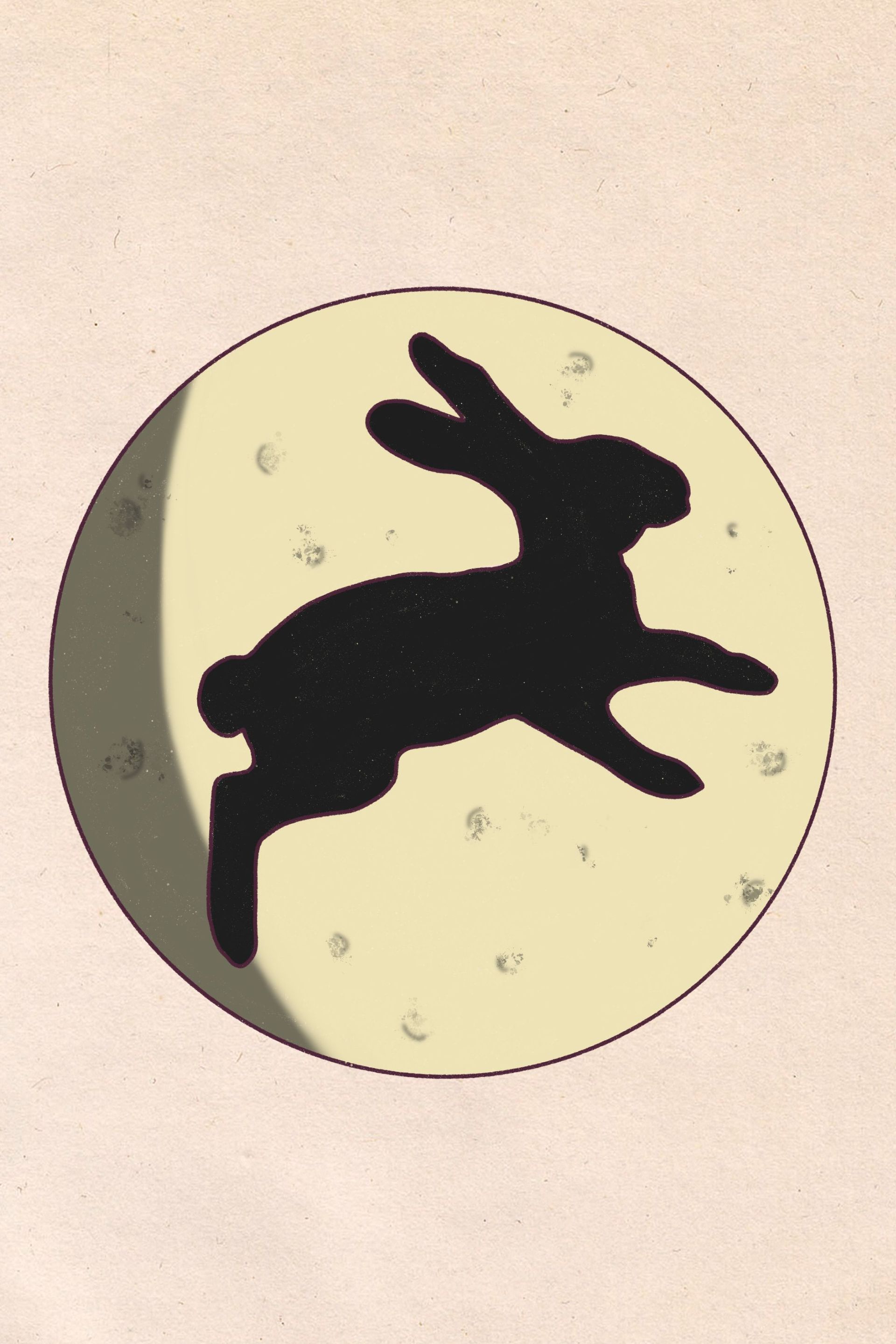
Ashamed of his cowardice, Tecuciztécatl finally jumped into the dying embers and rose as a second sun, making the sky too bright to be seen. The other gods were angered by this and decided the moon should be dimmer than the sun. To solve this, one of the gods took a rabbit and hurled it with great force at Tecuciztécatl’s face on the moon, dimming its light.
The rabbit's outline remains on the moon to this day, a permanent reminder of the moment a humble sacrifice brought forth the sun and a reluctant one became the dimmer moon.
A Mythfolks thought and discussion prompt on this story:
In this story, the strong, proud god struggles to achieve his goal and only acts after seeing the humble, weaker god take the leap first. What makes some people willing to step into the unknown while others hold back? Are those who take the initiative considered better than those who follow, or are they simply different? What does courage really mean in the world today?
Hati the wolf & the moon (Norse mythology)
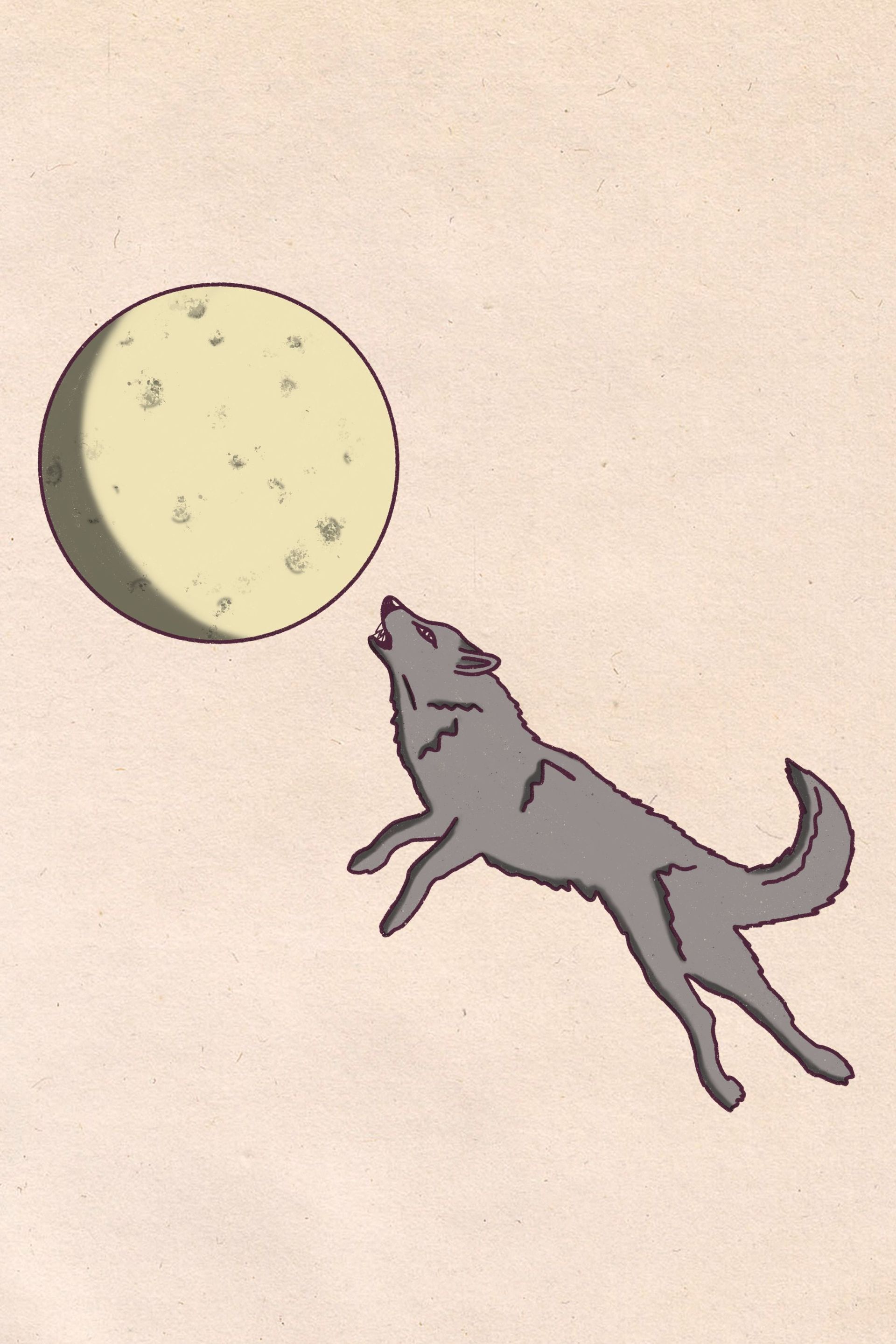
In Norse mythology, the sun and moon are divine chariots, guided by two gods called Sol and Mani. Mani, the moon, guides his chariot across the sky each night, but his journey is not a peaceful one. He is in a constant, hurried flight from a monstrous wolf named Hati. The wolf is a son of the great wolf Fenrir and a giantess who lives in a forest of iron and his lineage is destined to bring about the destruction of the cosmos.
Hati’s desperate pursuit of the moon explains its constant movement across the night sky. He's not alone in his task; his brother, Skoll, is locked in a similar eternal chase with the sun. The ancient Norse believed that an eclipse was a sign that one of the wolves was getting dangerously close to catching its prey.
The chase will only end at Ragnarok, the fated "end of the gods." During this final cataclysmic battle, Hati will finally succeed in his long pursuit.
He will catch and devour the moon, and his brother Skoll will devour the sun. This event will plunge the world into a lasting darkness, a sign that the old order has finally been consumed.
A Mythfolks thought and discussion prompt on this story:
In this myth, the two wolves are destined to fulfil a role in bringing about Ragnarök. Do you think knowing your future would make it easier to accept, or would it make you feel trapped by expectations you had no control over?
There are many myths about the creation of the moon but it's notable that the stories specifically featuring animals and moon creation are actually relatively few (at least on my initial passes - i remain open to discovering more!). Most of the myths i've covered here appear to have come about more as a commentary on human behaviour or other explanations of existence rather than purely explanations of creation.
And as always with these old stories - there's still plenty we can learn today.
Explore more moon mythology and folklore below.
Article sources
- Cowell, E. B., ed. The jataka or stories of the Buddha's former births. Vol. 3. Cambridge: Cambridge University Press, 1897.
- Schmidt, Wilhelm. High gods in North America and high gods in South Africa. Oxford: Oxford University Press, 1933.
- Carrasco, David. Quetzalcoatl and the irony of empire: myths and prophecies in the Aztec tradition. Boulder, CO: University Press of Colorado, 2000.
- Sturluson, Snorri. The prose edda: Norse mythology. Translated by Jesse L. Byock. London: Penguin Classics, 2005.
- Lal, Brij V., and Kate Fortune, eds. The Fiji islands: a historical, political and social survey. Suva, Fiji: Institute of Pacific Studies, University of the South Pacific, 2000.
- Lévi-Strauss, Claude. The raw and the cooked: introduction to a science of mythology, volume 1. Translated by John and Doreen Weightman. New York: Harper & Row, 1969.
- Tindale, Norman B. "Celestial lore of some Australian tribes." Songs from the sky: Indigenous astronomical and cosmological traditions of the world (2005)
- Australian Aboriginal astronomy, J. G. Griffin.

Learn more about the mythology of the moon with my vintage ebook bundle
I spend a lot of time digging through old and out-of-print folklore texts and curate selected titles as digital editions.
I've given them new covers, tidied and compressed the original scans and repackaged them into a convenient digital download at a great price. Check out these lunar folklore texts here.
(Clicking the button will open the Mythfolks Etsy shop in a new tab.)
You might also like