
Manx folklore: supernatural creatures, magic & old Celtic legends of the Isle of Man
This article gives great authentic & obscure details for writers & storytellers in multiple fantasy & horror genres.
The Isle of Man is a small, self-governing nation in the centre of the Irish Sea. Culturally, it's one of the six acknowledged "Celtic" nations, alongside Ireland, Scotland, Wales, Cornwall and Brittany.
While other Celtic regions - particularly the Scottish Hebrides and parts of Ireland - were also settled by Vikings, the Isle of Man served as the
capital and political headquarters of their sea kingdom and
this fusion of Gaelic and Norse cultures was arguably deeper and more permanent than other Celtic areas.
The result is a specific hybrid folklore: the spirit remained Gaelic, but the land divisions, laws and many giants or monsters became Norse.
Keep reading to find out more about this fascinatingly unique region.
Published: 6th Feb 2026
Author: Sian H.
Fairies (fae) in Manx folklore
In the wider Celtic world, the fae or the "Good People" are often seen as a hidden society parallel to humanity.
The Manx equivalent, the Mooinjer-Veggey or Sleih Beggey ("The Little People"), share this same lineage and were often described in much the same way as other Celtic stories.
Generally they were considered as spiritual beings who resembled humans in feature but often with a smaller, more delicate build. Not small as in minute, but many were considered to be more the size of small children rather than fully grown adults.
While they may appear attractive from a distance, up close they would appear more withered and decrepit.
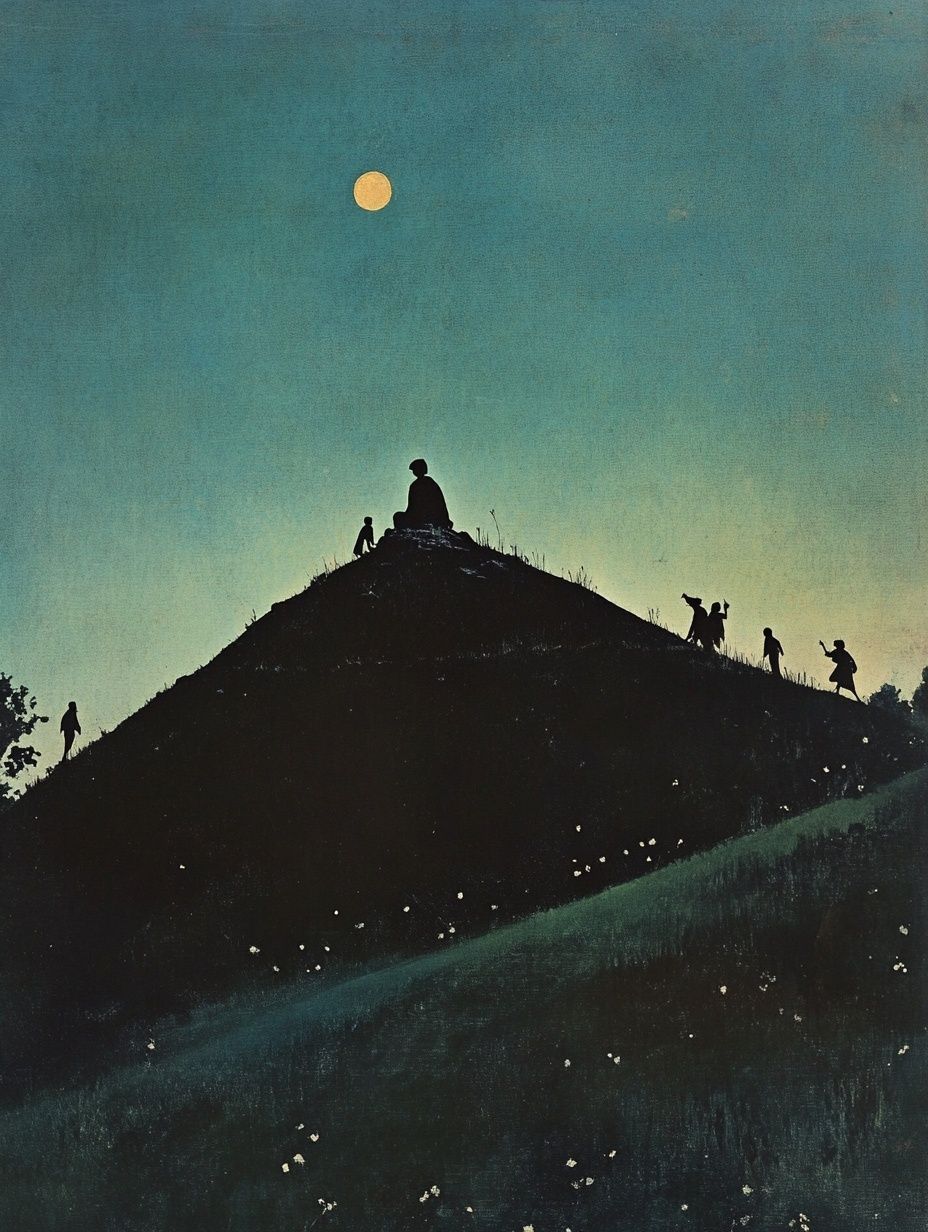
They typically wore blue or green clothing with red peaked caps (also see the Danish Nisse) and lived in the green hillsides, particularly favoring ancient burial mounds. There are also specific types of fae within this who appear differently so this is just a broad categorisation (see the "Phynnodderee" further below for an example).
Fairies on the hunt
Manx fairies were said to be particularly fond of the hunt - if a horse was found to be perspiring heavily without any obvious reason, the locals would say that a fairy had been riding it.
Their nature, a mix of the human and the spiritual, allowed them to remain invisible unless they chose to reveal themselves. They could be kind, curing diseases and helping those who treated them well, or mean, abducting people and bringing misfortune.
Beliefs regarding their methods of attack vary significantly. In some stories - a hint of the prominent Scandinavian influence - flint arrowheads were considered fairy weapons used to strike those who offended them and leaving a blue mark without breaking the skin.
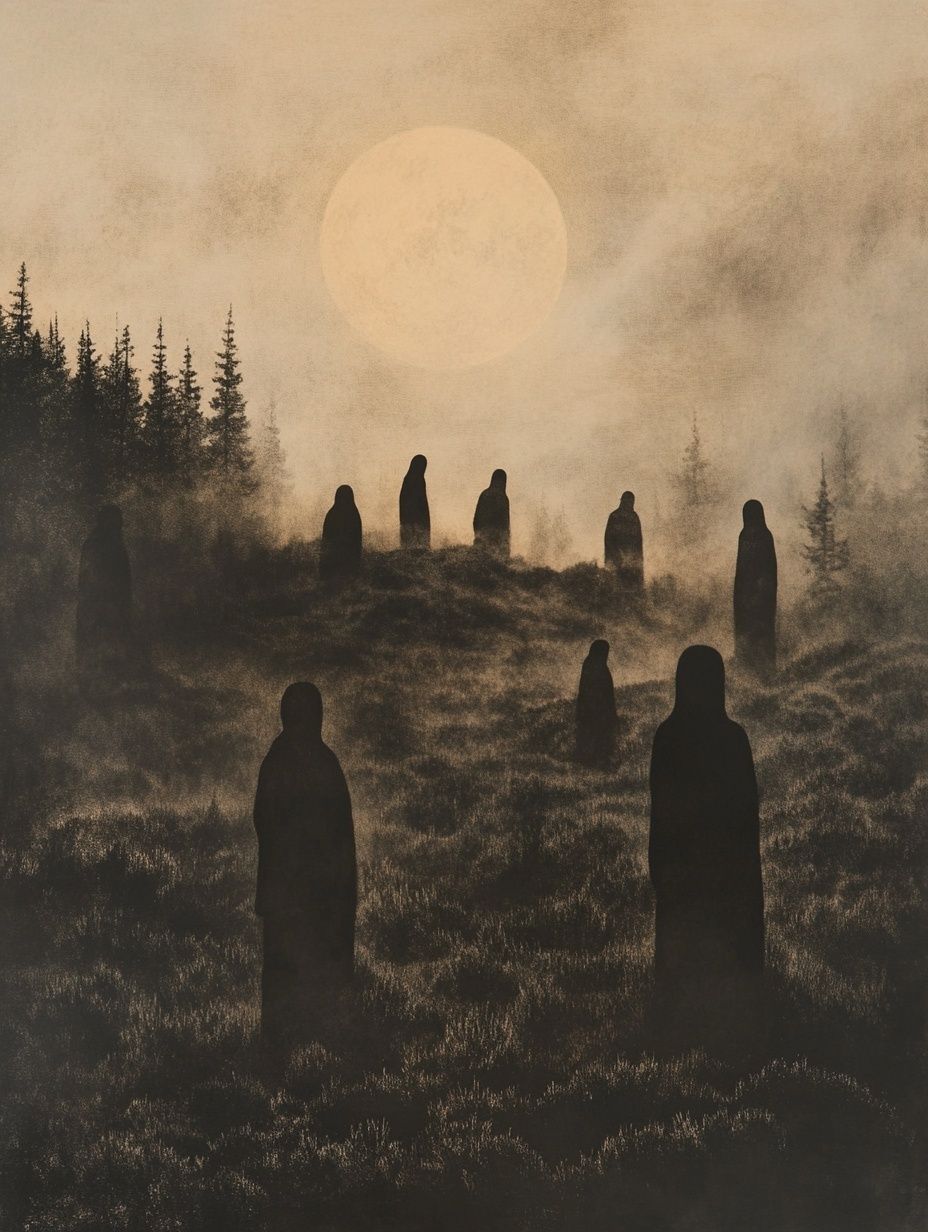
Other tales described them as purely spiritual entities without physical bodies or bones, dismissing the idea that they used material weapons like arrows.
Fairy customs
Manx women historically ceased spinning specifically on Saturday evenings to please the Mooinjer-Veggey. During every baking or churning session, a small piece of dough or butter was stuck directly onto the wall for the fairies' consumption.
Ploughmen had a distinct custom of throwing "chamber lee” (that would be old urine!) over their ploughs to secure protection.
The Fairy King
These spirits were believed to be physical neighbors with a strict hierarchy and specific territories and they were ruled by a Fairy King, whose royal court was said to reside within the interior of "Fairy Hill" in Rushen (in the south of the island).
To the locals, this ancient prehistoric burial mound was considered to be a subterranean palace where the court held its midnight revels.
Other locations, such as Glentrammon, were renowned as specific sites for their feasting and merry-making, grounding these supernatural beliefs firmly in the physical geography of the island.
A linguistic aside
In one text I used as a source, the author highlighted a specific linguistic history, noting that another Manx word for fairy - Ferrish - was a recent (in 1891) corruption of English, as the language didn't have a word for fairy some 150 years previously.
The Phynnodderee
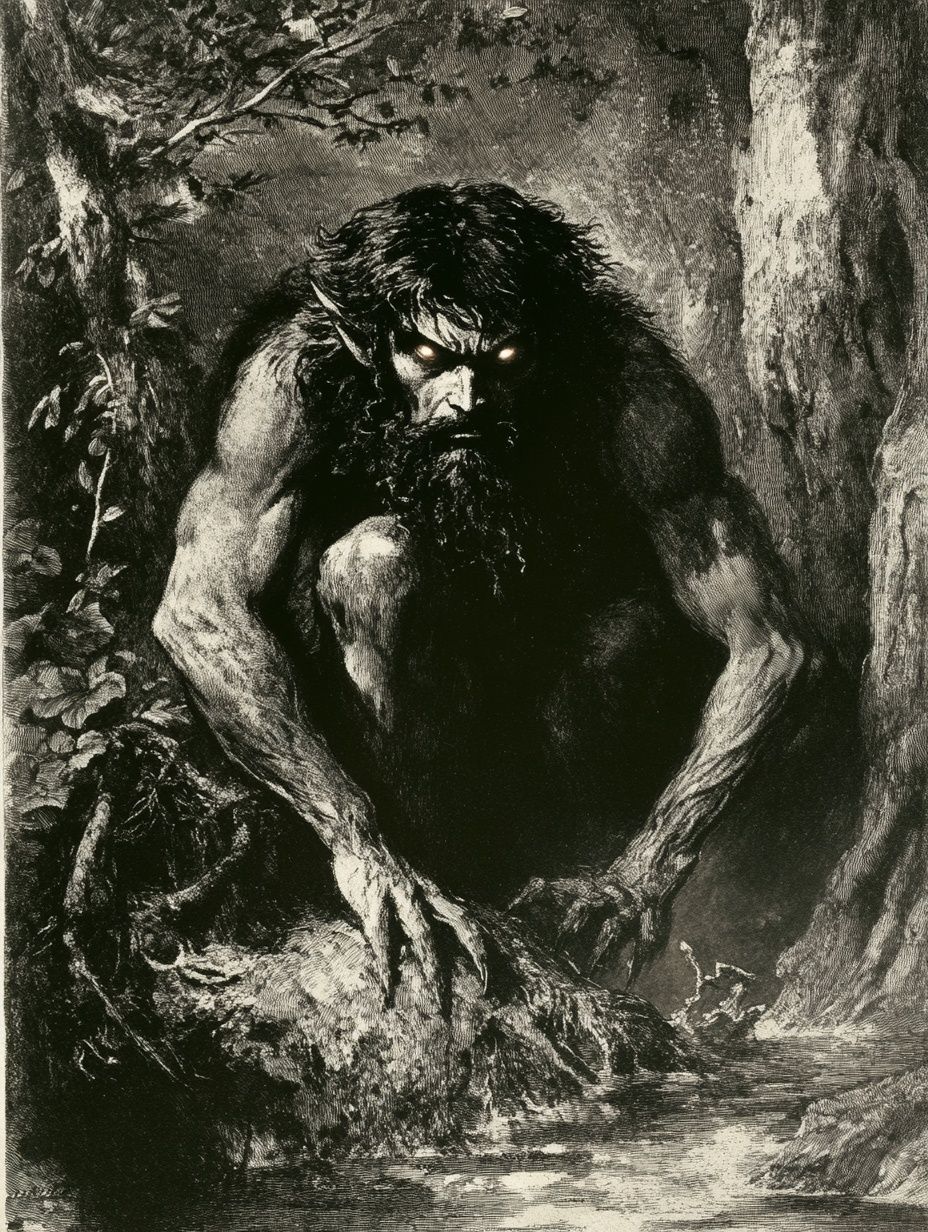
The Phynnodderee is a type of fae and the Manx equivalent of the Scottish Brownie or Gruagach (though he's said to have dark hair not blond) - a solitary goblin spirit who sometimes performs helpful labor for farmers.
But while a Brownie is typically understood as a specific species of domestic spirit born to that station, the Phynodderee is presented in one Manx legend as perhaps a more tragic figure: a fallen aristocrat of the Fairy Court mentioned above.
According to one story, he was once a member of the fairy nobility who fell in love with a human girl from the parish of Marown.
He left the Royal Fairy Court to court her and for this transgression, the Fairy King banished him. His punishment was to remain on the Isle of Man forever, stripped of his beauty and powers of flight, transformed into a hairy, solitary labourer, searching desperately for connection or penance.
He also represents extraordinary strength. In another legend, a blacksmith offered to shake the Phynnodderee's hand.
Knowing the creature’s power, the blacksmith instead extended the red-hot iron tip of a ploughshare.
The Phynnodderee squeezed the solid metal until it twisted like soft clay, demonstrating how easily he could have crushed the blacksmith's hand.
An Aside about Hobgoblins
The author of one of the texts I used for this article made this distinction between “fairies” and “hobgoblins” which I quite enjoyed:
“The distinction between Fairies proper and Hobgoblins seems to be mainly that the former are nimble, merry, and clever, and the latter heavy, plodding, and stupid.”
Technically, hobgoblins are a type of fae or fairy and predominantly a term from English/Germanic folklore though the creatures themselves have much in common with similar creatures from Celtic countries. While the author may have just been using a semantic term of the time, it was likely heavily influenced by that prominent Scandinavian heritage so the term "hobgoblin" may have been uttered here more than other Celtic regions.
(Incidentally, “The Hobgoblin” is the name of an old local pub in my English home town and I am certain there are plenty more hobgoblins dotted around the country!).
Other Mythical Manx Creatures
The Glashtin
The Glashtin is one of the most confusing mythical creatures I’ve written about to date and that’s because the original sources couldn’t get a clear and cohesive view of what it was from the locals!
Some accounts described it as a goblin like creature, similar to the Phynodderree. One tale described such a Glashtin seizing a woman by her dress. She escaped only by cutting away her skirt, leaving the piece in his fist.
The Cabbyl-Ushtey (The Water-Horse)
Other accounts described the Glashtin as a shape-shifting goblin that came from the water, a bit more like the Scottish Kelpie, the Irish Pooka or the Scandinavian Nykr.
One Isle of Man legend said that the locals of Glen Meay believed that a glen below the waterfall was haunted by a man killed by a Cabbyl-Ushtey (or Glashtin?). He thought it was just a normal horse, jumped on its back and then drowned as the horse ran off and dived deep into the sea.
The Tarroo-Ushtey (The Water-Bull)
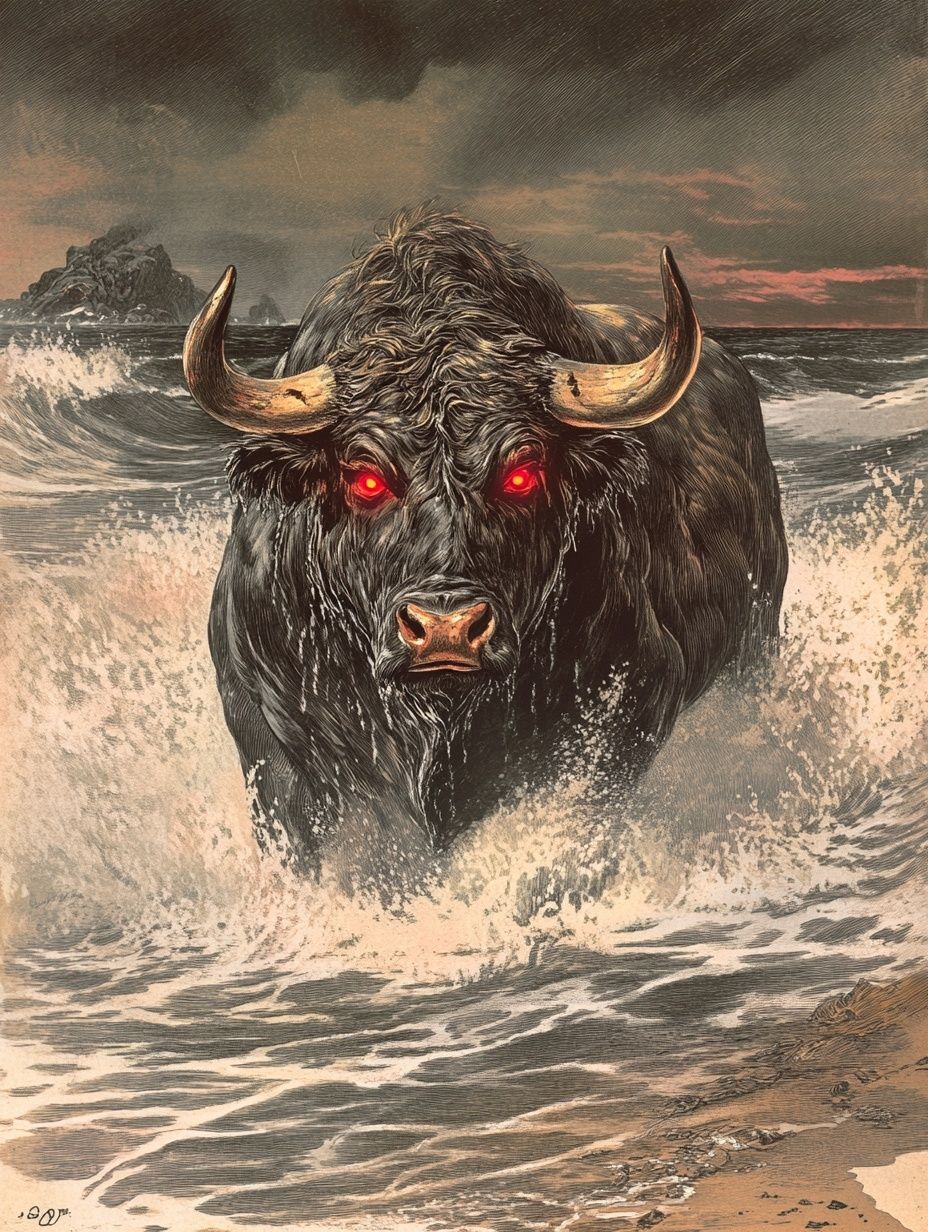
Distinct from the water horse above, the Water-Bull is an amphibious creature that lives in the sea or lakes but comes ashore to mingle with ordinary cattle.
One description said it was wild looking with large eyes that sparkled like fire. It was said that when they mated with ordinary cows, they would only produce monstrous and "distorted" calves, (this apparently quite different to the super calves produced in similar stories from Welsh folklore!).
Other tales described how the bull liked to taunt people who chased it by running at them, then fleeing and swimming merrily in the water where it couldn’t be caught.
Mermaid (Ben-Varry)
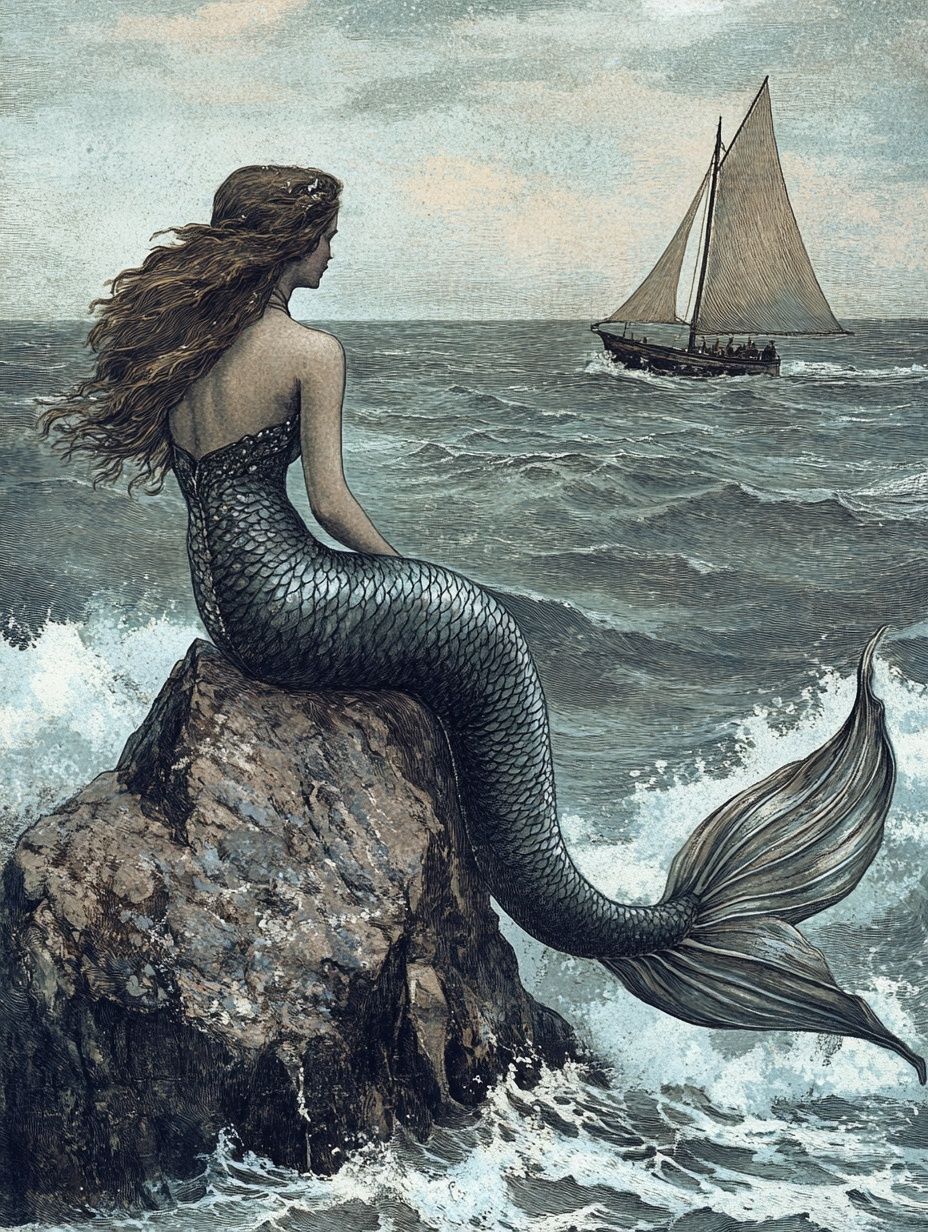
In Manx tradition, the mermaid was referred to locally “Ben-varry”, which translates directly as "Woman of the sea." Her physical form matches the standard depiction found in other cultures, appearing as half-woman and half-fish.
Her temperament is generally described as gentle and affectionate and she frequently falls in love with young human men. But, she was said to become dangerous and terrible if she was angered.
Her male equivalent is the Merman, known as the Dooiney-varrey ("Man of the sea") or the Phollinagh, but there doesn't seem to be a lot of information recorded about him.
The Buggane
The Buggane is a malicious shape-shifting ogre/giant capable of growing to an enormous size (that Scandinavian influence is prominent here, as with trolls in the next section).
The most famous Buggane haunted the ruins of St. Trinian's Church, repeatedly tearing the roof off whenever the builders finished it.
In another lesser-known legend, a tailor named Timothy attempted to defy the spirit by betting he could finish sewing a pair of breeches inside the church before the Buggane destroyed the roof.
As Timothy stitched frantically, the monster rose slowly from the ground. It taunted him, asking if he saw its terrifying head and long teeth, then its body and long nails. Timothy refused to look up, replying only with a hurried "Hee! Hee!" (Yes! Yes!) while continuing to sew.
Just as the Buggane fully emerged to crush him, Timothy finished the last stitch and sprinted out of the church as the roof collapsed behind him.
He leaped into consecrated ground where the spirit could not follow. In a final act of rage, the Buggane ripped off its own head and threw it at the tailor's feet, where it exploded like a bomb. Timothy survived, but the church remained roofless.
Trolls
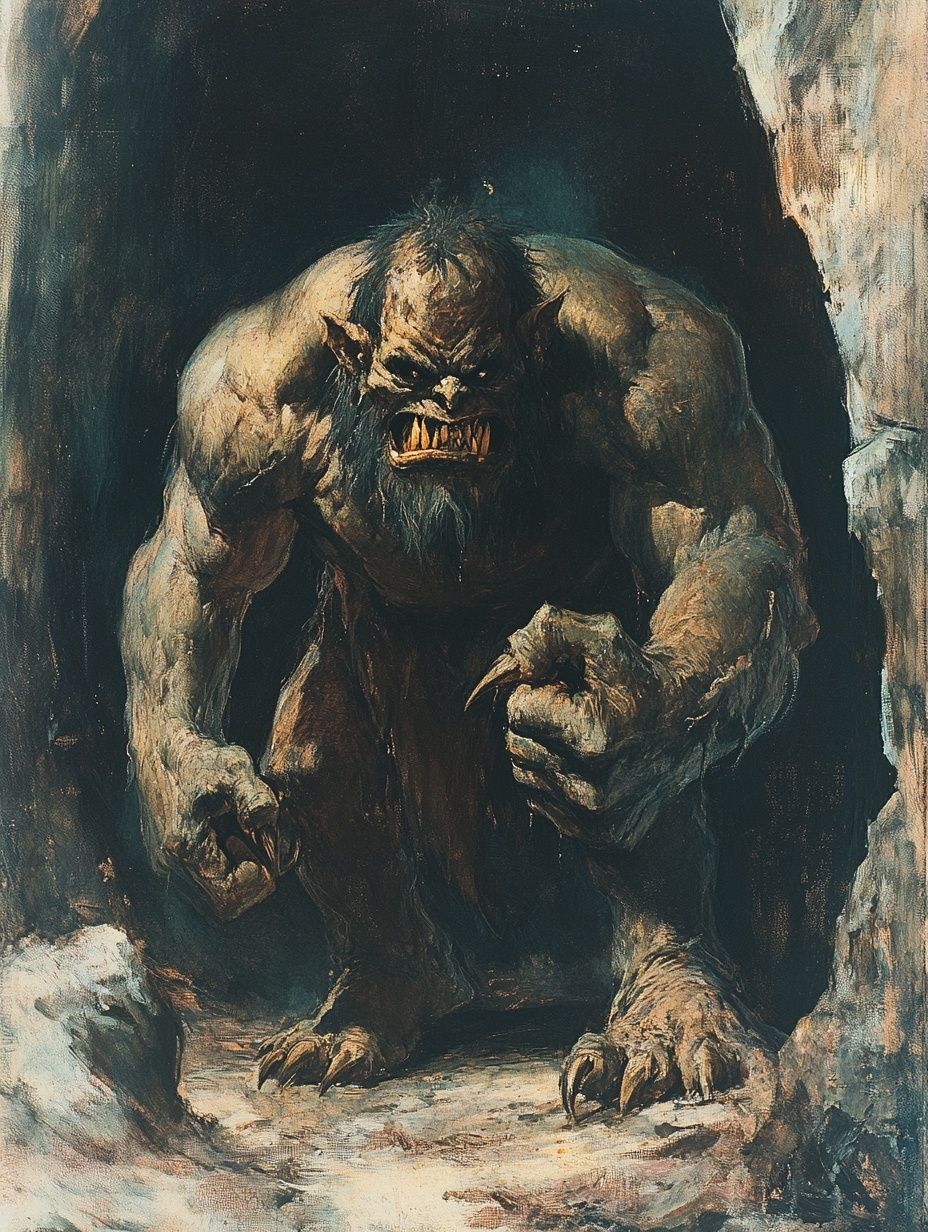
Like the Buggane, the influence of Norse folklore is obvious again in the Manx beliefs in trolls (these creatures are also very similar).
Trolls are deformed, hideous giants who possess immense physical strength paired with a nasty temperament. They typically live in rocks and caverns and are known for being cruel or mischievous towards humans, often seeking vengeance if insulted.
Despite this aggression, they also usually stick to a code of reciprocity; anyone who performs a service for a Troll is rewarded with good luck for the rest of their life.
Their intelligence is contradictory. While generally described as stupid and lacking reasoning power, they hold secret knowledge that humans lack, specifically regarding the location of hidden treasure.
They were said to have a distinct hatred for Christianity and the sound of church bells, which can be used to drive them away.
Evidence of their former prominence in Manx belief survives today in with things like street names such as Trollaby.
Death omens & other spirits in Manx folklore
The Moddey Dhoo
The Moddey Dhoo (Black Dog) is a ghost hound that haunted Peel Castle (a castle on the Isle of Man originally built by the Norwegians in the 11th century).
It was described as a large black spaniel with rough, shaggy hair and would appear nightly in the guard room, sitting silently by the fire.
The soldiers feared it, but one night a drunken guard boasted he would confront the creature. He took the keys to lock the castle gate alone. He returned shortly after, speechless and struck with horror and died three days later in agony.
The Dooiney-oie
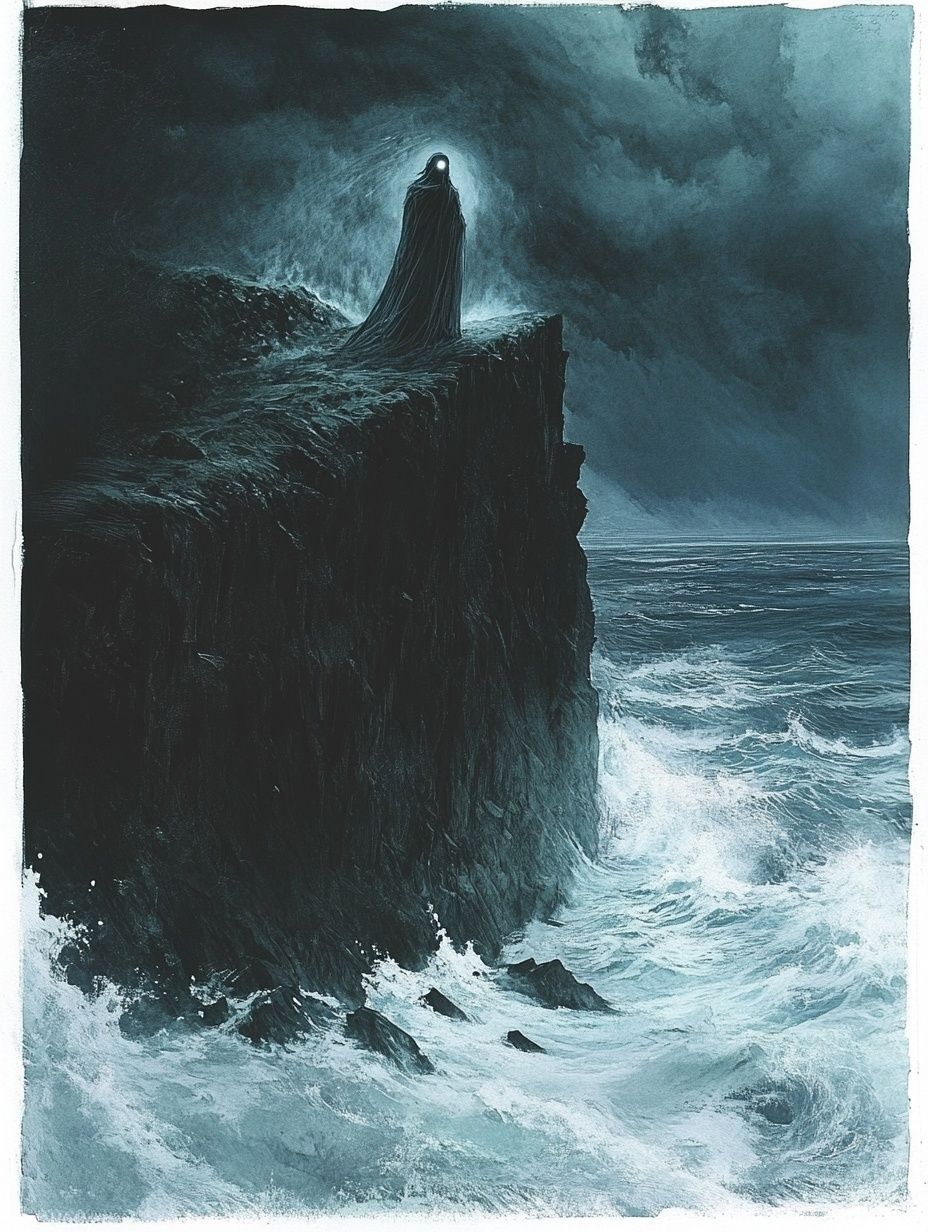
A relative of the Irish Banshee or the Breton Ankou, the Manx death omen is often the Dooiney-oie or "Night-man." He manifests as a male figure on the coast or mountains, issuing a mournful howling sound.
When heard on the coast, his cry was seen as a meteorological warning, predicting approaching tempests and shipwrecks.
The Lhiannan-Shee
The Lhiannan-Shee is a familiar spirit defined by its exclusive attachment to specific families (and related to the Leanan Sídhe in Irish folklore).
She can be a guardian or a dangerous "fairy sweetheart" who attaches herself to a man, driving him to madness and ruin. The duality of nature in folklore is rife again in this creature.
Manx magic & witchcraft
The Isle of Man has held a reputation as
a center of magic for centuries. In 1203, a bard accompanying the King of Norway described the Manx as an "impious race" wielding "horrid powers of enchantment."
Magic wind
One legend claimed that Manx women could sell wind to sailors. The wind was enclosed within three knots of thread and apparently the more the thread was untied, the more wind would be summoned.
Witches and charmers
Witch folklore follows similar patterns to other Celtic and European regions.
In the Isle of Man, the Butch (Witch) was feared for using the "Evil Eye" to blight cattle and stop hens from laying.
The antidote to the witch was the Fer-obbee or Ben-obbee (if a woman) - better known as the local folk healers. These practitioners used hereditary powers and herbs to cure diseases and break spells.
The most famous Manx example was Teare of Ballawhane, known as "The Seer," who was said to possess great power over birds and other animals. Learn more about authentic Gaelic folk magic here.
Tehi-Tegi
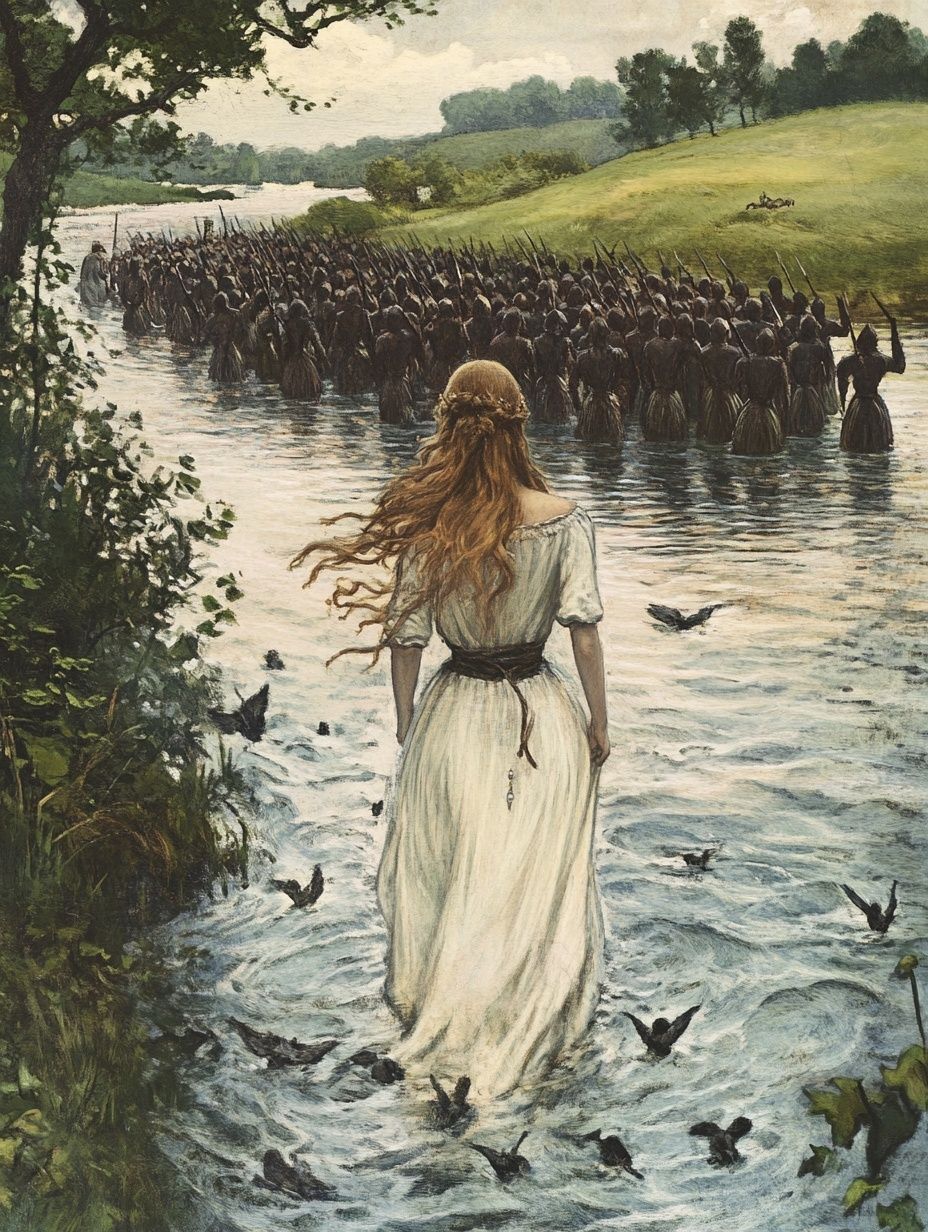
Tehi-Tegi was a legendary enchantress who appeared as a beautiful woman. She gathered a following of 600 Manx men who were so enamored they neglected their work and families to follow her. She eventually led this procession into a river, where she drowned them all before transforming into a bat and flying away.
(The deceptive enchantress is exceptionally common in global folklore - although noted as a witch here, often she is a described as
a monstrous or predatory spirit).
Want original Gaelic incantations and rituals?
If authentic folklore and historical accuracy is critical to your magic practice or project, my NEW & EXCLUSIVE ebook has got you covered.
Featuring 30+ traditional incantations in Gaelic (with English translations) and curated from primary sources captured in the late 19th-century.
You'll find verbal folk magic charms that cover everything from protection spells and becoming invisible and invulnerable, to finding love, obtaining justice and blocking supernatural magic.
(Clicking the link will open the Mythfolks Etsy shop in a new tab.)
Manx myths of a Viking legacy
The Viking influence on the Isle of Man is preserved on ancient stone crosses and includes original stories of some of the more popular Norse gods & goddesses.
Sigurd the Dragon Slayer
Carvings at the Isle of Man churches, Kirk Andreas and Kirk Malew ("Kirk" being the old Norse word for "church"), told the saga of Sigurd.
The story goes that a dwarf named Regin manipulated Sigurd into killing a dragon named Fafni to steal its gold.
The stones depict the end of the story: Sigurd has slain the dragon and is roasting its heart over a fire for Regin.
He accidentally burns his thumb on the meat and puts it in his mouth to cool it. The moment the dragon's blood touches his tongue, he gains the magical ability to understand the chirping of birds. The birds in the tree above warn him that Regin plans to betray him. Forewarned, Sigurd kills the dwarf and keeps the gold.
The Punishment of Loki
A cross at Kirk Andreas depicts the end of the trickster god Loki.
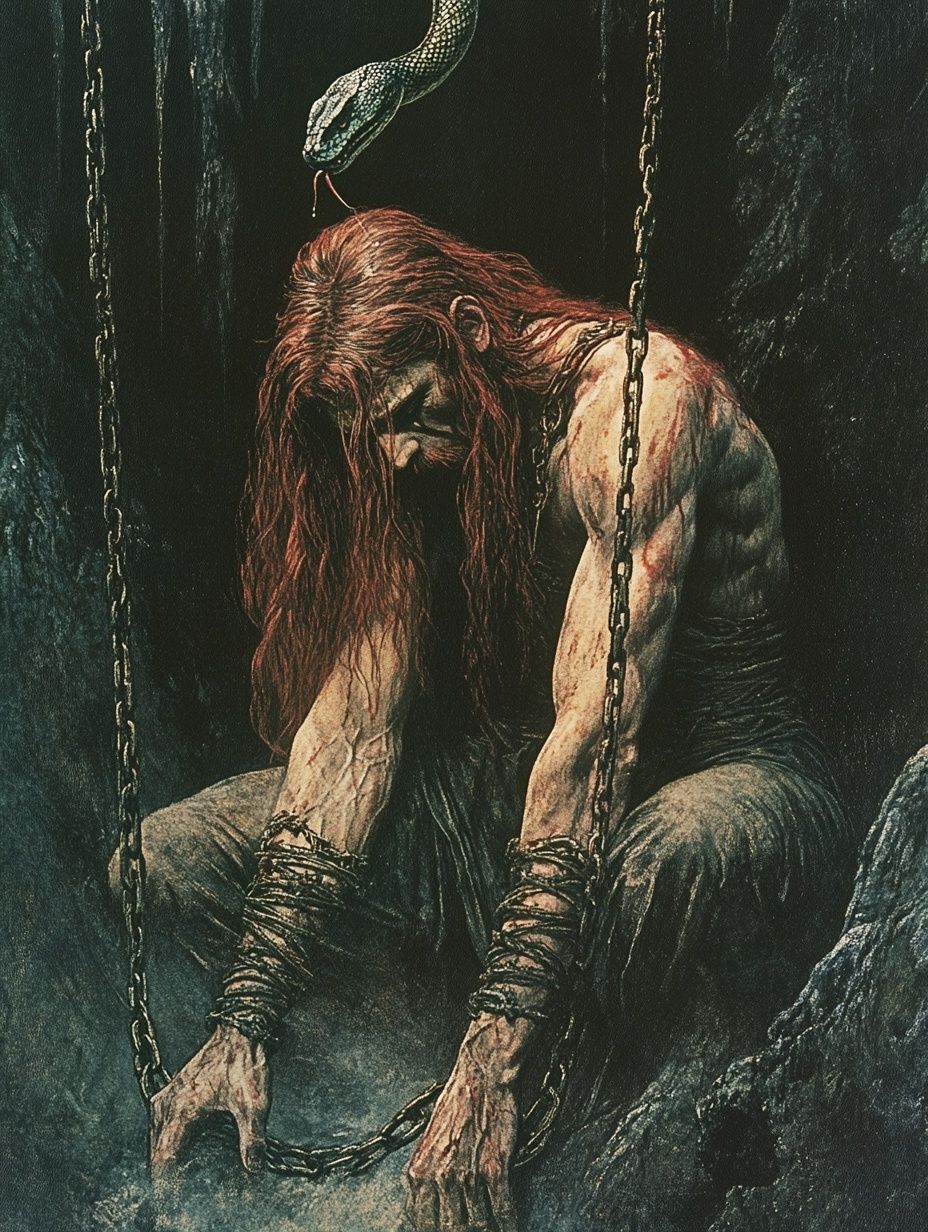
Having angered the gods, Loki is shown bound to a rock. A venomous serpent is positioned above him, dripping poison onto his face.
His wife, Sigyn, stands by him with a bowl to catch the venom. The legend says that when the bowl fills up and she has to turn away to empty it, the poison strikes Loki's face.
He writhes in such pain that the earth shakes - a Norse mythological explanation for earthquakes.
I did check in on those original stone carvings referenced above and I'm pleased to say that over the last decade or so there has been an active preservation effort taken on by various local Manx charities and organisations to ensure these irreplaceable pieces of history are kept alive for generations to come.
Don't forget to check out more Celtic folklore below!
Article sources
- Moore, A. W. The Folk-Lore of the Isle of Man: Being an Account of Its Myths, Legends, Superstitions, Customs, and Proverbs. Douglas: Brown & Son, 1891.
- Rhys, John. Celtic Folklore: Welsh and Manx. 2 vols. Oxford: Clarendon Press, 1901.
You might also like
Traditional Gaelic magic
These authentic folk magic practices and rituals are centuries old. Learn more here.
All Celtic folklore
This Celtic folklore powerhouse is packed old superstitions, learn more about them here.
A history of witches in folklore
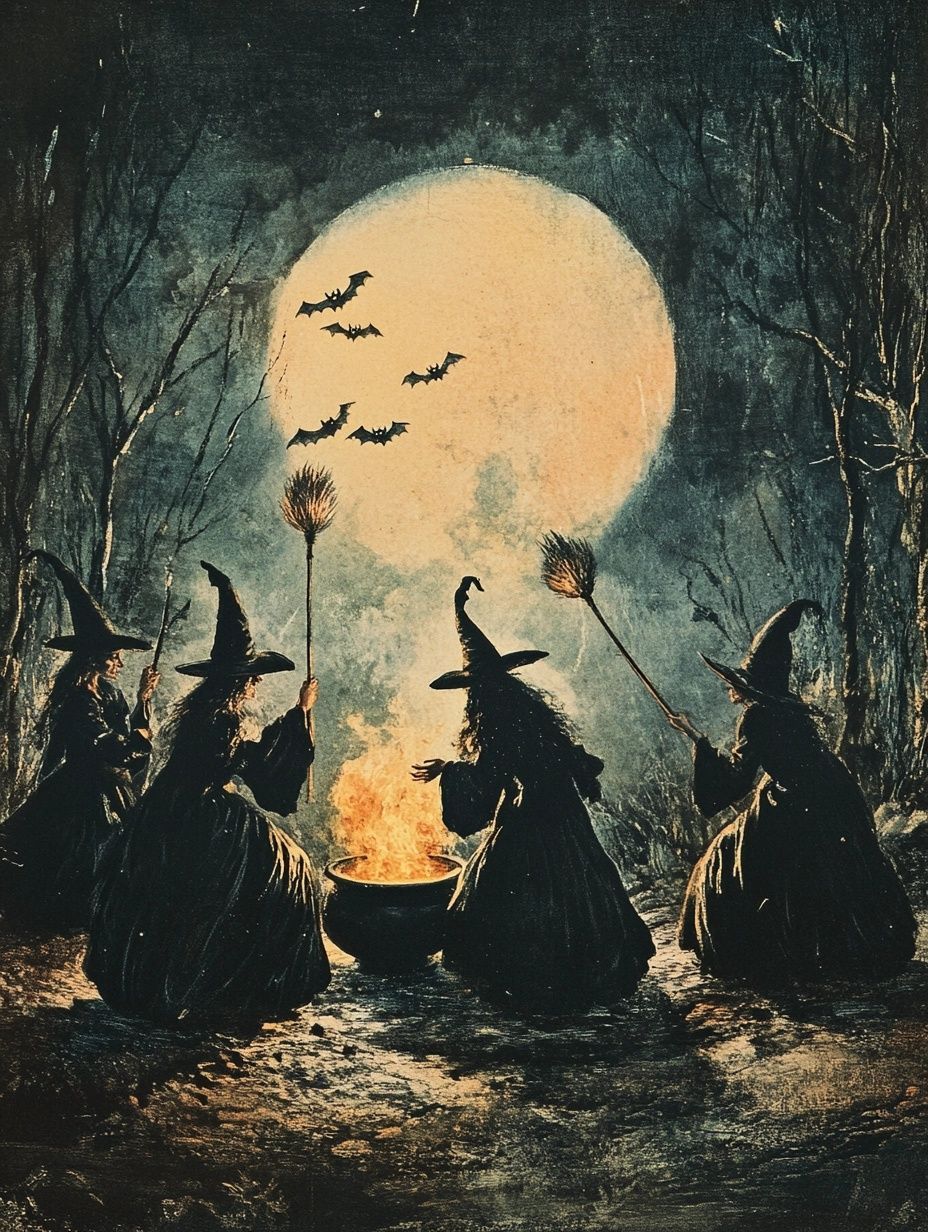
From ancient myths to the famous witch trials, take a step back in time and take a quick tour through witch folklore.