
Iroquois folklore: creation myths & other stories of 6 indigenous nations
Native American mythology is a broad, complex and important part of the US folklore eco-system. As with all groups, there are a lot of universal folklore stories under the indigenous umbrella, but of course each different nation has their unique nuances and identifiers.
This article covers tales recorded from the Haudenosaunee Confederacy. Historically known as the Iroquois, this is a union of six Indigenous nations: the Mohawk, Oneida, Onondaga, Cayuga, Seneca and Tuscarora.
The myths I've covered were recorded by a woman called Harriet Maxwell Converse (Ya-ie-wa-noh) and published in 1908. She was a culturally adopted member of the Seneca nation but the stories are universal Iroquois tales (they are retold here using the specific names and dialect of the Seneca people at the time of recording, for authenticity).
Enjoy!
Published: 12th Jan 2026
Author: Sian H.
Iroquois creation myths
The Floating Island
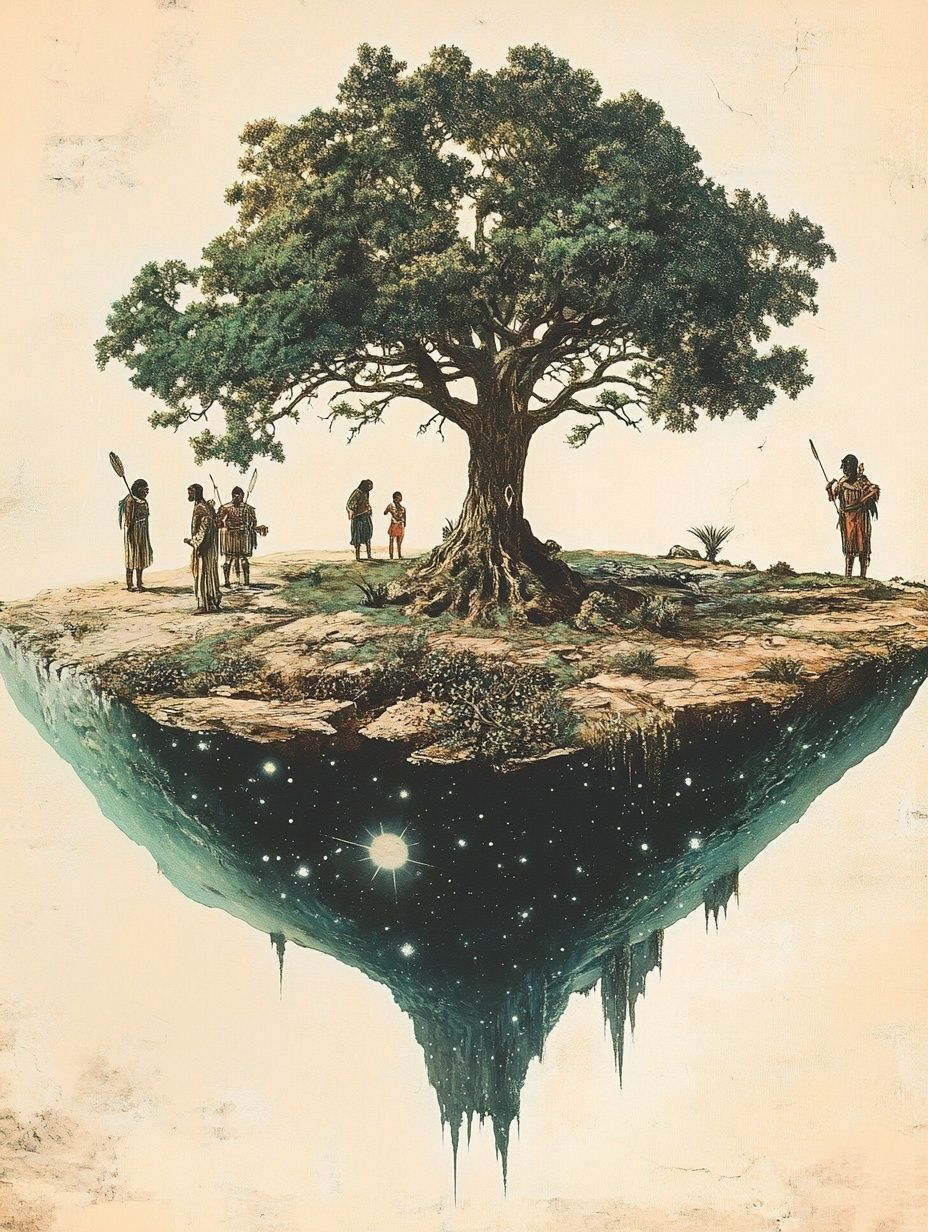
In Iroquois mythology, it was believed that the earth came to be as an idea of the long ago Indian Ruler of a serene floating island in space.
The Ruler was known by various names including, Great Creative Being, Hah-ni-go-e-yoo (Good Mind), Great Spirit and Tha-nio-do-oh or To-no-do-oo, the latter being generally adopted by the Iroquois. (The author also noted at the time the Iroquois required the Ruler to be called Ho-dia-nok'-da Hed'-io-he, Our Creator).
This floating island was a place of perfect peace with no pain or death and in the center of the island stood a large council tree (identified as an apple tree) where the people would gather.
One day, the Ruler announced that a new place would be created to allow people to grow and that the "cloud sea" beneath the tree would show them the way.
They pulled the tree up by the roots and the Ruler called for Ata-en-sic (the First Mother), who was pregnant, wrapped her in a ray of light and sent her down through the hole to the clouds below.
Hah-nu-nah, the Turtle
The animals living in the cloud sea were scared by the light falling from the sky. They realized only oeh-da (earth) could hold it - but the oeh-da was buried at the bottom of their deepest waters (it seems the cloud sea is quite literal = clouds and water).
The Beaver and the Duck tried to find the earth but died as did many others. Finally, the Muskrat swam deep down and came back with a small piece of earth but it was too heavy for him to hold.
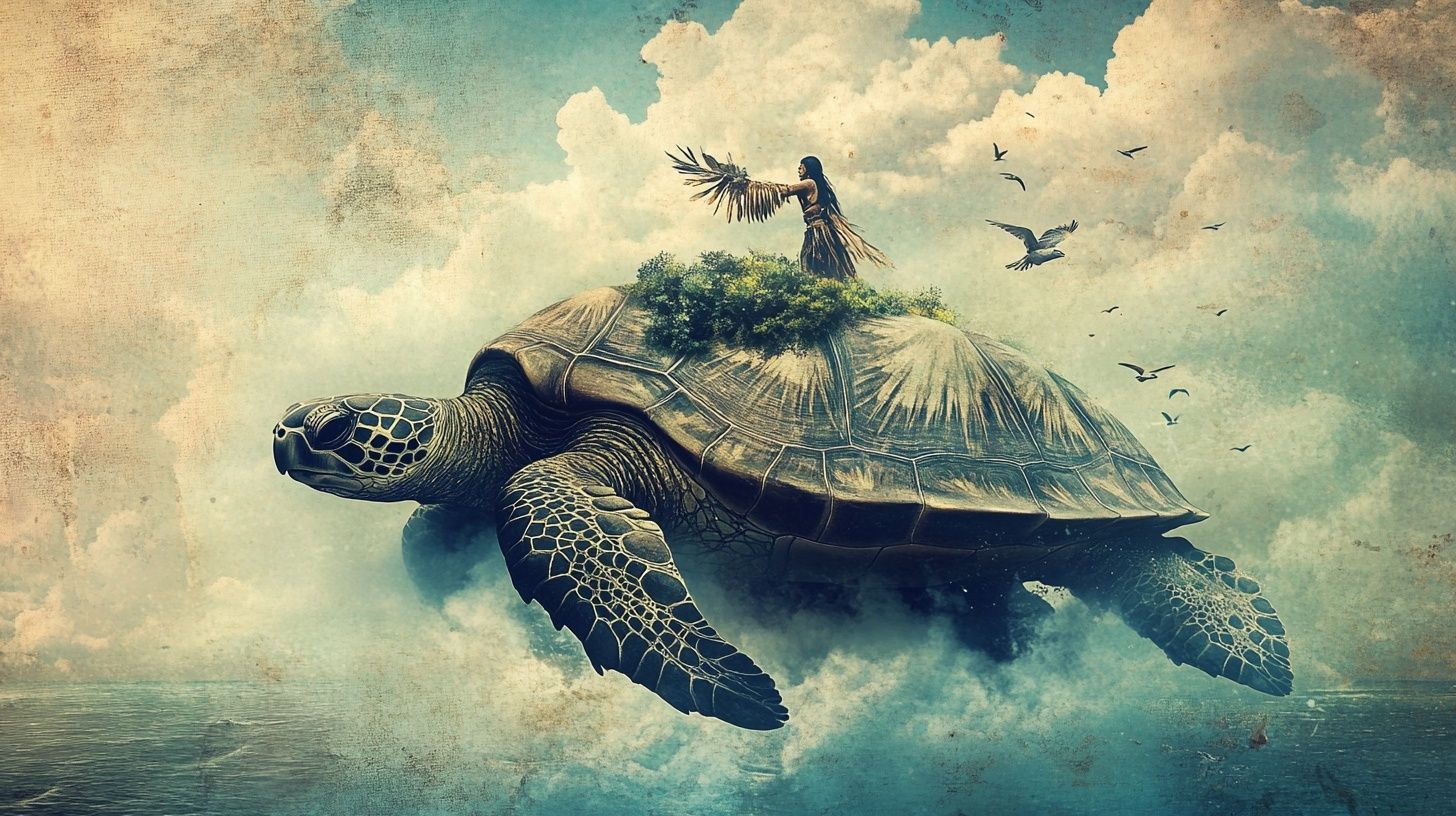
Hah-nu-nah, the Turtle, volunteered to carry the heavy earth on his hard shell and now with a safe place to land, the birds caught Ata-en-sic on their wings and lowered her gently onto the Turtle's back.
Ata-en-sic, the Sky Woman
The small piece of earth on the Turtle's back grew rapidly until it became a large island - this became the Earth. (the editor noted in the book that the belief about the world resting on the back of a giant turtle was common across cultures, using the example in old Hindu beliefs, where the earth was said to rest on 4 elephants who in turn stood on a giant turtle).
Ata-en-sic settled there, but she carried two opposing lives inside her. These were the Do-ya-da-no (Twin Brothers - stories of twins are popular in folklore including in Maya mythology).
The good twin, Hah-gweh-di-yu (Good Mind), was born without issue. But the evil twin, Hah-gweh-da-et-gah (Bad Mind) forced his way out through his mother's side and killed her.
The Sun, Moon and Stars
Following the death of Ata-en-sic during childbirth, Hah-gweh-di-yu honored her by transforming her remains into the cosmos, making the Sun from her face and the Moon and Stars from her breast.
He created the earth's contents from her body and attempted to design an orderly landscape featuring straight rivers and fruitful forests.
But his evil twin countered these creative acts with destruction and he introduced darkness to pursue the sun, smashed the mountains to bend the rivers, twisted the forests and filled the skies with hurricanes and the seas with monsters.
Earth's completion & the Duel of Hah-gweh-di-yu and Hah-gweh-da-et-gah
Once the earth was finished, Hah-gweh-di-yu attempted to make peace, but Hah-gweh-da-et-gah refused and challenged him to a duel for ultimate power over the world. The evil twin wanted to fight with poisonous roots and monster fangs but Hah-gweh-di-yu insisted they use the sharp thorns of the giant crab-apple tree.
After a long battle, Hah-gweh-di-yu defeated his brother and banished him to an underground pit that he cannot return from. Ever the meddler, Hah-gweh-da-et-gah now sends half-human, half-beast servants that can take any form to spread destruction across the world.
But his good twin stayed true to the Great Ruler's prophesy that people should occupy a new place and continues to populate and protect the world.
Iroquois myths of elemental & seasonal spirits
Ga-oh, Spirit of the Winds
Ga-oh is a giant spirit imprisoned in the far northern sky. He has such uncontrollable strength that if he were left free, he would tear the sky apart.
From his solitary lodge, he acts as the warden of the weather, forcing the winds back into line whenever they try to break loose.
To manage the storms, Ga-oh controls four animal spirits, keeping them on leashes at the gates of his home:
- Ya-o-gah (the Bear) waits at the north gate and brings the freezing winter.
- Da-jo-ji (the Panther) is the West Wind; he is the most violent, bringing whirlwinds and heavy waves.
- O-yan-do-ne (the Moose) is the East Wind, blowing grey mists and cold rains.
- Ne-o-ga (the Fawn) is the South Wind, the gentle spirit of summer who brings the warmth that allows crops to grow.
He-no, The Thunderer (and how Horseshoe Falls came to be)
He-no is the Thunder Spirit who guards the world from monsters and brings the rain needed for harvest.
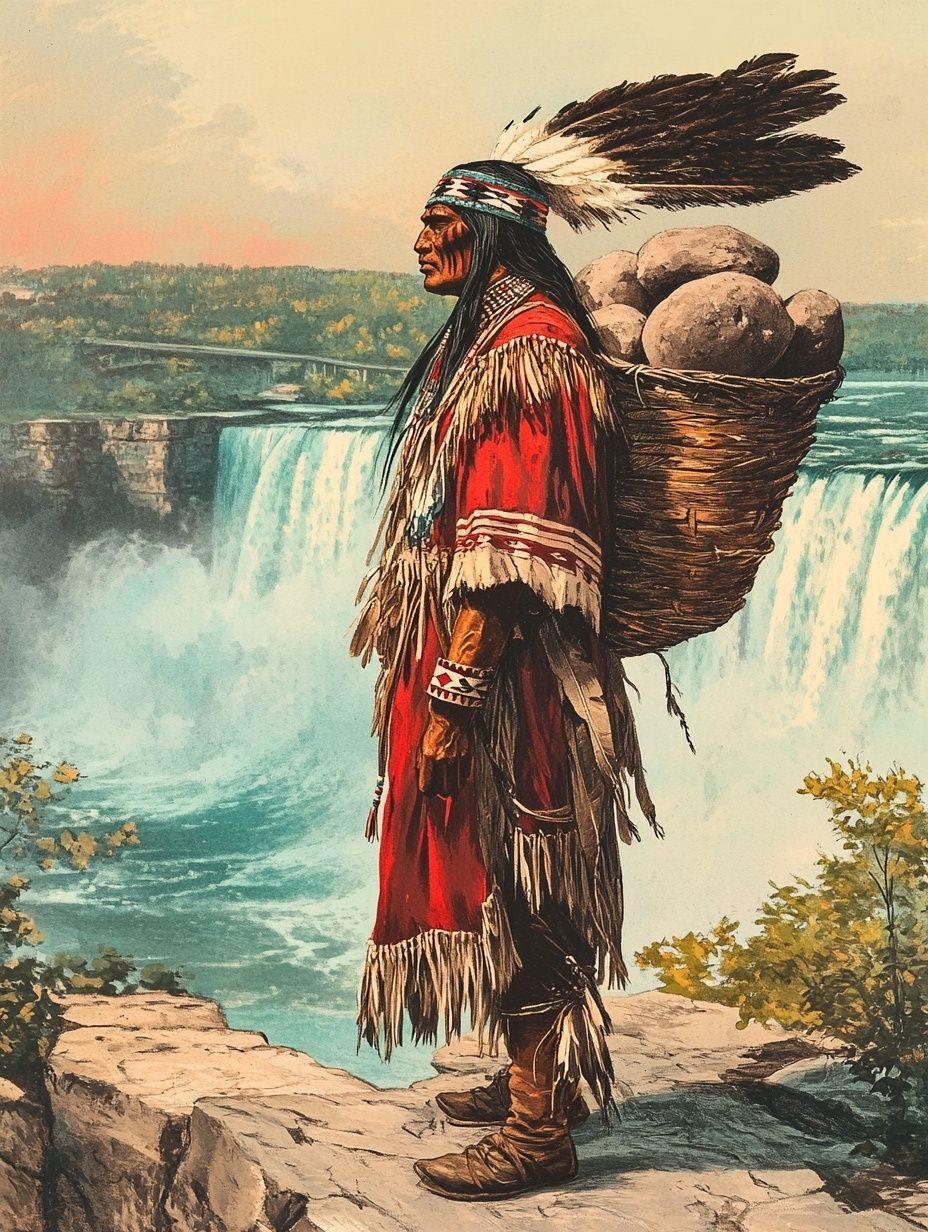
He appears as a warrior wearing a magic feather that protects him from evil. On his back, he carries a huge basket of boulders, which he throws at dark spirits.
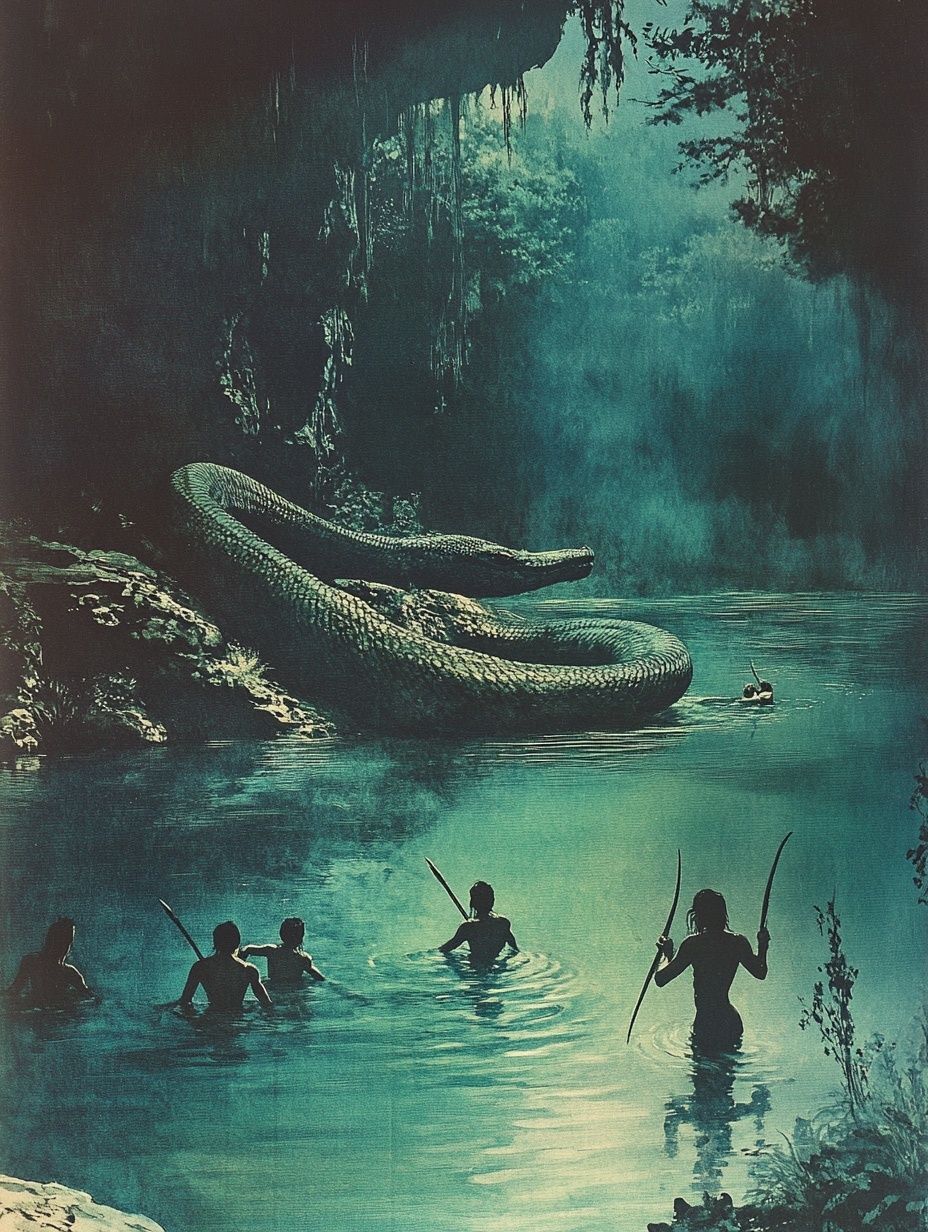
Long ago, He-no lived in a cave behind Niagara Falls. At that time, a giant serpent terrorized the region, emerging once a year to eat the dead and spread disease among the living.
He-no hunted the beast down and killed it with a thunderbolt in Buffalo Creek. The massive carcass floated down the river and got stuck at the edge of the falls, blocking the flow of water completely.
The pressure of the dammed river eventually smashed through the rock ledge, creating the famous horseshoe shape of the falls we see today. After this, He-no left the earth to live in the sky.
Gun-no-do-yah, The Thunder Boy and the Human Snake
He-no adopted a human orphan named Gun-no-do-yah to help him hunt. Because Gun-no-do-yah was human, he knew the layout of the land better than the sky spirits. He-no tasked him with killing a "Human Snake" (a horned water serpent) in Lake Ontario that had been avoiding the Thunderers.
Gun-no-do-yah tracked the monster during a dark storm, but when he waded into the lake, the serpent tricked him. It spoke gently, claiming to be a friend, and asked him to come close and comb its long mane.
Refusing to be fooled, Gun-no-do-yah drew his bow to kill it, but his bowstring snapped. Powerless, he was grabbed by the serpent and devoured. He-no learned of the boy's fate in a dream and sent his warriors to plough through the bottom of Lake Ontario.
They found the serpent sleeping, killed it, and cut Gun-no-do-yah out of its stomach alive. To keep him safe, He-no brought him permanently to the sky, where he helps chase the lightning.
Gau-wi-di-ne and Go-hay, Winter and Spring
An old man named Gau-wi-di-ne (Winter) lived in a lodge made of ice at the foot of a mountain. He was grumpy and solitary, bragging that his power could freeze the waters and scare away the sun.
One day, a young warrior named Go-hay (Spring) knocked on his door. The old man tried to order him out, claiming that the young man had no place in his cold lodge.
The young warrior sat by the fire and calmly told the old man that his time was up. Go-hay explained that when he lifts his hand, the sky opens, the sun wakes up, and the trees send out buds.
As he spoke, the old man began to shrink and fade. The ice lodge melted away, turning into a swift river, and where the old man sat, a bed of flowers appeared. Gau-wi-di-ne had passed, and Go-hay now ruled the earth.
Iroquois celestial myths (and how the stars came to be)
Od-je-so-dah and Ji-hen-yah, the Dancing Stars and the Sky Witches
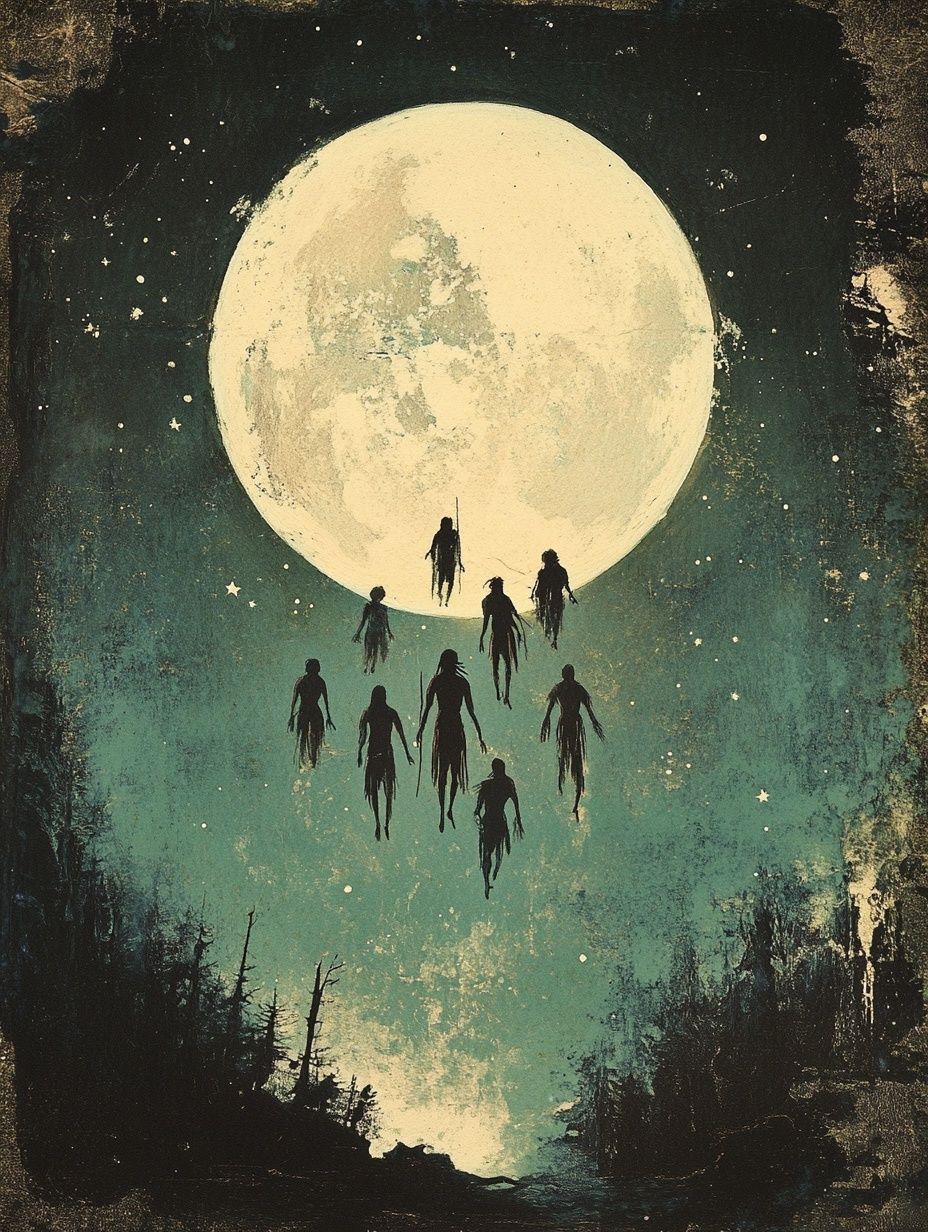
An Indian hunter took his eleven sons into the deep forest to teach them the secrets of hunting. One night, they heard sweet singing drifting through the trees.
The eldest son, Hai-no-nis, woke his brothers to listen, and they followed the sound to a moonlit circle. The singing came from the Ji-hen-yah (Sky Witches).
The music charmed the boys, and they began to dance wildly. They danced until they floated off the ground and rose higher and higher into the air.
The Moon saw them and, out of pity, turned them into a group of fixed stars - the Pleiades. She commanded that they must dance over the council house during the New Year. Hai-no-nis, however, fell back toward the earth and became a shooting star.
Ga-do-waas, His Star Belt, The Milky Way
Ga-do-waas is a spirit with four eyes who lives in the very top of the sky. He watches the gate where every soul must pass to reach the afterlife. To guide these souls, he wears a hunting belt decorated with stars - this is the Milky Way.
When a human is dying, Ga-do-waas takes a star from his belt and throws it into space. The star's light creates a path for the soul to follow.
Once the soul reaches the sky gate, Ga-do-waas puts the star back into his belt. The Indians believe that the confusion of stars in the Milky Way is actually a procession of souls journeying to the "Happy Hunting Ground."
Nya-gwa-ih, The Celestial Bear
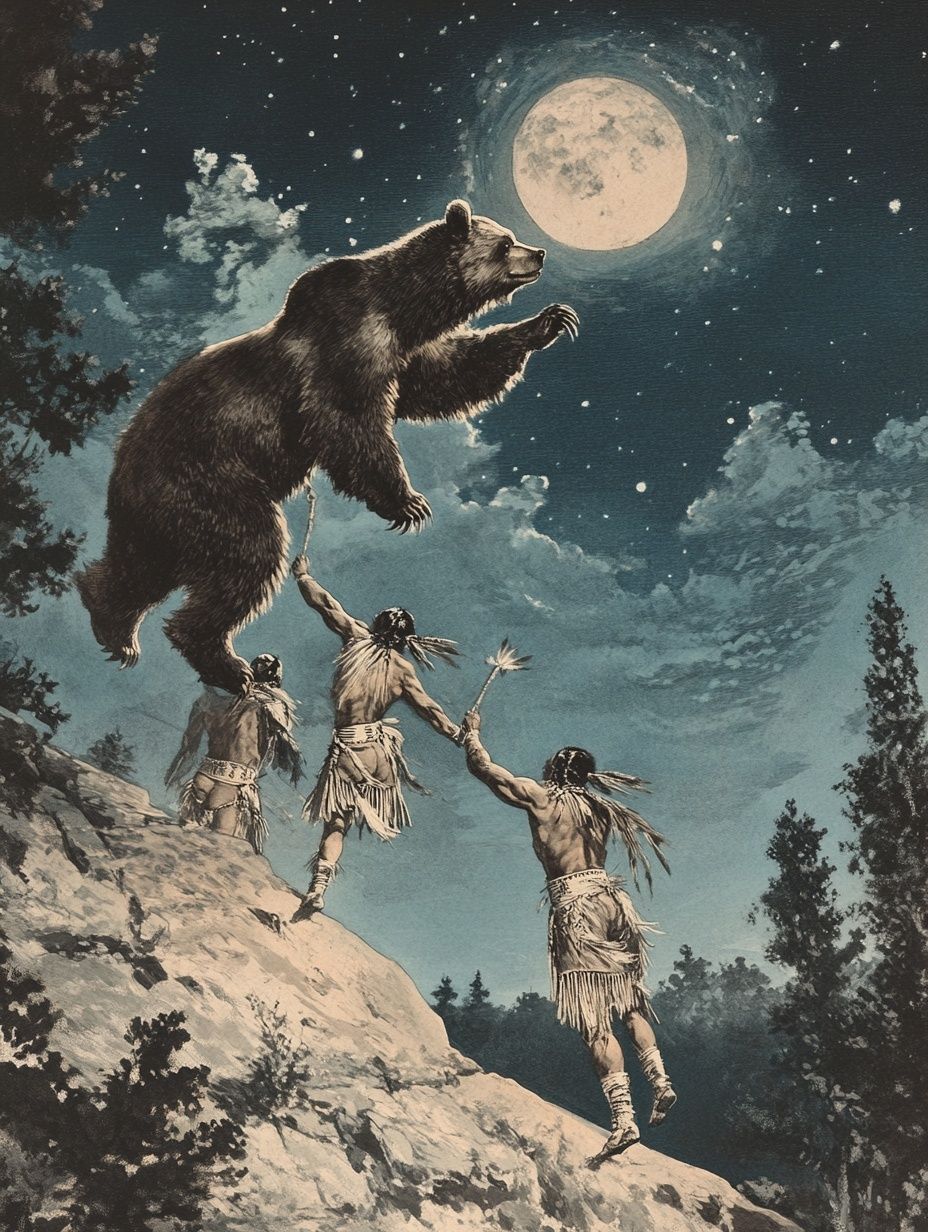
A giant bear once terrorized the forests, devouring all the game and avoiding every hunter's arrow.
Three brothers had a dream that they found the bear, so they grabbed their weapons and their faithful dog, Ji-yeh, and set out to kill it. They chased the bear so relentlessly that they ran to the edge of the world and straight up into the sky.
They did not realize they had left the earth. They found the bear resting in an invisible net of stars (Corona Borealis). The bear woke up and dragged the hunters into the sky to wander forever.
They are seen today as the Big Dipper (Ursa Major): the bowl is the bear, and the handle represents the three hunters and their dog, still chasing it.
O-je-a-neh-doh, The Sky Elk
A famous hunter named So-son-do-wah spotted a magnificent elk, O-je-a-neh-doh, and chased it.
The elk was a supernatural creature and ran up the mountains and into the sky. The hunter followed it so far that the Dawn caught him and made him a guard at her lodge. Looking down from the sky, So-son-do-wah fell in love with a woman he saw by a river.
To visit her, he entered the bodies of birds: first a bluebird, then a blackbird, and finally a night-hawk. He spoke to her through their songs.
The Dawn discovered he had abandoned his post and punished him. She turned the woman into a star and bound her to the hunter's forehead.
This created the Morning Star (I assume it refers to Sirius or Venus).
Iroquois myths about animals
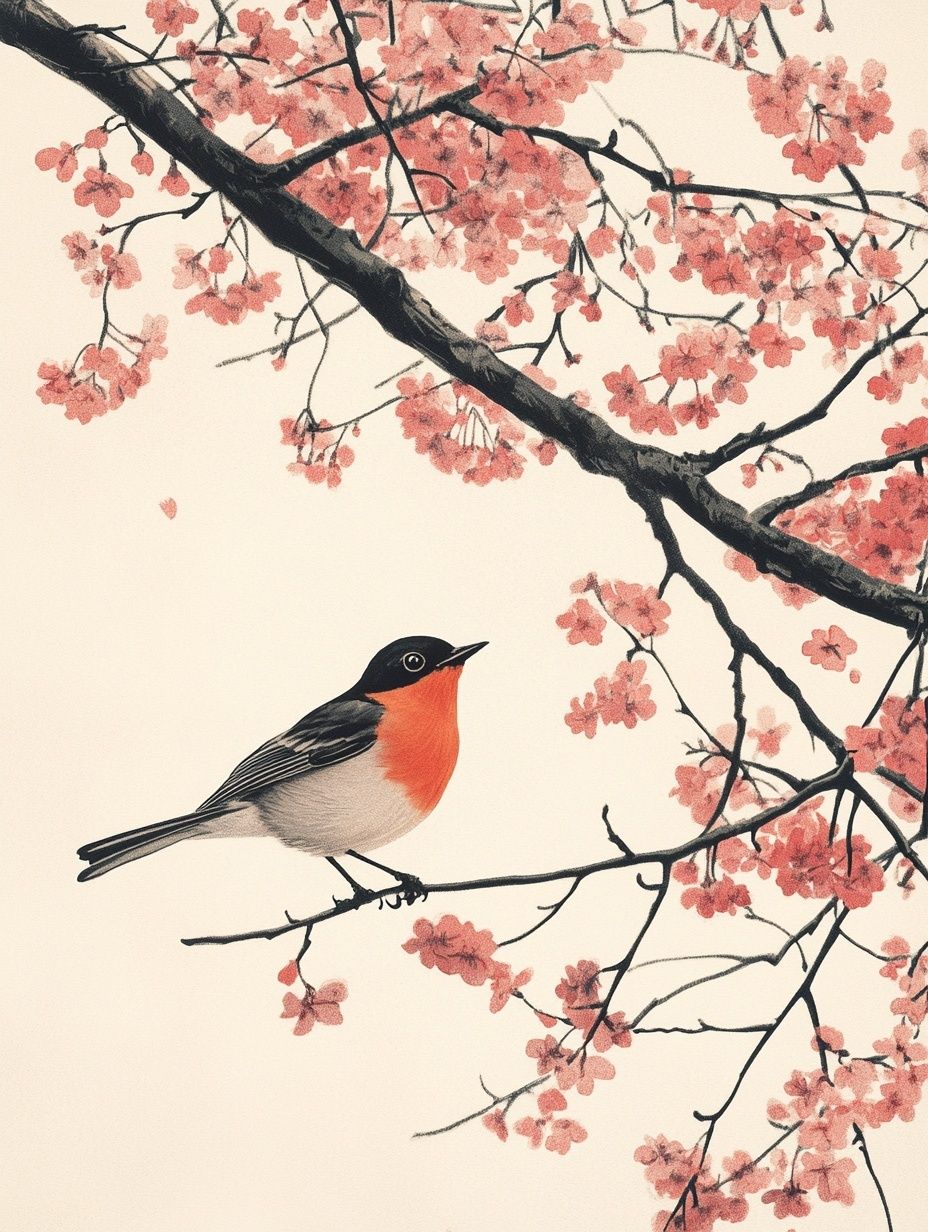
The Dream Fast, Jis-go-ga, The Robin
A young boy named O-go-ne-sas went into the forest to perform his Dream Fast, a ritual to find his guardian spirit. He fasted for ten days, refusing to leave his lodge because his clan spirit had not yet appeared.
The village chiefs urged him to quit, but he insisted on waiting one more day. On the final morning, the boy was gone.
A bird flew down to the lodge and spoke with the boy's voice. He explained that his spirit was pure, but his guardian had been late.
To save him from the disgrace of a failed fast, he had been transformed into Jis-go-ga, the Robin. He promised to return to the village every year to bring the spring, singing to the trees to wake the leaves.
It was recorded that this was why the Iroquois planted wild cherry trees near their homes for the Robin (I'm not sure if that's still the case today!).
How the Flying Squirrel Won His Wings, The Frog Lost Its Teeth, and the Woodchuck Its Appetite
Nuk-da-go, the chief squirrel, investigated a theft of nuts from the industrious squirrel Jo-nis-gy-ont.
He discovered that the Frog (Nos-gwais) and the Woodchuck (Teh-do-oh) were stealing the nuts and hiding them, even though they had plenty of their own food. A council was held to punish the thieves for their greed.
The Frog was punished by losing his teeth, which is why frogs have none today. The Woodchuck was stripped of his appetite for fish and birds and condemned to sleep through the winter when nuts are scarce.
To help the victim, Jo-nis-gy-ont, protect his stores in the future, the council gave him webbed wings to fly and wider eyes to see enemies, creating the flying squirrel.
The Origin of the Rattlesnake Tribe
The Sky Holder organized a dance competition to settle disputes between the clans. A group of young warriors danced so wildly and beautifully that they won the prize.
However, possessed by the Evil Mind, they suddenly used their rattles and clubs to murder the spectators. The Sky Holder punished them for using a time of peace to kill.
He cast them into the dust, transforming them into the Sais-tah-o-noh (Rattlesnake People). They were cursed to crawl on their bellies forever, but they were commanded to always rattle a warning before they strike, just as they rattled before the massacre.
Nya-gwa-ih, How the Bear Lost Its Tail
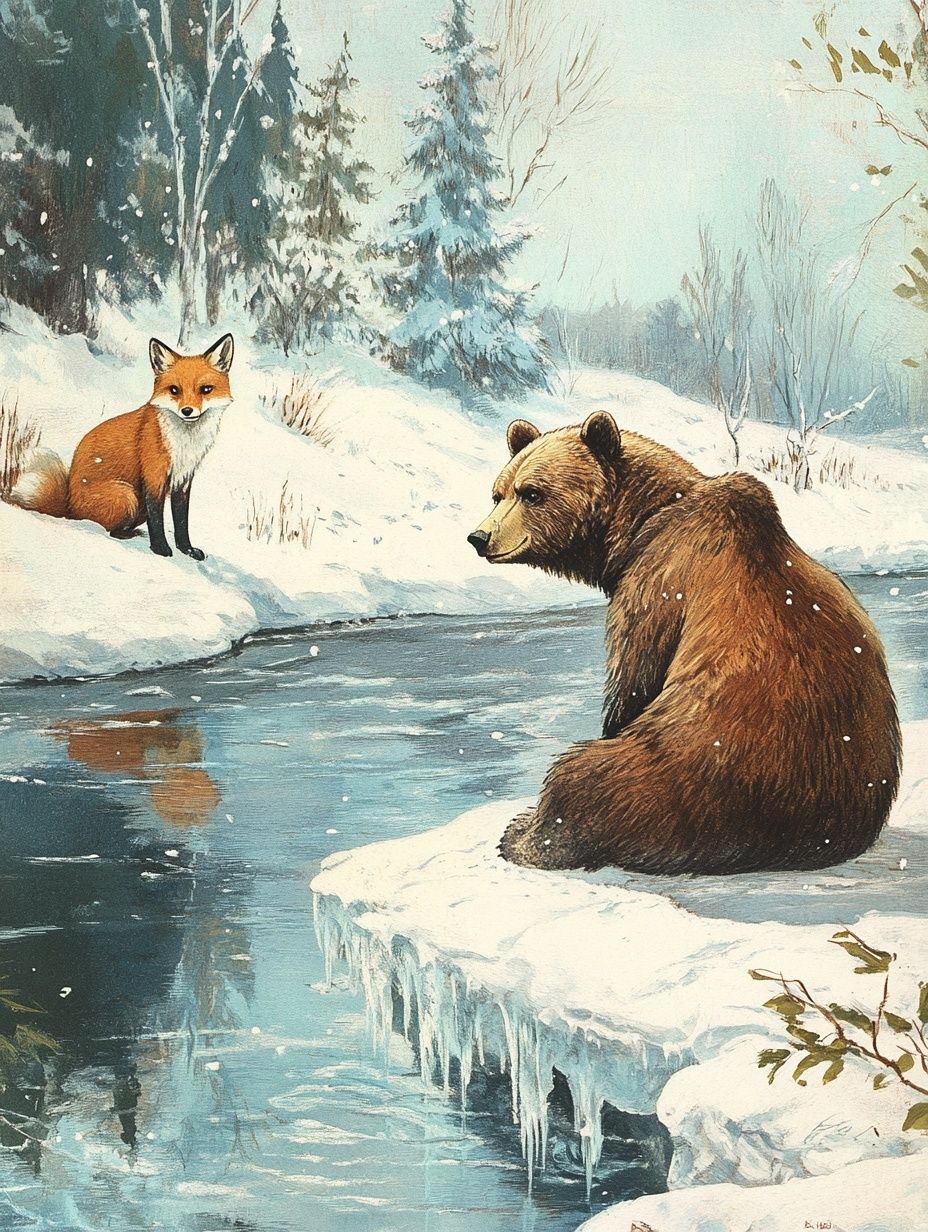
Nya-gwa-ih, the Bear, once had a long, bushy tail. One day, a tricky Fox convinced him that he could catch fish by dipping his tail into the river.
The Bear sat on a log all day, waiting for a bite, while the North Wind froze the water solid around his tail. When the Bear finally tried to jump up and pull his catch out, his tail snapped off in the ice. This is why bears today have short, stubby tails and do not trust the Fox.
(This story is a good example of how folklore stories can cross cultures based on shared experiences even without direct shared origins - a
similar story turns up in this Scottish fairy tale where it's a wolf instead of a bear that loses its tale).
Iroquois myths & legends of death and the soul
Deh-oh-niot, The Evil Soul Gatherer
Deh-oh-niot is a spirit the color of the sky who hides in the tops of tall trees and on mountain peaks. He has the face of a wolf, the wings of a vulture, and the body of a panther.
He is an agent of Death sent to gather souls. When a person is dying, Deh-oh-niot waits at the door; if the person is not ready to go, he barks like a wolf or whines like a cat.
He can only seize evil souls. If a soul has some good in it, it might fight back and escape while being carried across the sky.
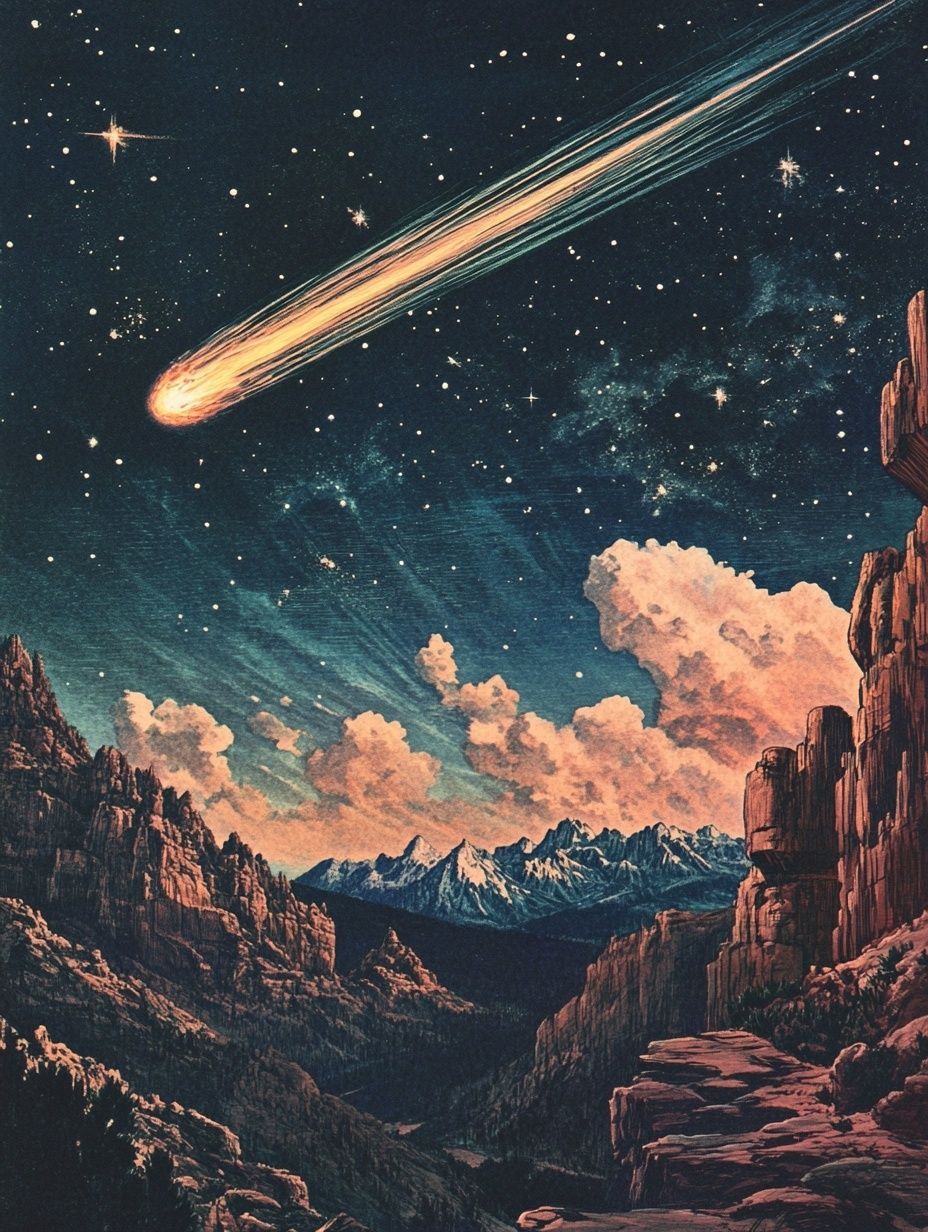
If a soul manages to break free, the angry Deh-oh-niot turns it into a "fire stone" (meteor) and throws it back to earth to be imprisoned forever. When a comet appears in the sky, the Iroquois say it is Deh-oh-niot spreading his tail to hunt.
The Face in the Water and the Death Dance
A young woman named Ah-ne-ah went to a spring at noon, a dangerous time when the protective spirits leave.
She saw a beautiful face in the water and was pulled in by Och-do-ah, the Bat spirit of the night. She was dragged to the underworld where she saw witches and the dead performing a frantic dance.
She was rescued by Oh-swe-da, the Spirit of the Spruce Tree, who brought her back to the surface.
Ah-ne-ah returned to her people and taught them the dance she had seen, known as the Oh-gi-we (Death Dance). This ceremony is performed to release the spirits of the dead from the influence of witches.
Soon after, Ah-ne-ah vanished from her lodge, leaving behind only two feathers—one from an owl and one from an eagle—as a sign that she had passed on.
Ot-to-tar-ho, The Tangled
Ot-to-tar-ho was originally a gentle Onondaga chief. One day, he killed a beautiful but poisonous bird. The poison entered his brain and drove him insane. He became a terrifying monster; his body grew crooked, and living snakes grew from his head instead of hair. His mind became so powerful he could kill people with just a thought, and he ruled his people with fear and cruelty.
Hiawatha wished to unite the tribes to save them from destruction, but Ot-to-tar-ho opposed him. Eventually, with the help of a powerful hymn and wampum beads, Hiawatha was able to soothe the mad chief. He combed the snakes out of Ot-to-tar-ho's hair and restored his sanity. Ot-to-tar-ho then became the first presiding chief of the new Iroquois Confederacy.
I'm always fascinated by the origin myths of different cultures. Although I tend to focus the content of Mythfolks more on other parts of folklore, these stories of mythology offer incredible insight into how people in the past made sense of the world.
Don't forget to check out
more US folklore below!
Article sources
- Converse, Harriet Maxwell. Myths and Legends of the New York State Iroquois. Edited by Arthur Caswell Parker. New York State Museum Bulletin 125. Albany: University of the State of New York, 1908
Explore more North American folklore