
Pecos Bill: the fakelore tall tale king of the cowboys
In this article:
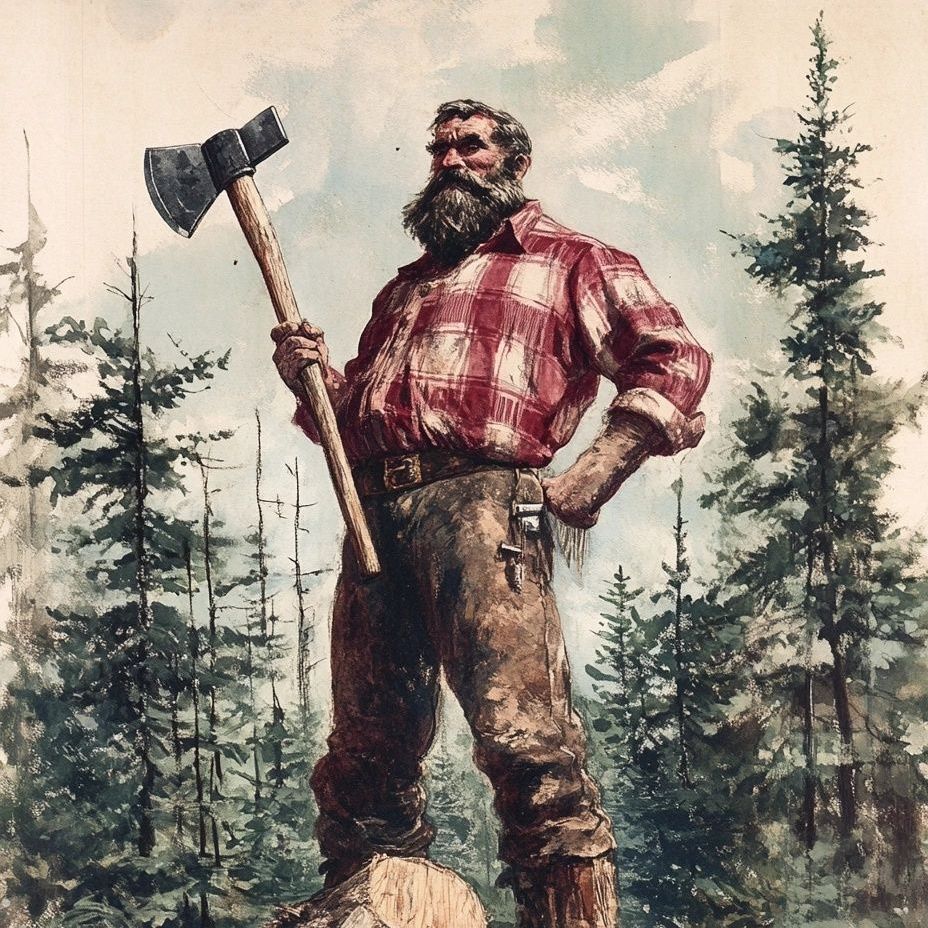
The lumberjacks had Paul Bunyan. And the cowboys had Pecos Bill.
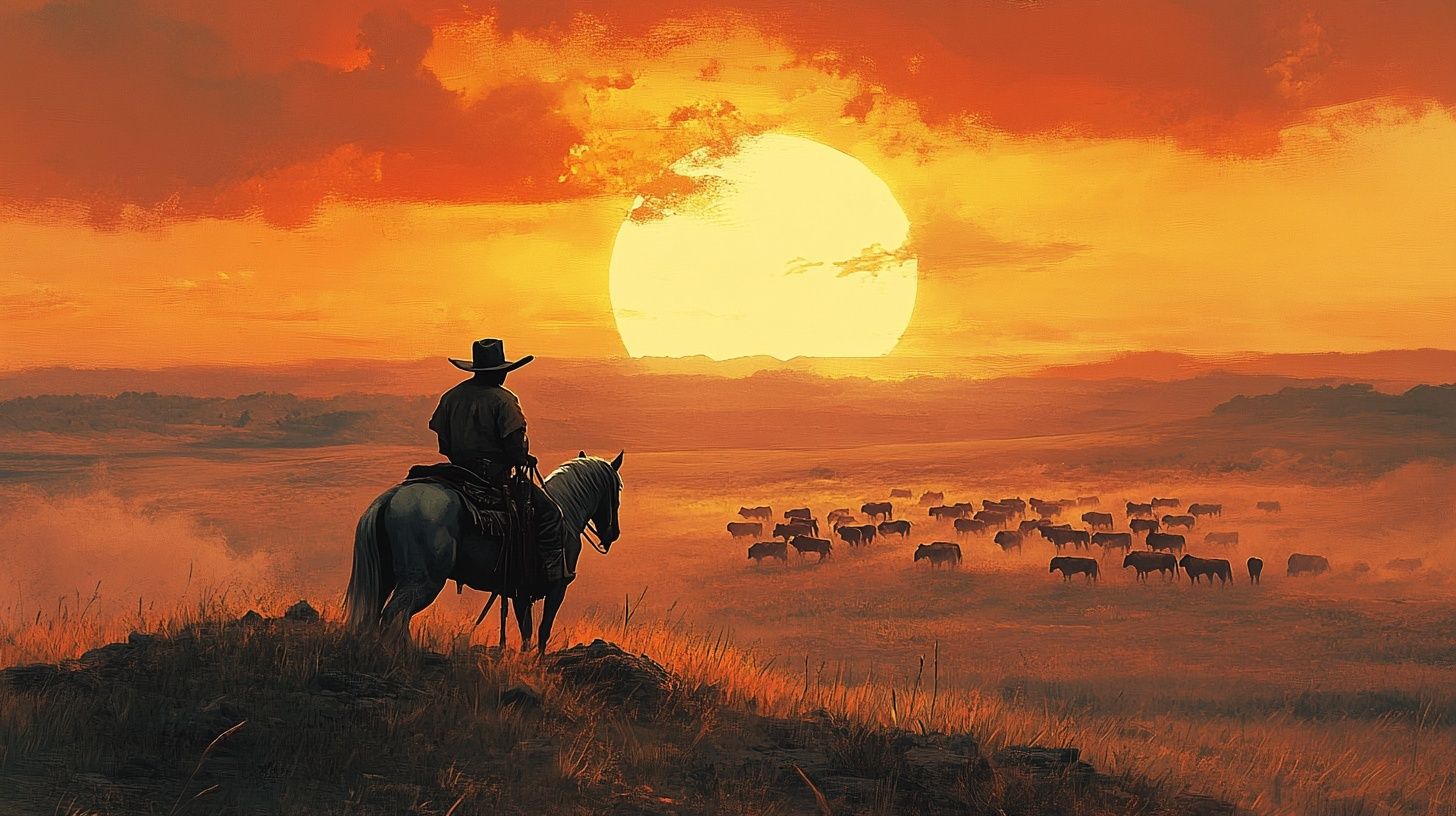
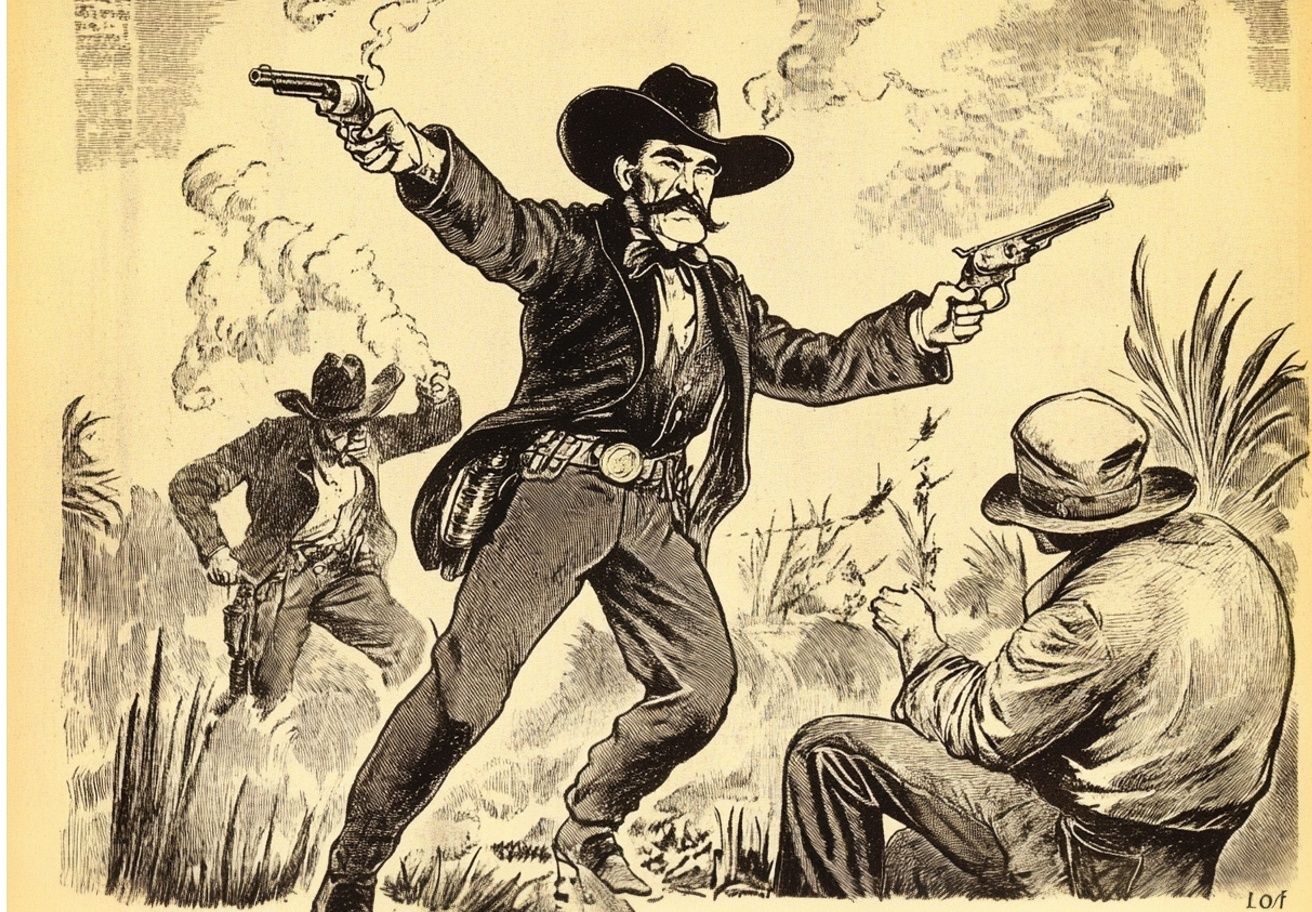
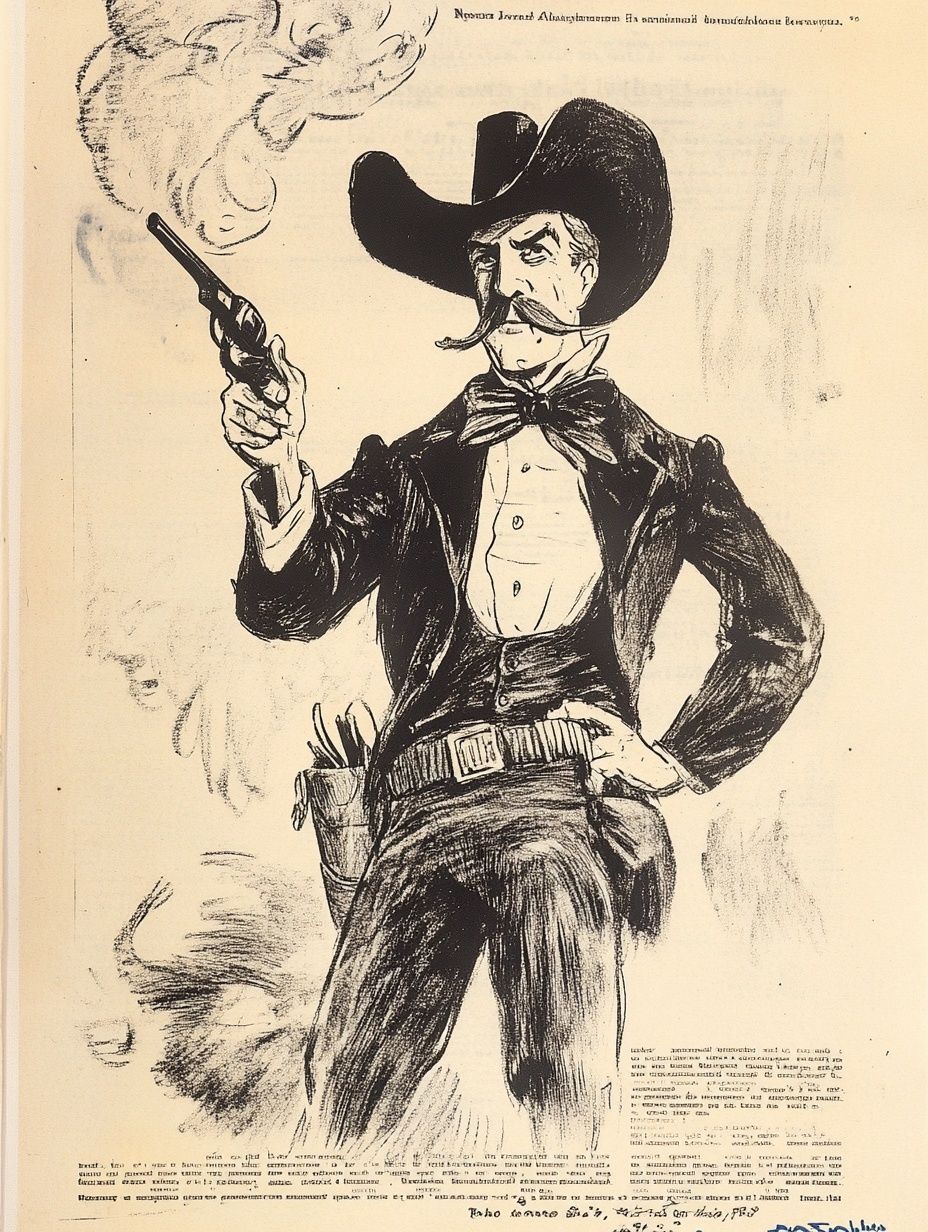
Pecos Bill is the American Southwest (and primarily Texan folklore's) ultimate avatar - a larger-than-life figure of who embodies the crushing heat, the vast distances and the wild independence of the frontier.
But, in the realm of American tall tales, Bill also occupies a unique and controversial space in folklore studies: he is the primary example of “Fakelore.”
So who was Pecos Bill really, and how did the stories about him actually emerge?
Read on to find out, plus some of the best and more obscure tall tales about this frontier hero.
Published: 19th Jan 2026
Author: Sian H.
Folklore vs. fakelore: the Pecos Bill paradox
The idea that folklore might be fake seems almost paradoxical - folklore stories can become "true" when sourced from only a handful of people, even if not recognized by the masses.
But "authentic" folklore arises organically from communities and is passed down (mostly orally) from generation to generation, often changing with every telling.
Pecos Bill, by contrast, has a specific birth certificate. He's credited as the invention of the writer Edward “Tex” O’Reilly, who published the first stories in The Century Magazine in 1917.
O’Reilly had claimed these tales were "sung for generations" by cowboys, but historians like Richard Dorson argued they were manufactured for commercial gain - thus the main distinction of fakelore from "real" folklore.
And yet, the public loved Bill so much that they enthusiastically adopted him. As the stories were retold and details changed, this "fake" character turned into a genuine legend through collective storytelling.
So now he exists as a popular folklore character, albeit one that didn't emerge as naturally as other folklore tales (this is generally true for a lot of tall tale characters when commercial objectives got involved).
The following stories and details come from the original O’Reilly canon and also include some additional, more obscure story details from other mid-20th-century texts.
The origins of Pecos Bill
So no, Pecos Bill wasn't a real man, though O'Reilly likely used parts of real frontier legends as inspiration for his own stories.
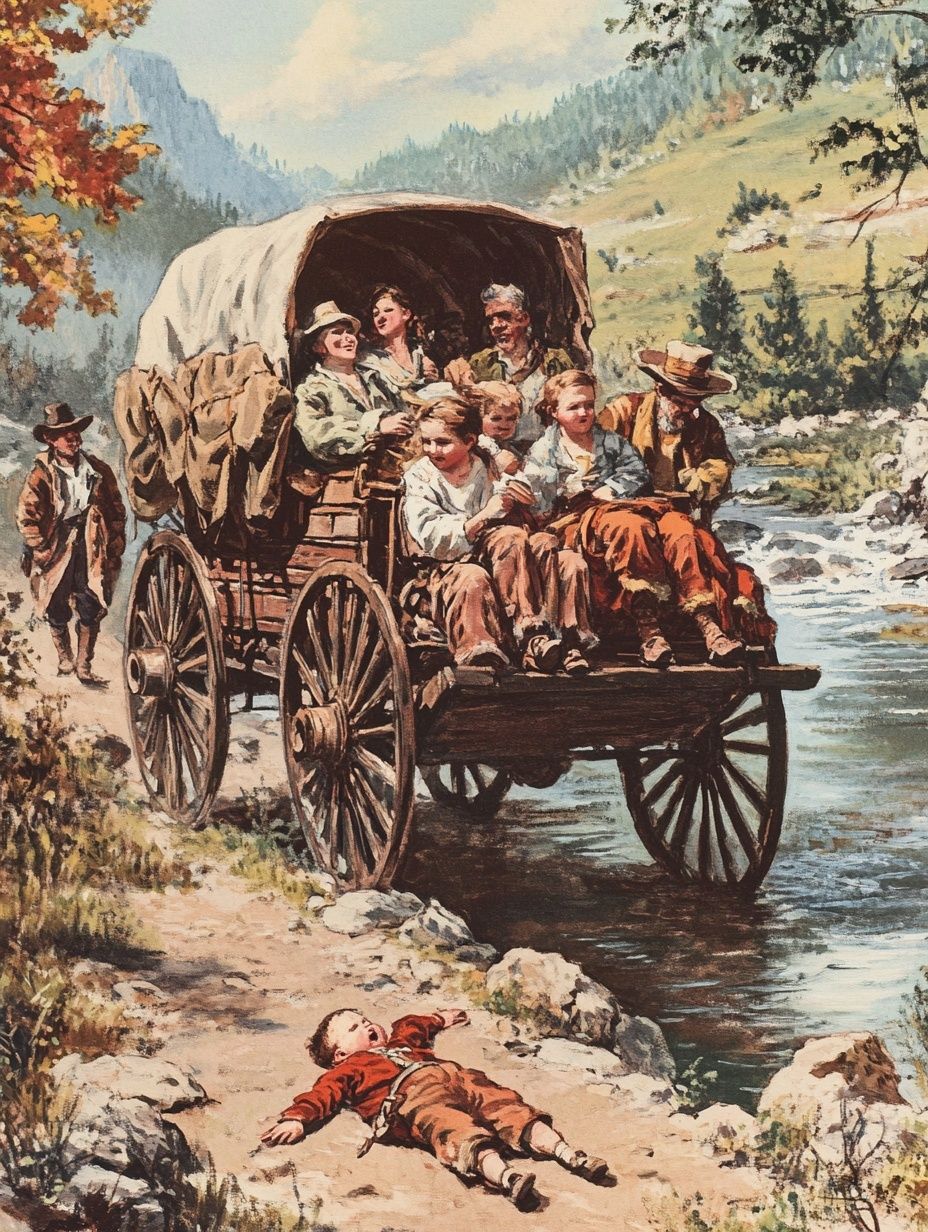
In the standard O’Reilly biography, Bill's story begins with his pioneer family moving west because their neighbors got within fifty miles - a situation his father deemed "too crowded."
Bill was a prodigy of toughness; he was weaned on moonshine and cut his teeth on a Bowie knife.
But his life changed forever at the Pecos River. As the wagon jolted across the broken ground, the infant Bill fell out. His family, having so many children (16 or 17), "didn't miss him for four or five weeks" and left him behind.
Bill was subsequently adopted by a pack of coyotes. [Note: While O'Reilly simply says he grew up with coyotes, a later story specified that he was found by a wise coyote named Grandy, who gave him the name "Crop Ear".]
He learned their language, hunted with them and mastered the art of killing deer by running them to death on foot.
He fully believed he was a "varmint" until age ten, when a passing cowboy challenged his identity. Bill argued that he must be a coyote because he had fleas and howled at the moon. The cowboy countered that Bill lacked a tail.
Upon checking and finding no tail, Bill conceded he was human and agreed to rejoin civilization.
The darker details of this "civilized" outlaw
While Disney and other later versions softened Pecos Bill into a wholesome hero, O'Reilly's original text defined him as a "bad man" who engaged in extreme violence and criminal innovation. A proper Texas outlaw!
Career as a criminal inventor
O'Reilly credits Bill with inventing the technology of violence.
- Crimes: Bill is explicitly credited with inventing "train-robbin’ and most of the crimes popular in the old days of the West".
- Theft: While he didn't invent cow-stealing (O'Reilly notes that was "discovered by King David in the Bible"), Bill is credited with "improving on it".
- Weapons: He invented the six-shooter to facilitate his trade.
Violence and "civilization"
The original text paints a grim picture of Bill's impact on the demographics of the West. Before moving to new territory, Bill had "killed all the bad men in west Texas", wiped out indigenous tribes and had eaten all the buffalo.
But the text also describes Bill as having a "tender heart". For example, he refused to kill women, children, or tourists "out of season".
Furthermore, he prided himself on being "too civilized" to scalp his victims. Instead, he would "skin them gently and tan their hides". What a jolly good fellow!
Both of these points are an explicit nod to the exaggerated and unbelievable nature of the tall tale format given that these actions could hardly be considered to equate to a "tender heart"!
After getting rid of the things that irked him in West Texas, Bill sought a new challenge. He asked an old trapper where he could find the "hardest cow outfit in the world," specifically requesting a "hard herd of hand-picked hellions that make murder a fine art".
Or in other words - where can I find my gang.
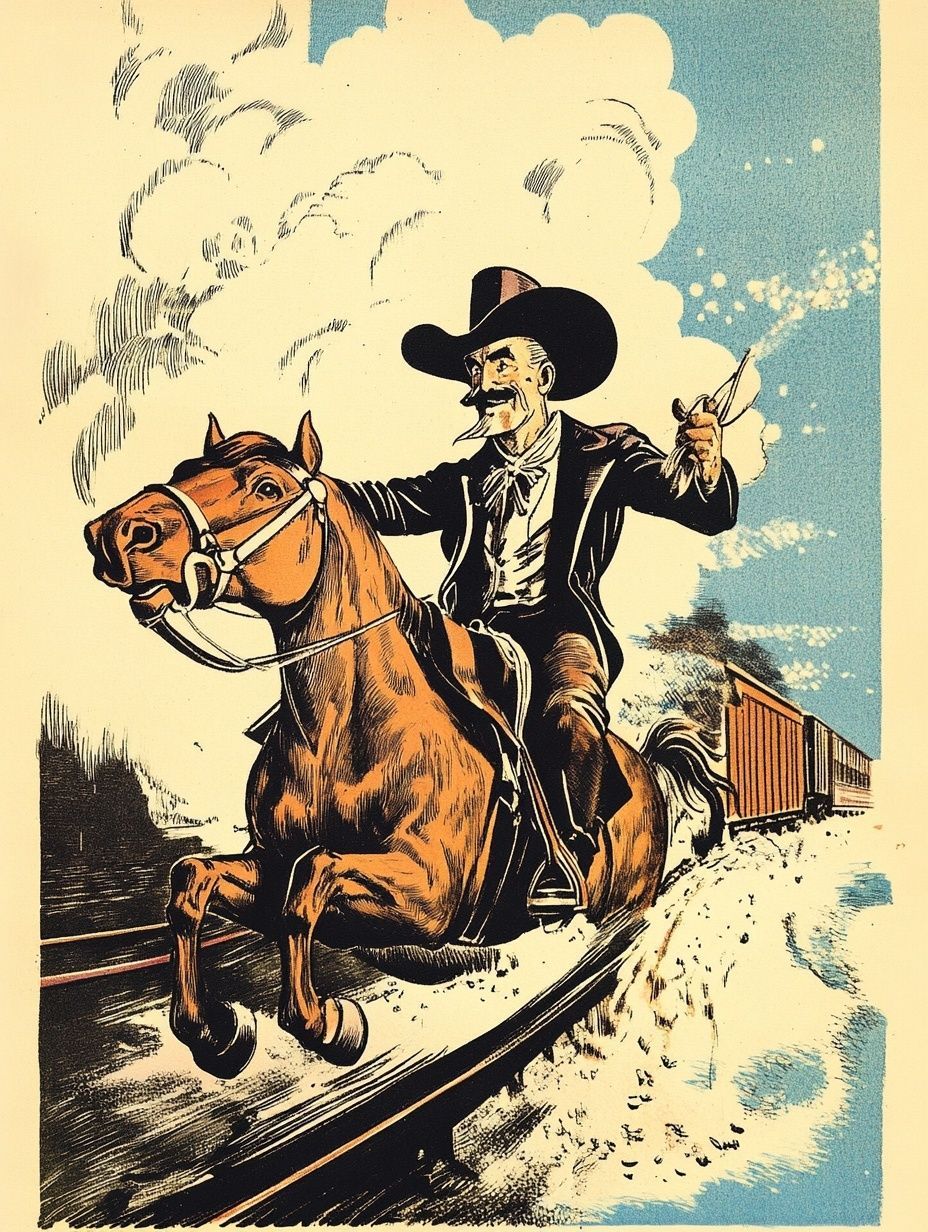
Establishing his outlaw gang
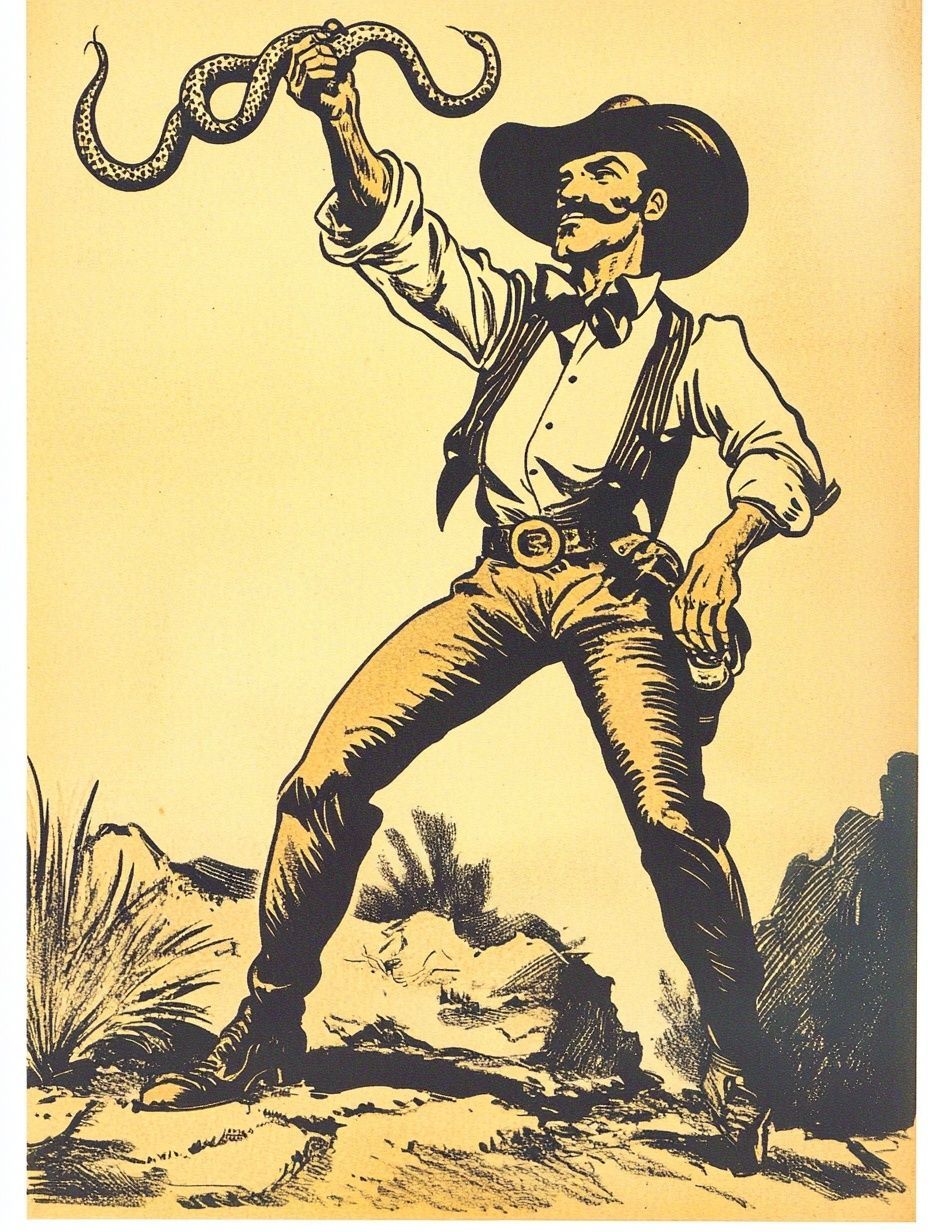
Bill began the journey on his horse, but the animal stubbed its toe on a mountain and broke its leg, forcing Bill to carry his saddle and hike.
The rattlesnake whip
A ten-foot rattlesnake blocked his path, eager for a fight. To be fair, Bill allowed the snake the first three bites before attacking. He "frailed the pizen out of him" - or in other words, he hit the snake so hard and so many times that it lost its ability (or will) to bite him.
Bill then carried the snake in his hand, spinning it in loops at Gila monsters as he walked. [Note: A later story gave this snake a specific identity, "Granddaddy Rattler," and claim the fight lasted an hour.]
The mountain lion
Fifty miles later, a massive mountain lion - weighing more than three steers and a yearling - jumped Bill from a cliff. Bill fought the lion until the animal shouted, "I'll give up, Bill. Can't you take a joke?".
Bill saddled the lion and rode it the rest of the way, using the rattlesnake as a quirt (whip) to spur the cat on.
[Note: In a later story, this lion is upgraded to a "Wowser" - a mythical cross between a mountain lion and a grizzly bear.]
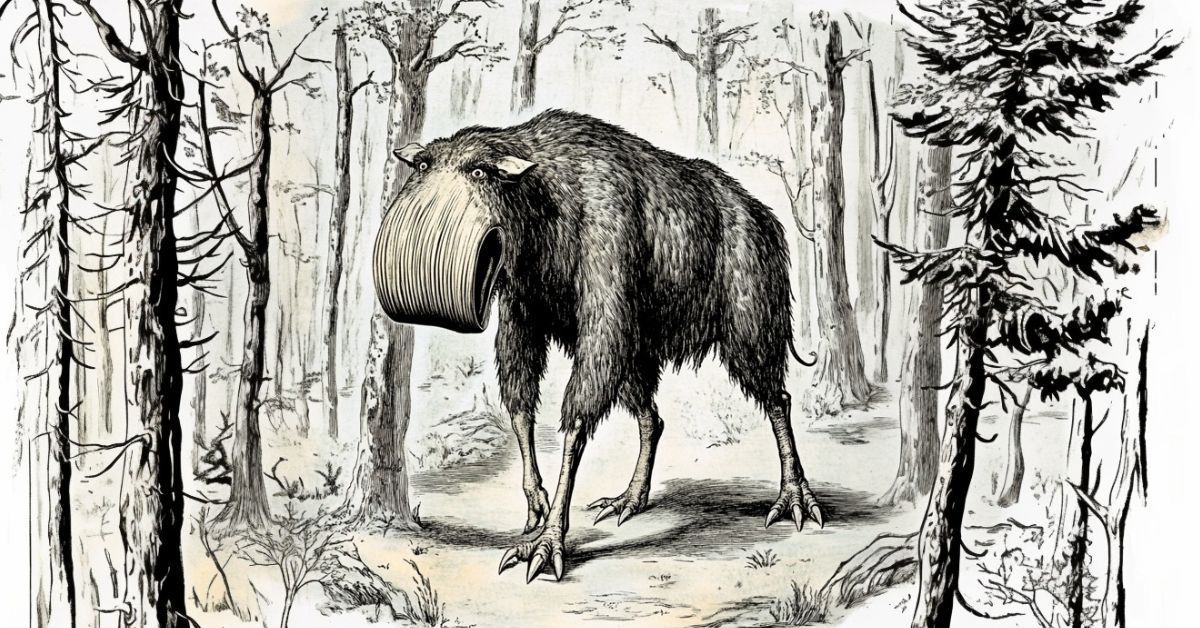
For more mythical tall tale creatures make sure to discover the fearsome critters of the lumber woods here.
Taming the hellions
Bill arrived at the outlaw camp riding the screeching lion and spinning the singing rattlesnake. He walked to the fire, grabbed the lion by the ear to sit it back on its haunches and looked over his ready-made gang. [Note: While O'Reilly left the gang unnamed, later stories added more detail calling them the "Devil's Cavalry" hiding in "Hell's Gate Gulch".]
Hungry from his trip, he scooped boiling beans out of the pot with his bare hands and washed them down with gallons of boiling coffee. He finished the meal by wiping his mouth with a handful of prickly-pear cactus.
When he asked, "Who the hell is boss around here?", a giant man - eight feet tall with seven pistols and nine Bowie knives - stood up, took off his hat and replied: "Stranger, I was; but you be".
[Note: Later tales named this giant "Old Satan" and claimed he fainted upon seeing Bill.]
Shaping the West - or how Pecos Bill made the Grand Canyon
With his new gang, Bill staked out New Mexico and used Arizona to graze cattle.
Widow-Maker
It was during this time Bill acquired his famous horse, Widow-Maker. He raised the colt on a diet of nitroglycerin and dynamite. Bill was the only man who could ride him.
The cyclone ride
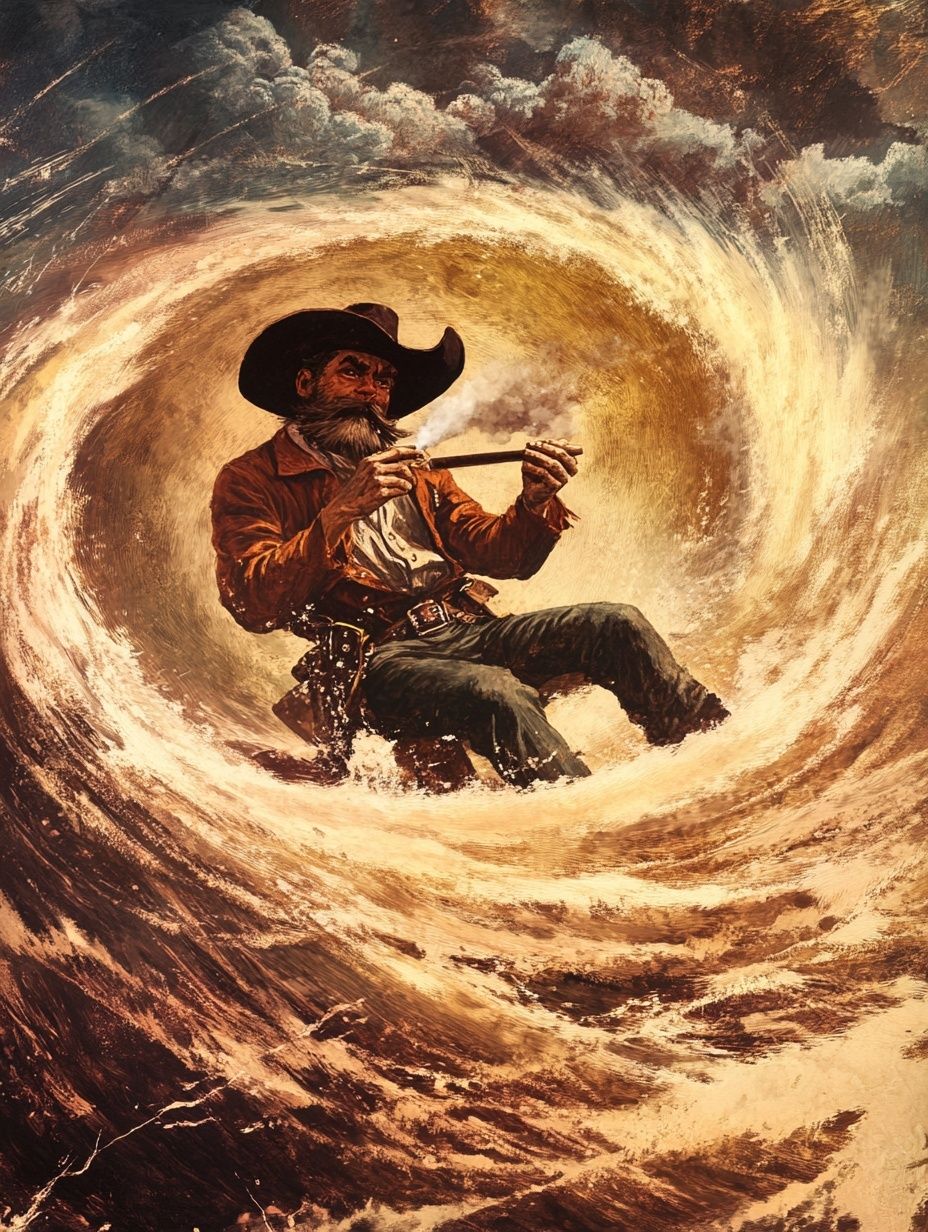
Maybe the most famous Pecos Bill story, this one said that he once bet he could ride an Oklahoma cyclone without a saddle.
He met the storm in Kansas, "eared it down," and climbed on. The cyclone attempted to throw him off, destroying forests across the Staked Plains and tying rivers into knots.
But Bill rode it across three states, rolling a cigarette with one hand the entire time.
- Grand Canyon: The cyclone eventually "rained out" from under him in Arizona, washing out the earth and creating the Grand Canyon.
- Death Valley: When Bill finally landed in California, he hit the ground so hard he created the basin known as Death Valley. The print of his hip pockets can still be seen in the granite there!
Business ventures & obscure feats
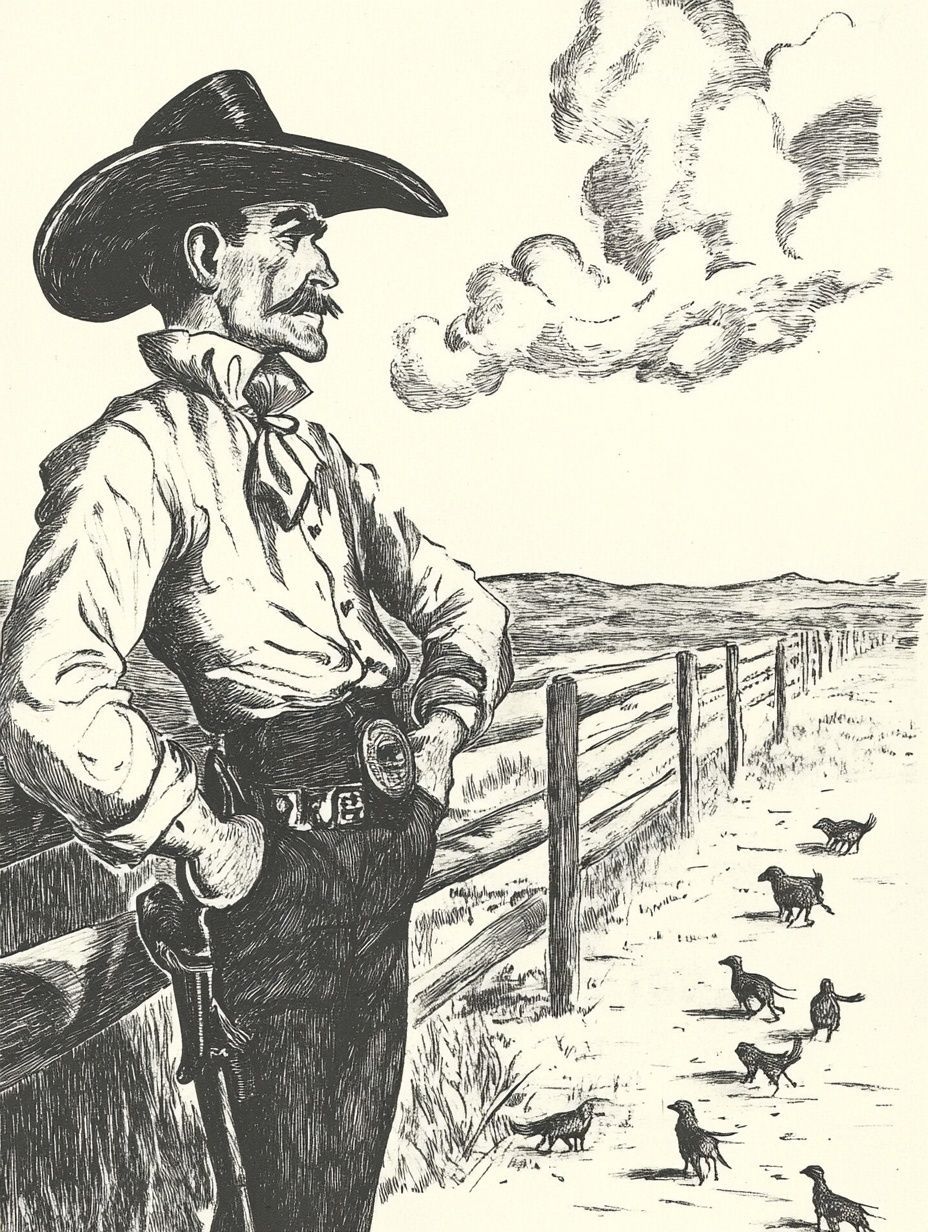
O'Reilly detailed several of Bill's stranger, less heroic business exploits:
- The wood contract: Bill took a contract to supply wood to the Southern Pacific Railroad. He hired hundreds of Mexicans to chop the wood, offering them 1/4 of the wood they hauled as payment. Since they had no use for the wood in the middle of the desert, Bill kindly "took it off their hands" for free, thus getting the work done for free.
- As an aside: Paul Bunyan tall tales feature similar less-than-upstanding stories about work and payment; although framed as a simple joke in tall tales, they function as satire - a deliberate dig at 'the man' and born from the real exploitation and poor working conditions that lumberjacks (and a majority of other laborers) endured.
- The prairie dog fence: Tasked with building a fence from El Paso to the Pacific, Bill showed his knack for ruthless efficiency. He rounded up a herd of prairie dogs and set them loose, knowing their natural instinct was to dig. As soon as a dog finished a hole and settled in to make it a home, Bill evicted the tenant and jammed a fence post in its place. The public admired Bill’s genius; the prairie dogs had a different opinion, but as the story goes, nobody cares what a prairie dog thinks.
- Norther the squatter-hound: On a hunting trip, Bill used a specialized dog named "Norther". The dog would run down a buffalo and hold it by the ear while Bill skinned it alive. They would then release the buffalo to grow a new hide. The scheme worked in summer, but the buffalo tended to catch colds and die in winter.
The tragedy of Slue-Foot Sue or the loves of Pecos Bill
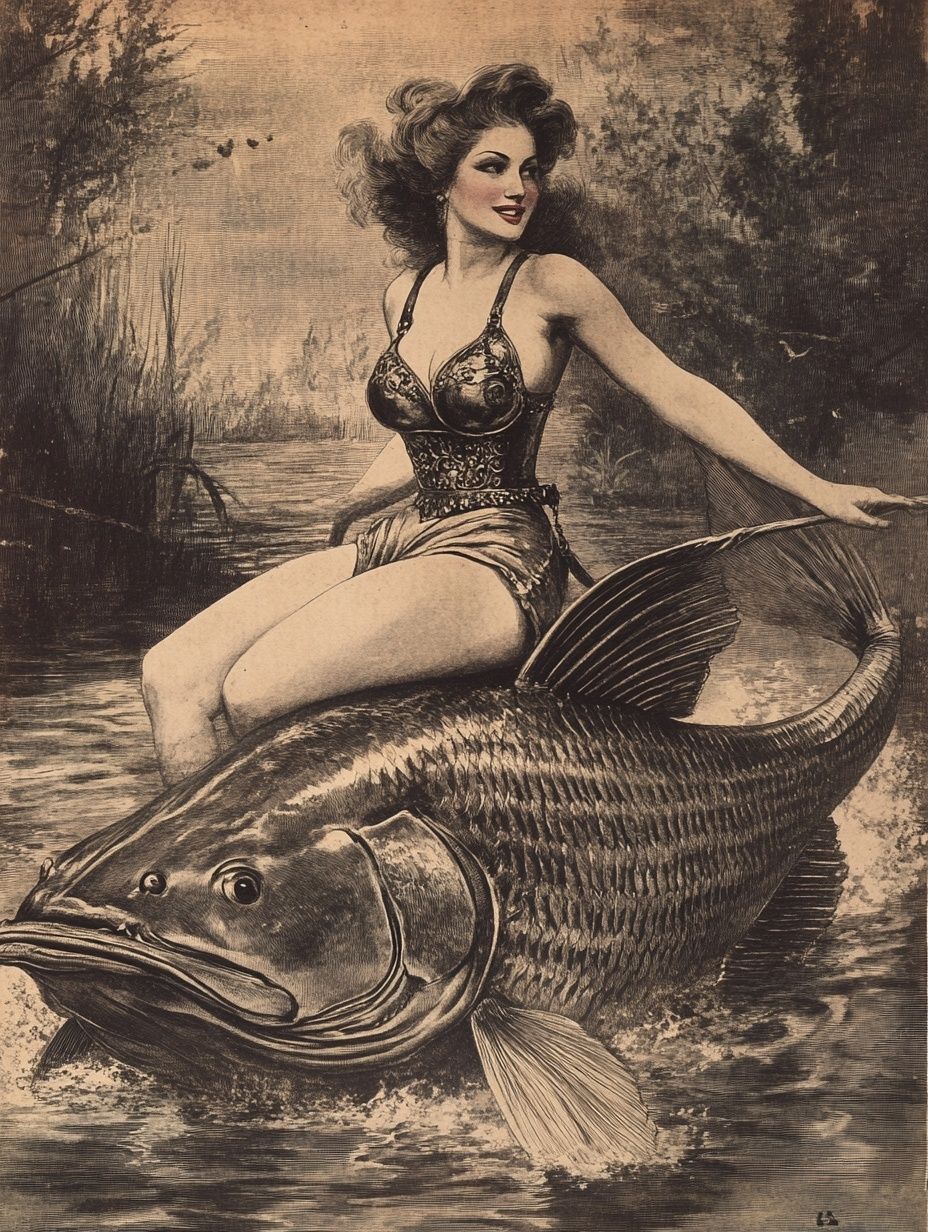
Bill eventually fell in love with Slue-Foot Sue, a woman he first saw riding a catfish down the Rio Grande. She was wearing a bustle made of steel springs - a fashion of the time.
On their wedding day, Sue insisted on riding Widow-Maker. The dynamite-fed horse threw her so high she had to duck to avoid hitting the moon.
When she landed, her steel bustle acted as a spring, bouncing her back into the sky. She continued to bounce for three days and four nights.
Bill frantically threw kisses to her as she wept, but eventually, he had to shoot her to keep her from starving to death. O'Reilly notes this was the great tragedy of Bill's life, and though he married many women afterward, none replaced Sue.
Baby the coyote
An even more bizarre later tale from 1943, Baby was a "willful," giant female coyote - Bill's ultimate rival in speed and wit. For years, Bill chased her across Texas. When bullets and physical traps failed, he mixed a "Hell-Broth" to catch her. This cocktail included:
- Whiskey, Rum, Bourbon, and Gin.
- "Cream dess Violets" and "Liquor dess Peaches."
- Hair tonic, catsup, and Eau d’Amour perfume.
When Baby drank the mixture it was so potent it literally "took her hide off". Bill was sad but he'd also promised the hide to a woman named Kankakee Katie in exchange for marriage. When he returned with it, Katie had already run off with another man.
Bad luck Bill.
The death of a legend
Pecos Bill has a couple of endings:
- The "rust" death: In O’Reilly’s original, whiskey lost its kick, so Bill started drinking strychnine mixed with fishhooks. The rust from the hooks eventually gave him fatal indigestion.
- The "laughing" death: In another story, he saw a tourist from Boston in a mail-order cowboy suit asking naive questions about the West. Bill found the sight so funny he laughed himself to death.
- The "fading" death: Heartbroken over the loss of Baby the coyote, Bill drank the remaining cup of his "Hell-Broth." He faded away, leaving his clothes standing upright for a moment before they collapsed to the floor.
He might not have started out organically, but the tall tales of Pecos Bill are firmly ingrained in US folklore and culture and give a snapshot of the American frontier's psyche in the early 20th century.
While modern retellings often soften the edges for children (yes you, Disney), Edward O'Reilly's original 1923 text presents a character defined by violence, isolation and a very specific moral code.
From his upbringing among coyotes to his crazy cyclone-riding and other feats, the stories of Pecos Bill embodied the raw, often brutal humor of the West - a place where nature was something to be beaten into submission and where the only thing tougher than the landscape was the people who survived it.
So whether he died from drinking fish hooks or laughing at a tourist, his legend remains the ultimate tall tale: a story too big to be true, but too entertaining to be false.
Check out more tall tales and other folklore below!
Article sources
- O'Reilly, Edward. The Saga of Pecos Bill. Century magazine, 1923.
- Brickell, Herschel, ed. O. Henry Memorial Award Prize Stories of 1943. Assisted by Muriel Fuller. Twenty-Fifth Anniversary Edition. Garden City, NY: Doubleday, Doran and Company, 1943.
- Fenner, Phyllis R., ed. Cowboys, Cowboys, Cowboys: Stories of Round-ups and Rodeos, Branding and Bronco-busting. Illustrated by Manning de V. Lee. London: Chatto and Windus, 1953.