
Sun folklore & mythology: legends, superstitions and rituals from around the world
Today, we define the sun as a physical object - a star approximately 91 million miles away that governs our seasons and anchors our planetary system through the laws of gravity.
But in folklore, much like the moon, our ancestors saw the sun as a living, breathing personality and often regarded it as a kind of hero or as the watchful eye of a supreme god.
And as time went on, those early beliefs, those superstitions, rituals and legends continued to evolve.
Let's take a look at how this celestial body fit into the imagination of the people of the past and how they tried to explain those little mysteries of the sky before science could.
Published: 19th Feb 2026
Author: Sian H.
Sun myths in global mythology
It's no great surprise that most ancient cultures believed that the world began in darkness or semi-darkness and had various creative ways for explaining its presence.
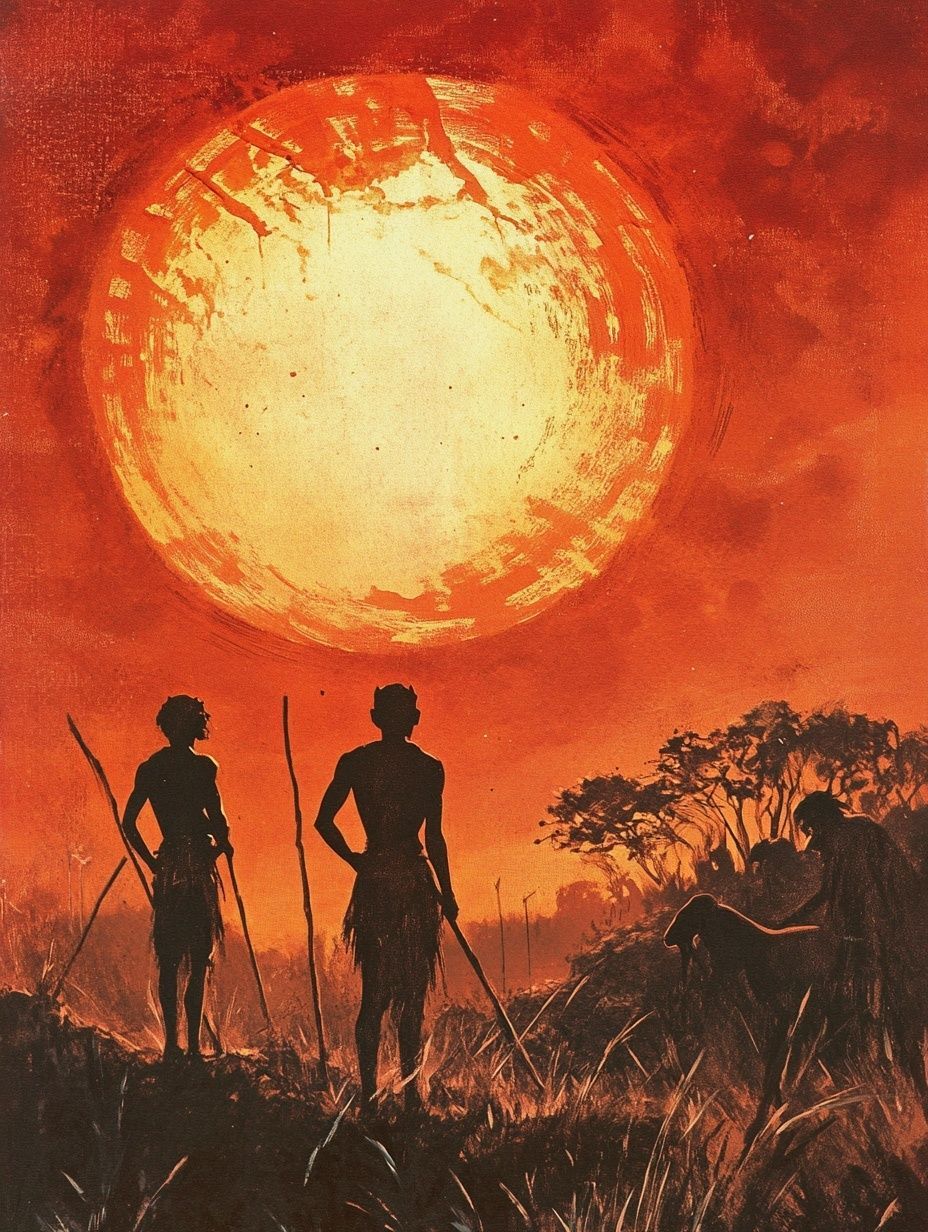
The common thread across these stories is the idea that the sun wasn't always there, but was manufactured, found or stolen to solve the practical problem of lighting:
- Different North American tribes described it as a ball of grease shaped by a coyote, a disk painted yellow by a tribal council and enlarged until it was bright enough, or a piece of fire stolen by a wolf.
- In Africa, the Bushmen told a story of the sun originally being a man on earth who emitted light from his armpit until children threw him into the sky to dry their rice
- Pacific islanders variously described it as an emu's egg tossed upward or the upper half of a child squeezed into a ball.
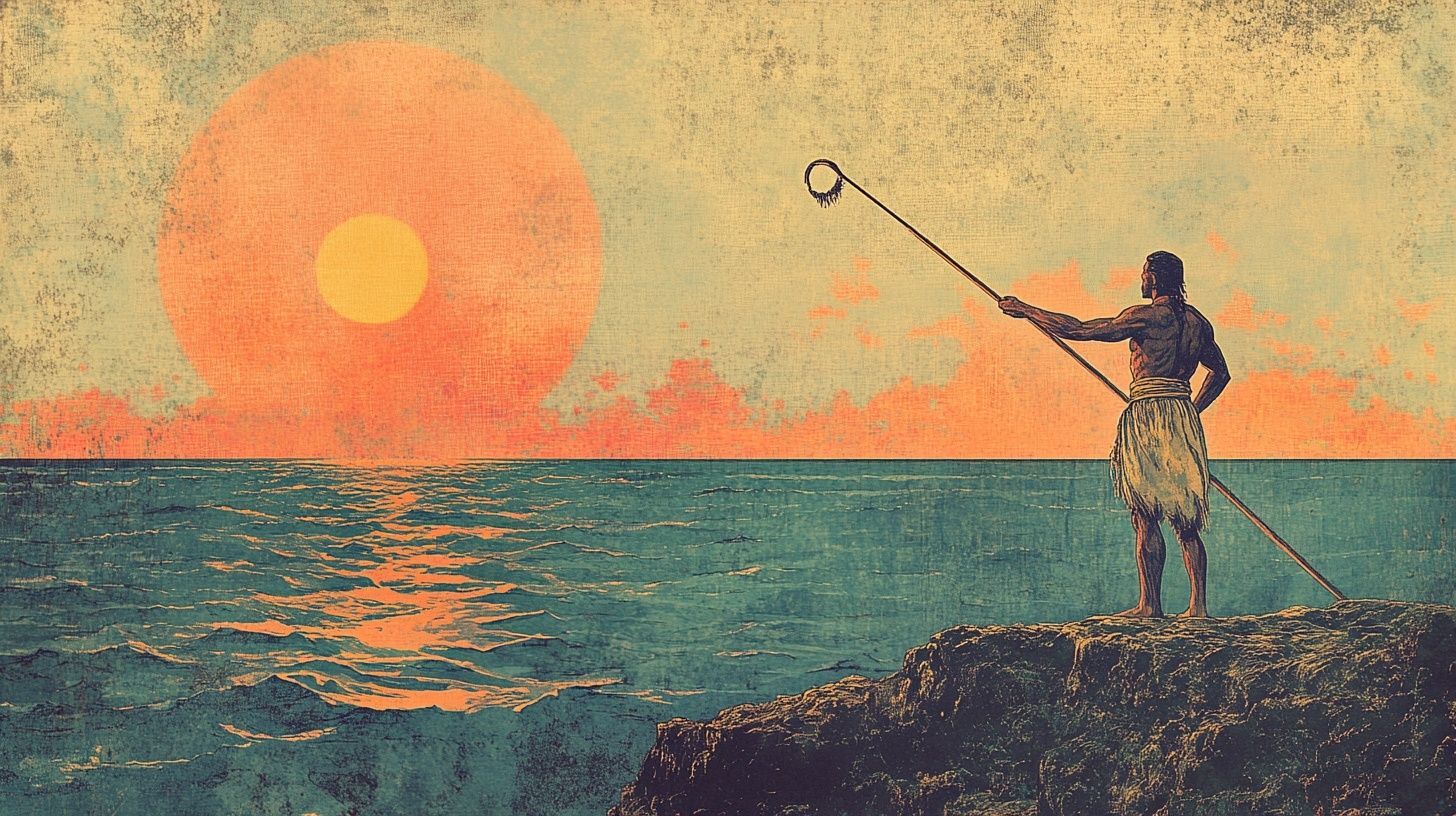
One of the most popular global themes was that of the "Sun-Catcher" which is found in sun myths all over the world, though it's most famous in the legends of Polynesia.
The basic idea is that the sun once traveled across the sky much too quickly or erratically, leaving people with days that were too short to finish their work, build their houses or cook their food.
To solve this, a hero - most notably Maui in the Polynesian tales - decided to physically trap the sun. He set a strong noose at the edge of the world where the sun rose, caught it in his ropes and beat it into submission until it promised to travel slowly and steadily forever after, giving humanity the long daylight hours we have today.
The sun's relationship with the moon and stars in folklore
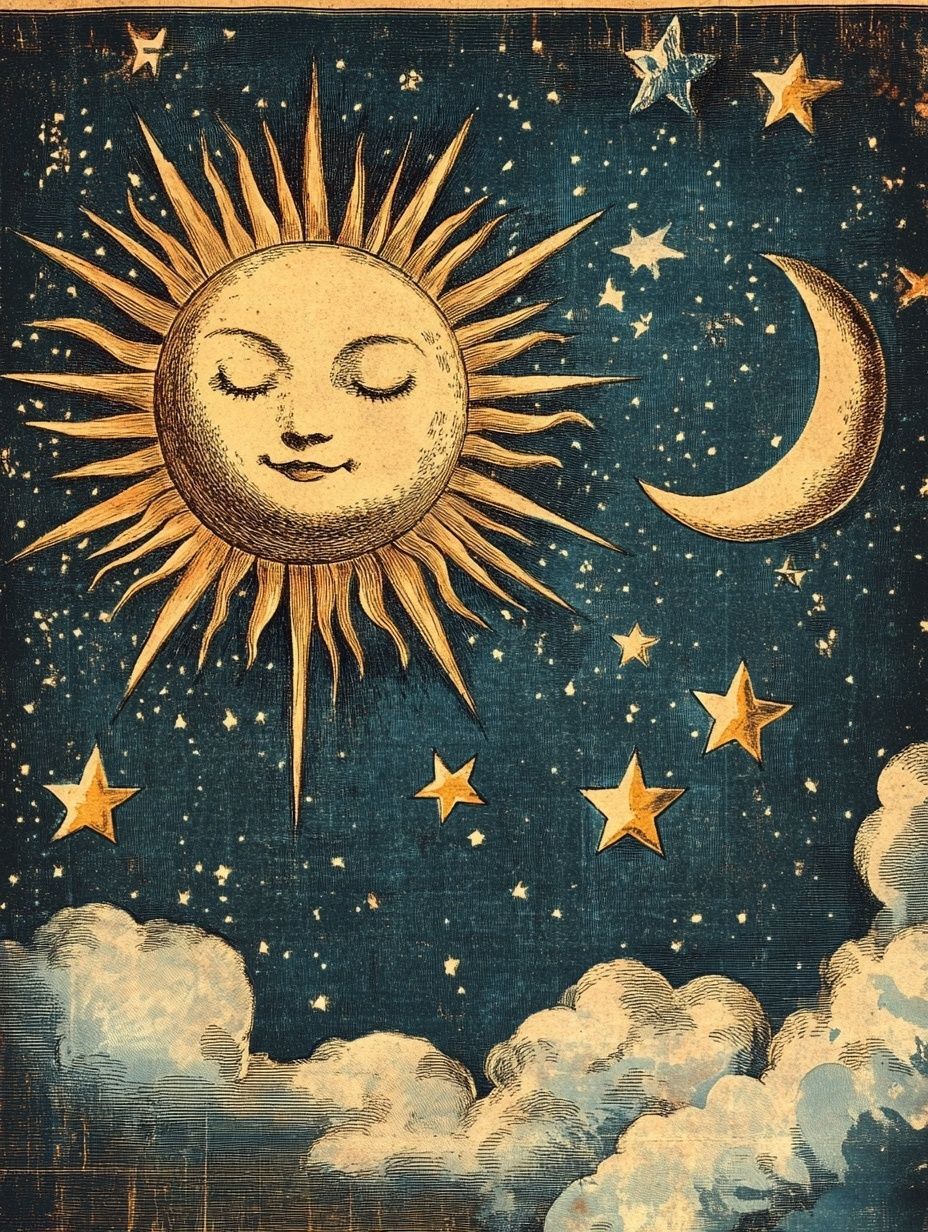
In other ancient myths, the sky was often viewed as a household and the sun was rarely alone.
In many cultures, the sun and moon were seen as husband and wife, though their specific roles varied.
In Central and South America, particularly among the Mexicans and Peruvians, they were a married couple, often called "grandfather" and "grandmother".
However, like the moon, the gender of the sun wasn't fixed; while often masculine, the sun was regarded as a woman by the Cherokee and Iroquois tribes and in German folklore, the sun was the wife (Frau Sonne - Mrs/Lady Sun) and the moon the husband (Herr Mond - Mr/Lord Moon).
The stars were often explained as the children of this celestial couple.
One myth from Malaysia said that the Sun and the Moon were both women, and the stars in the sky were their children. Fearing that mankind couldn't survive the intense heat of so many celestial bodies, the two women agreed to eat their respective star-children.
The Sun kept the pact and swallowed hers - which is why there are no stars seen during the day - but the Moon secretly hid her children instead.
When the Moon brought her star-children out of hiding that night, the Sun realized she had been tricked. Furious, she began an eternal chase across the sky to punish the Moon, occasionally getting close enough to bite her.
Superstitions and rituals about the sun
For the common person, the sun dictated the flow of daily luck and ritual.
There was a universal belief in the importance of moving "sunwise" (clockwise).
In Scottish Highland lore, you would have good fortune if you walked around a person three times in the direction of the sun (making the deazil), whereas moving "withershins" (against the sun) was an act associated with witches and bad luck.
This belief extended to household tasks. In parts of the United States and Canada (Newfoundland), it was thought that cake batter or custard must be stirred "with the sun" or it would curdle or fail to rise.
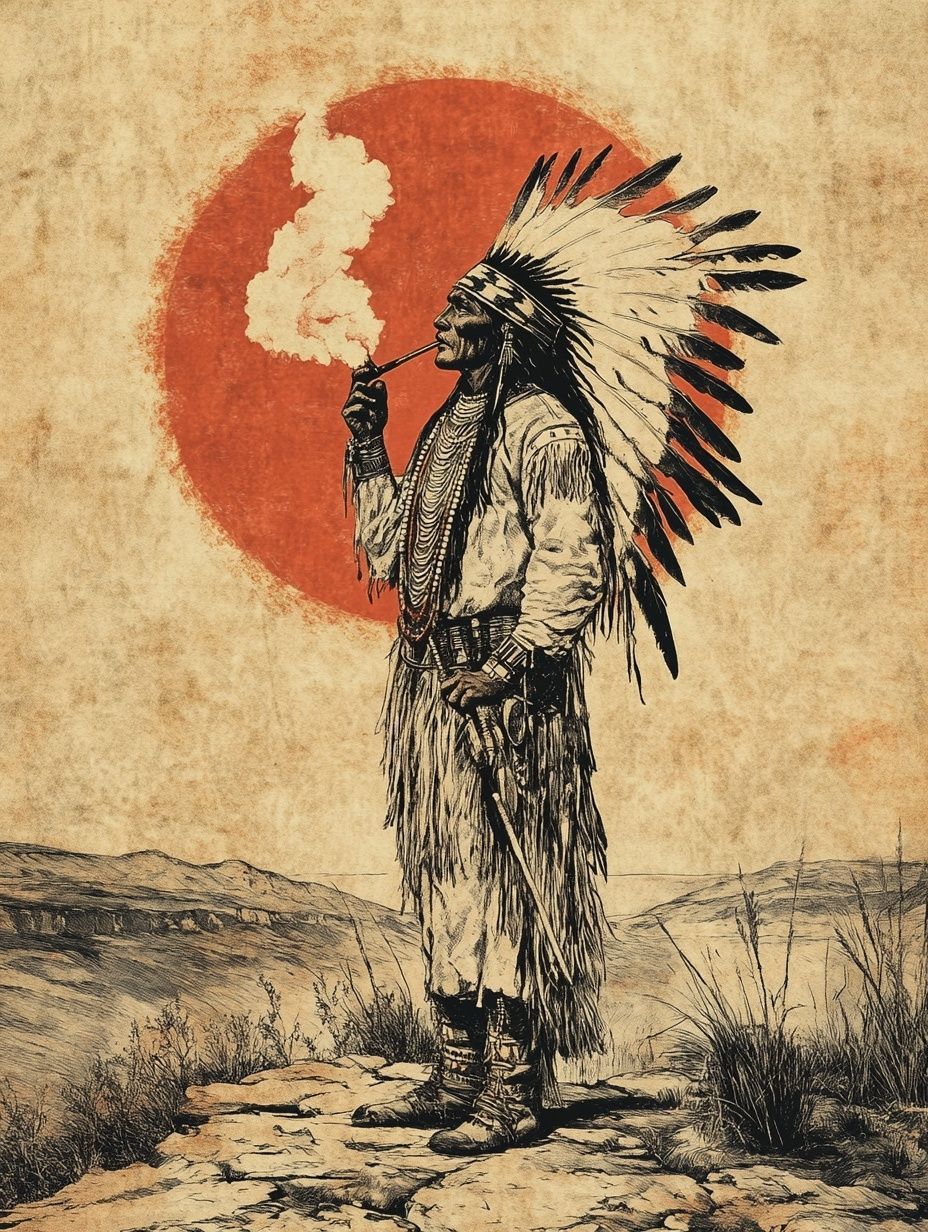
People also observed strict rituals of greeting. In ancient Greece, it was customary to kiss one's hand to the rising sun, while some Native American chiefs would smoke a pipe toward the sun each morning as a salutation.
The sun was also seen as a judge of truth; a German legend warned that the sun would punish liars by withdrawing its light from them personally, making the world appear permanently gloomy and dark to the perjurer.
Sun omens, dreams & divination
The sun was a primary source of omens. To dream of the sun shining bright and clear was a sure sign of incoming riches. While dreaming of a sun under a cloud foretold hardships and danger.
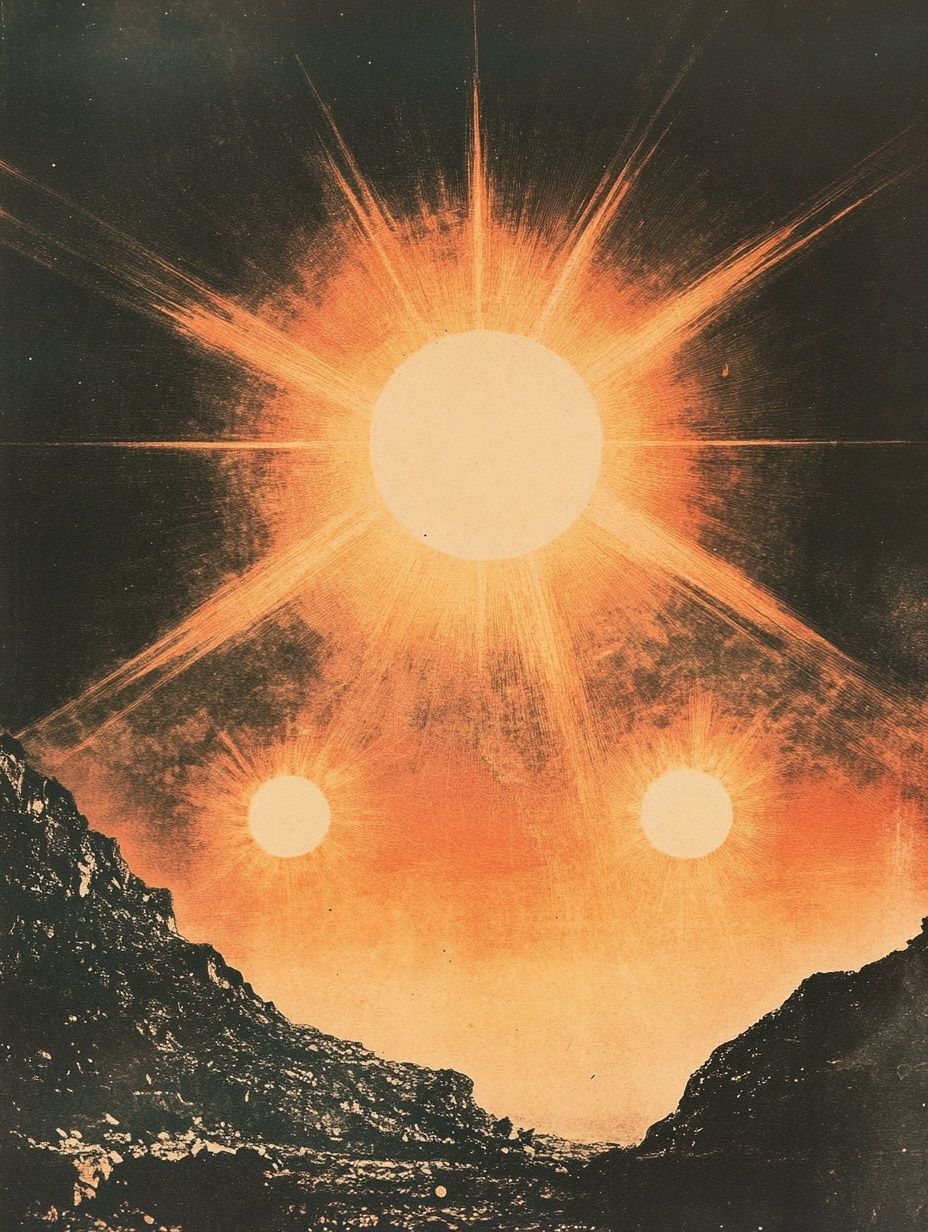
Unusual solar phenomena, such as the appearance of parhelia (also called "three suns" or sundogs), were interpreted as a warning of war. This odd illusion occurs when sunlight reflects and bends through hexagonal ice crystals drifting in high-altitude clouds , giving the appearance of multiple suns.
It was claimed these suns appeared just before Napoleon’s disastrous 1812 campaign in Russia (where his whole army nearly died).
Talismans made of gold or diamonds were also worn to attract the sun's favor, as these materials were often believed to be ruled by the sun and to give strength and courage.
The sun as a healer in folk medicine
The sun played a vital role in folk medicine.
- In Pomerania (now mostly Poland and Germany), a fever-stricken patient would face the rising sun and invoke it to "take the seventy-seven fevers from me".
- North American folklore suggested that a corn (or wen) could be cured by "rubbing it" with the sun.
- In India, rituals involving the sun were used to cure eye ailments. A charm involving a specific root, dug up on a Sunday morning after "inviting" the plant the previous evening, was used to cure corneal ulcers.
Sun festivals & the solstices
The turning points of the sun’s journey - the solstices - were marked by great "fire festivals" intended to encourage the sun.
To early people, the sun's return was a matter of survival; the ancient men of Greenland, for example, would climb the highest mountain tops at the winter solstice just to catch the first glimpse of the returning sun after thirty-five long days of darkness.
In Europe, the winter solstice was celebrated with the burning of the Yule log, a custom designed to rekindle the solar fire.
.
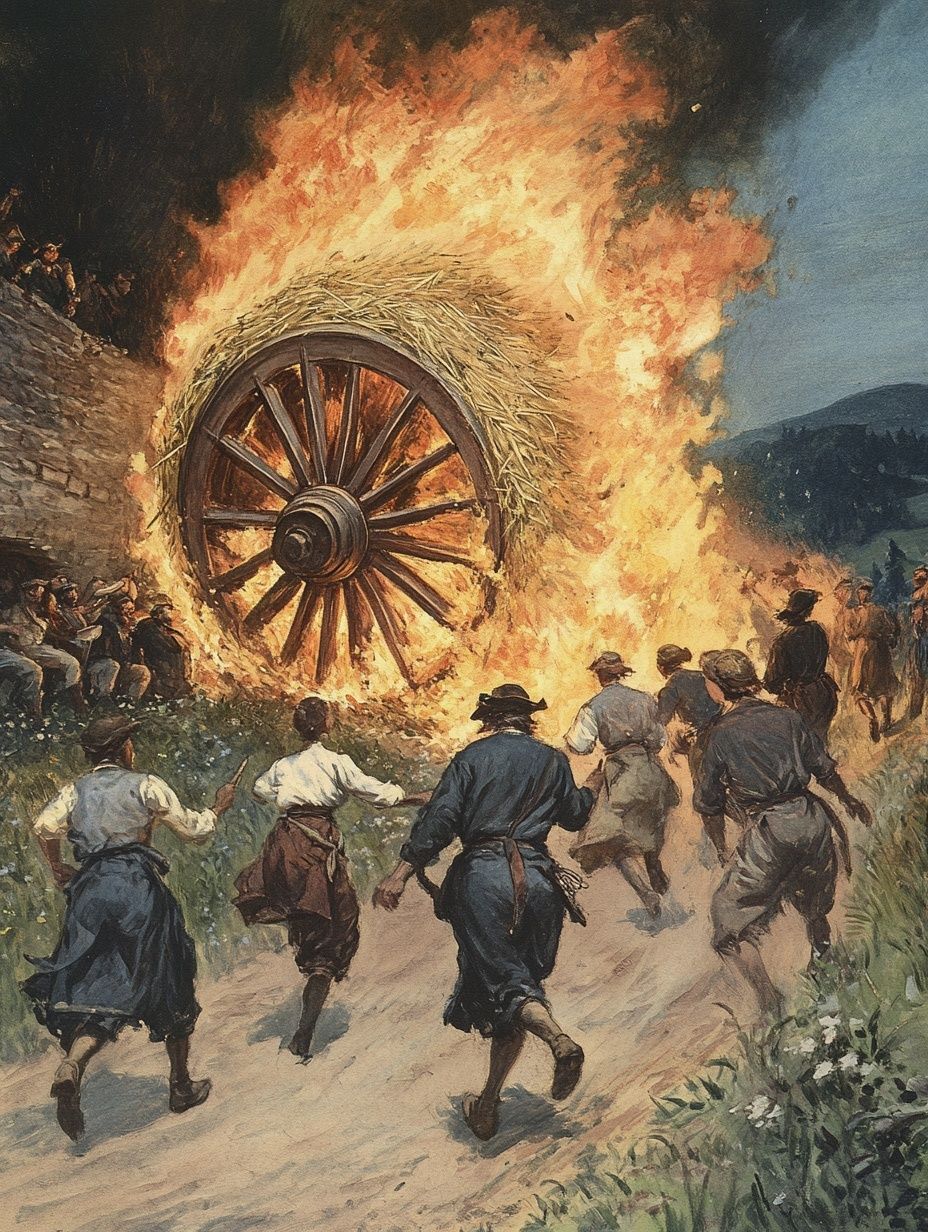
The summer solstice, or Midsummer, was celebrated with dramatic rites. In Germany, peasants would wrap a large wheel in straw, set it on fire and roll it down a hill into a river.
This fiery wheel represented the sun descending from its highest point in the heavens. If the blazing wheel reached the water before the fire went out, the people believed it was a sure sign of a good grape harvest and the townsfolk were rewarded with the right to collect white wine from the surrounding vineyards.
It was also common for people to dance around and leap through bonfires to ward off sickness and evil spirits, believing the fire possessed the sun's purifying power.
In Ireland, as the fires burned low, parents would lift their children across the glowing embers to ensure good luck for the coming year.
The fires also held promises of romance;
in Brittany, it was a popular belief that any maiden who danced around nine different midsummer fires before midnight would surely be married within the year.
The sun and the solar eclipse in folklore
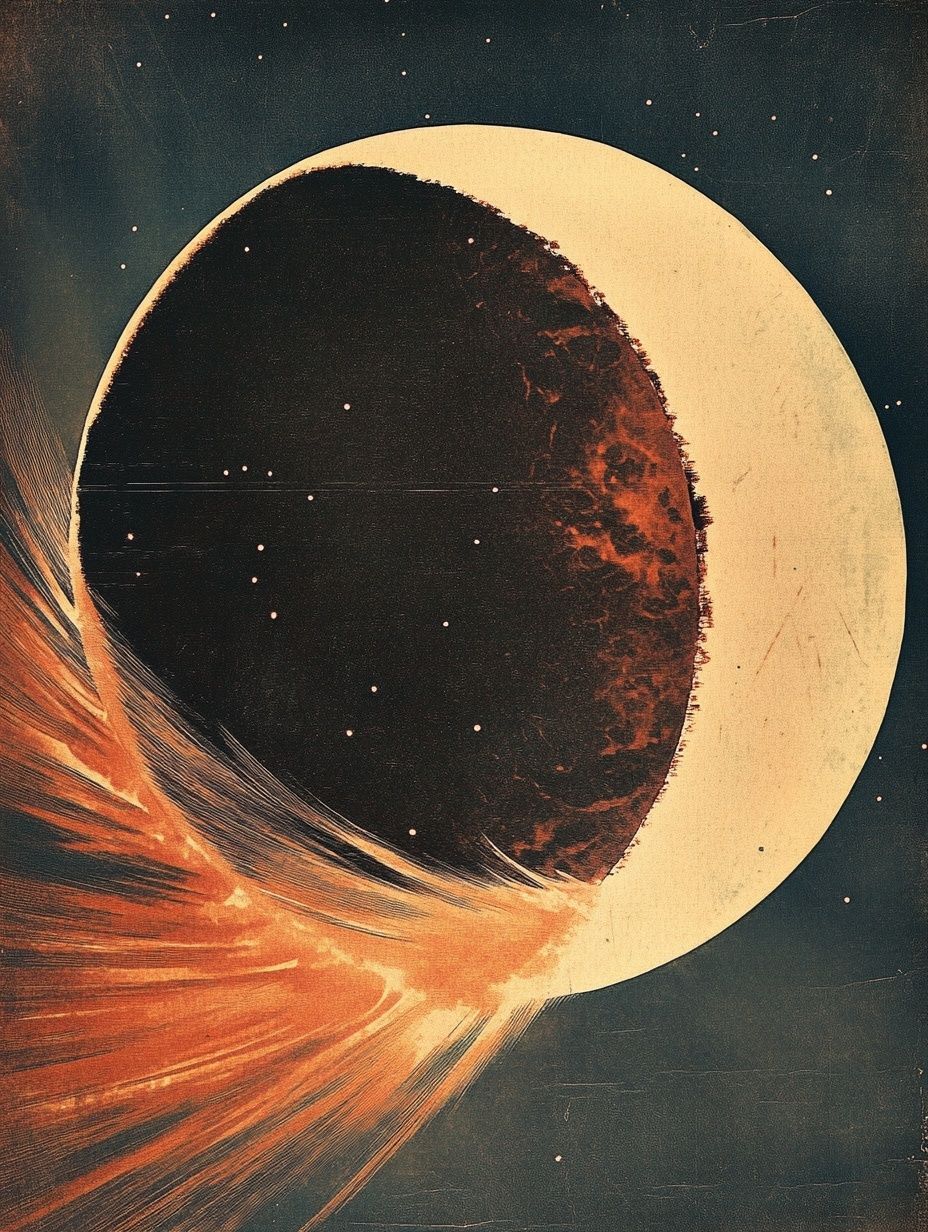
Like the lunar equivalent, perhaps nothing terrified early people more than an eclipse. In the solar version (where the moon passes between the earth and sun) it was universally viewed as the sun being attacked or eaten.
- The Hindu demon Rahu and the Mang woman: Ancient Hindus believed a four-armed demon named Rahu was decapitated by Vishnu after the sun and moon caught him secretly drinking the nectar of immortality. Rahu's immortal head was placed in the heavens, where it occasionally wreaked vengeance by swallowing the sun. Another Indian folk tale claimed the eclipse is the shadow of a basket carried by a low-caste Mang woman who chases the sun demanding a meal because Ram (a local army chief) killed her son; during an eclipse, people would give alms to the poor to appease her and release the sun.
- The Chinese celestial dragon: The Chinese reasoned that a prodigious, hunger-driven dragon roamed the heavens and held the sun fast between its teeth, attempting to eat it. To frighten the monster into letting go of its prey, the people would create as much noise as possible by beating drums and brass kettles, while others knelt to beg the dragon for mercy.
- The Persian fiends: The ancient Persians believed the eclipse was caused by two opaque, dark bodies - described as greatly powerful fiends and opponents of the sun - which moved below the luminaries. One was called the head and the other the tail and during an eclipse, they were said to have stood as a dark curtain temporarily hiding the sun's light from the world.
The sun isn't as prominent in folklore as the moon. And it was a lot to do with the light they did - or didn't - emit. During the day, the sun makes everything bright and visible. Because people could easily see their surroundings, they felt safer and knew what to expect. There was less room for their imaginations to play tricks on them.
The moon, on the other hand, rules the night. And the dark is often a scary place for us humans. So imaginations worked overtime and the moon became tied to a much larger number of scary stories, magic and superstition.
But both of these celestial bodies sure gave our ancestors a lot to wonder about - and we're still wondering today.
Check out more celestial folklore below!
Article sources
- Guillemin, Amedée. The Heavens: An Illustrated Handbook of Popular Astronomy. Edited by J. Norman Lockyer. Revised by Richard A. Proctor. 6th ed. London: Richard Bentley & Son, 1876.
- Jacoby, Harold. Astronomy: A Popular Handbook. New York: The Macmillan Company, 1915.
- Kazvini, Mohammed. The Mystic Dream Book of Stephen Girard: A Complete Guide to Wealth, Health, and Happiness. Philadelphia: Rufus C. Hartranft, 1886.
- Kendall, John S. The Earth, and Its Relations to the Sun and Moon, as Illustrated by Kendall's Lunar Telluric Globe. Chicago: National School Furniture Company, 1880.
- Modi, Jivanji Jamshedji. Charms or Amulets for Some Diseases of the Eye, and a Few Ancient Beliefs about the Eclipse. Bombay: Anthropological Society's Steam Press, 1894.
- Olcott, William Tyler. Sun Lore of All Ages: A Collection of Myths and Legends Concerning the Sun and Its Worship. New York: G. P. Putnam's Sons, 1914.
- Pavitt, William Thomas, and Kate Pavitt. The Book of Talismans, Amulets and Zodiacal Gems. Philadelphia: David McKay, 1914.
You might also like
Moon magic & rituals in folklore - from ancient to modern practices
The moon has many magical practices associated with it and many of them have been around for centuries. Learn more here.
Moon gods & goddesses from global mythologies
Cultures around the world are full of stories about lunar gods. Discover the best stories here.