
The main practices and beliefs in modern witchcraft, from traditional to eclectic
To the outside observer (or the general population), "witches" practicing "witchcraft" in our modern societies would often be thought of as a single thing.
There are simply witches and non-witches (or people who believe in "that stuff" and people who don't).
In reality, the landscape is of course much more complex.
In western countries, witch practices range from the serious to the superficial.
While globally, the term "witch" and the practices associated with magic often carry entirely different weight and meaning.
Keep reading to learn more about modern witch practices or if you want to know more about the archetypes and other historical figures in witch history, check out this article here.
Published: 9th Apr 2026
Author: Sian H.
Defining modern Western witchcraft
Modern Western witchcraft is a broad, decentralized spiritual and magical movement that truly began taking shape in the mid-20th century.
While historical accusations of witchcraft centered on harmful magic, today’s serious practitioners prioritize nature worship, personal empowerment and historical reclamation.
Many practitioners call themselves "witches" regardless of their gender to reclaim a word once used to inspire fear and turn it into a term of positive identity.
A crucial element of modern witchcraft is that it operates as a creative revival.
Many early modern traditions drew inspiration from the "witch-cult hypothesis," a theory put forward by scholar Margaret Murray in the 1920s.
She suggested that the people targeted in historical trials were members of a secret, surviving pagan religion. While historians have thoroughly debunked this theory, the idea provided a powerful source of inspiration.
Modern witchcraft's roots stem from this creative process of re-imagining historical ideas to find functional spiritual meaning today.
Major paths of modern witchcraft
Wicca
Wicca is one of the largest, most influential and probably the best known form of modern Paganism and was founded in England in the 1940s by Gerald Gardner.
To give his new religion a sense of ancient lineage, Gardner claimed he was initiated into a surviving "Old Religion.” The name "Wicca" itself is adopted from Old English terms for "magic-workers," symbolically linking the religion to a pre-Christian past.
The legal context of the time was critical to Wicca's public emergence. For over 200 years, the UK's Witchcraft Act of 1736 made it a crime to pretend to be a witch, effectively criminalizing anyone who practiced the craft as a fraud.
When this law was finally repealed in 1951, it created an opportunity for Gardner to publish influential books like Witchcraft Today, officially introducing Wicca to a wider audience without fear of legal persecution.
Wicca’s core ideas were shaped by a blend of sources including Murray’s discredited "witch-cult hypothesis”. Gardner’s ideas were also influenced by Western magical traditions and the writings of occultist Aleister Crowley.
His priestess, Doreen Valiente, played a key role in writing much of the ceremonial language and prayers - known as its liturgy - including the famous "Charge of the Goddess."
Wicca is generally centered on the worship of a Horned God and a Mother Goddess, who are seen as balanced, complementary forces of nature.
Wiccans celebrate an annual cycle of eight seasonal festivals, called Sabbats, that honor the changing seasons. While some Sabbat names come from older pagan holidays, the rituals themselves are modern creations.
A core ethical guideline of the practice is the Wiccan Rede: "An it harm none, do what ye will," which means that practitioners are free to follow their own will, provided that their actions do not cause harm to themselves or others.
Key Branches of Wicca
- Gardnerian Wicca: As discussed above, this is the foundational and oldest tradition. It's based on a formal coven structure - a small, organized group of witches, usually led by a High Priestess and High Priest. To join a coven and become a Gardnerian witch, a person must go through a series of initiations, or ceremonial rites of passage. This process is how knowledge and a direct, unbroken lineage are passed down, tracing back to Gerald Gardner himself.
- Alexandrian Wicca: Founded by Alex and Maxine Sanders, this branch also uses a formal coven and initiation structure. However, it’s known for incorporating more elements of ceremonial magic and tends to be more theatrical.
Traditional witchcraft and folkloric-based modern practices
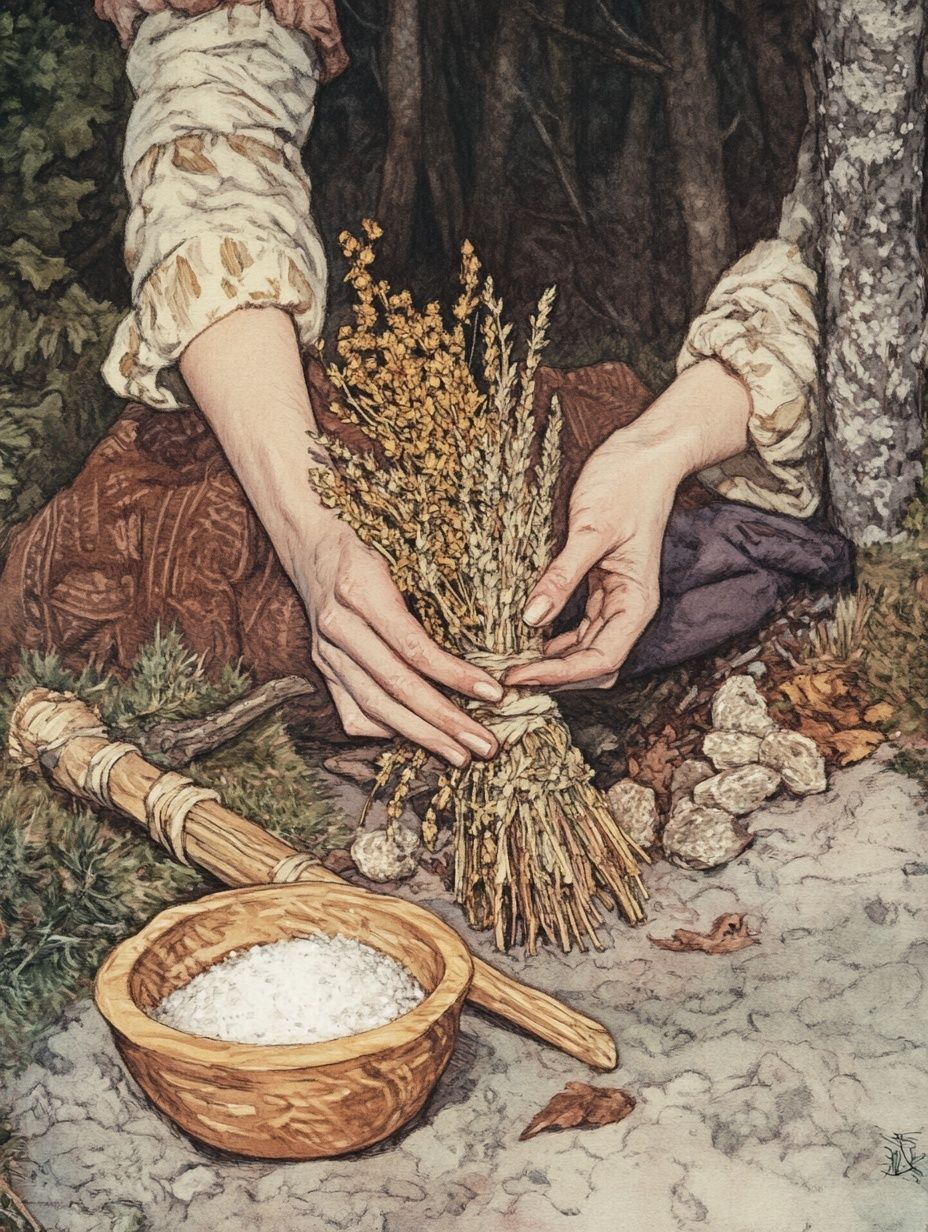
Traditional witchcraft serves as an umbrella term for practitioners who root their craft in regional folklore, historical trial records and surviving local folk magic.
Traditional witches draw inspiration from the "cunning folk" of old Europe - village healers and wise women who used practical magic to help their communities with herbal medicine, finding lost items and protection.
This path often places a heavy emphasis on animism - the belief that the physical world is populated by local land spirits, ancestors and nature spirits. Practice centers on building working relationships with these local entities.
The ethical framework embraces a highly practical worldview where practitioners use magic as a neutral tool to heal, bind or protect depending on the situation at hand.
Several highly specialized modern paths fall directly under the broader umbrella of traditional witchcraft or draw heavily from its folkloric roots:
- Hedge witchcraft: This path roots itself in the historical concept of the "hedge," representing the boundary between the civilized village and the wild forest. Hedge witches focus on trance work, spirit flight and communicating with the spirit world. It relies heavily on local herbalism and animism.
- Green witchcraft: This practice centers entirely on the natural world and local ecology. Green witches build their craft around working with flora, gardening, foraging and crafting herbal remedies based on regional plant folklore.
- Kitchen and hearth witchcraft: This path treats the home as a sacred space. Practitioners integrate domestic folk magic directly into tasks like cooking, cleaning and baking to infuse the living space with specific intentions for protection, healing or prosperity.
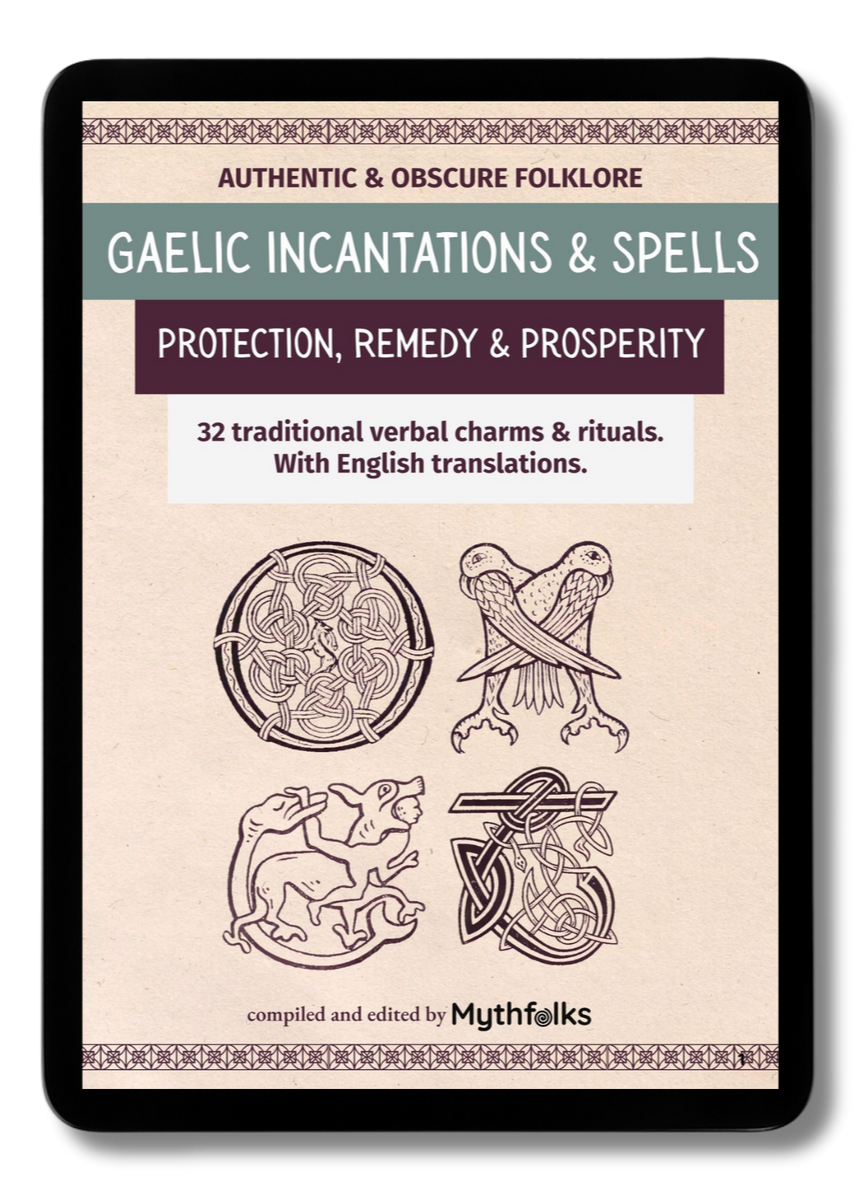
Want original Gaelic incantations and rituals?
If authentic folklore and historical accuracy is critical to your magic practice or project, my NEW & EXCLUSIVE ebook has got you covered.
Featuring 30+ traditional incantations in Gaelic (with English translations) and curated from primary sources captured in the late 19th-century.
You'll find verbal folk magic charms that cover everything from protection spells and becoming invisible and invulnerable, to finding love, obtaining justice and blocking supernatural magic.
(Clicking the link will open the Mythfolks Etsy shop in a new tab.)
Eclectic witchcraft
As witchcraft has evolved, highly individualized paths have emerged that operate entirely independently of formal traditions.
If Wicca provides a structured religion and traditional witchcraft offers a grounded connection to regional folklore, eclectic witchcraft operates as a highly individualized system focused on active self-improvement and psychological growth.
The core of this path is functionality. An eclectic witch might extract rituals and tools from established frameworks - like those in Wiccan or traditional practices - to serve their specific needs.
For example, they might celebrate Wiccan seasonal holidays while using the practical herbalism or moon-phase timings of traditional folk magic.
But because the goal is tangible personal development, the practice remains constantly dynamic and they will often adapt, experiment and bring in new practices of their own.
Modern witchcraft in the rest of the world
While we've had long traditions of witchcraft in the West, local beliefs and practices largely faded after the hysteria of the witch trials and the legal interventions of the 17th and 18th centuries.
Effectively, this was when we said "no" to the idea of "magic".
But in many other regions around the world that break never happened and the chain of passing down folk rituals and practices from generation to generation has continued through today.
Of course that's not to say that other countries and cultures fully commit to those beliefs or that they don't believe in other advancements of modern science and medicine.
It's simply that the older belief systems weren't interrupted to the same degree as they were in Europe and North America.
And while in modern Western circles, claiming the title of "witch" has become a statement of empowerment and personal freedom, in many regions across Africa, Asia, Latin America and the Middle East, the local translation for the word still acts as a literal accusation of malice.
In these contexts, the label carries the threat of severe real-world violence, legal persecution and community shunning.
For millions of people globally, the concept of a witch remains a serious physical danger rather than a chosen spiritual path.
Modern pop culture and witch aesthetics
The internet has fundamentally shifted how people discover and interact with witchcraft and there has certainly been an enormous dilution of what "witchcraft" means today.
Serious practice of the crafts discussed above requires substantial ongoing study. Dedicated practitioners - whether Wiccan, traditional, eclectic or specialized - spend years researching history, learning about local plant life, exploring theology and building active relationships with their environment. It requires deep commitment and operates as a comprehensive spiritual or practical framework.
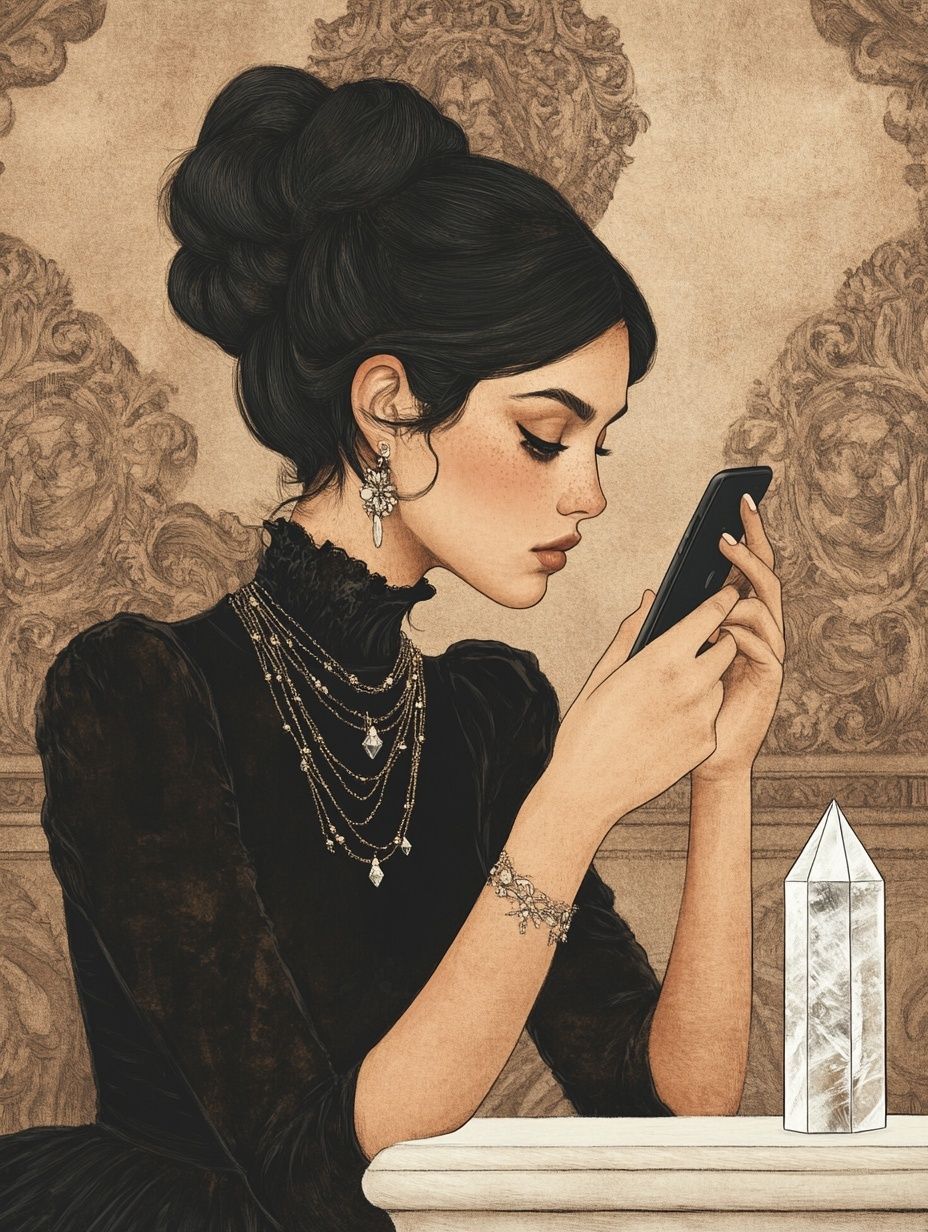
Aesthetic witchcraft and social media micro-labels
On the other hand, other modern "witches" aren't witches at all, they are driven by aesthetics and trends.
The internet has generated a highly visible subculture dominated by micro-labels like "crystal witch," "moon witch," "sea witch" and "cosmic witch."
These terms function primarily as social media identifiers - "Wtichtok" and the like - and personal branding tools rather than functional magical systems.
This aesthetic landscape operates as a consumer-driven lifestyle trend. It prioritizes collecting commercial tools, curating a specific visual mood and sharing performative content online.
This subculture focuses on instant gratification, commercialism and surface-level engagement with occult symbolism rather than the disciplined historical and practical work required of actual witchcraft.
I very much operate on an each-to-their-own set of principles. But while I support the idea of craft adaptation for self improvement, such as the ideas in eclectic practices, as someone who writes about folklore, I will never be able to get on board with these superficial social media trends!
Modern witchcraft is undoubtedly a complex landscape: a Western world split between dedicated spiritual practice and consumer-driven internet aesthetics that contrasts with a slightly different global reality where magic remains an unbroken tradition or a dangerous accusation.
Check out more on witchcraft in folklore and history below.
Article sources
- Leland, Charles Godfrey. Aradia, or the Gospel of the Witches. London: David Nutt, 1899.
- Murray, Margaret Alice. The Witch-Cult in Western Europe: A Study in Anthropology. Oxford: Clarendon Press, 1921.
- Hutton, Ronald. The Triumph of the Moon: A History of Modern Pagan Witchcraft. Oxford: Oxford University Press, 2019.
- Magliocco, Sabina. Witching Culture: Folklore and Neo-Paganism in America. Philadelphia: University of Pennsylvania Press, 2004.
- Berger, Helen A. Solitary Pagans: Contemporary Witches, Wiccans, and Others Who Practice Alone. Columbia: University of South Carolina Press, 2019.
Want original Gaelic incantations and rituals?
If authentic folklore and historical accuracy is critical to your magic practice or project, my NEW & EXCLUSIVE ebook has got you covered.
Featuring 30+ traditional incantations in Gaelic (with English translations) and curated from primary sources captured in the late 19th-century.
You'll find verbal folk magic charms that cover everything from protection spells and becoming invisible and invulnerable, to finding love, obtaining justice and blocking supernatural magic.
(Clicking the link will open the Mythfolks Etsy shop in a new tab.)
You might also like