
Fire demons in global mythology - or how people used to explain the power of the sun & combustion
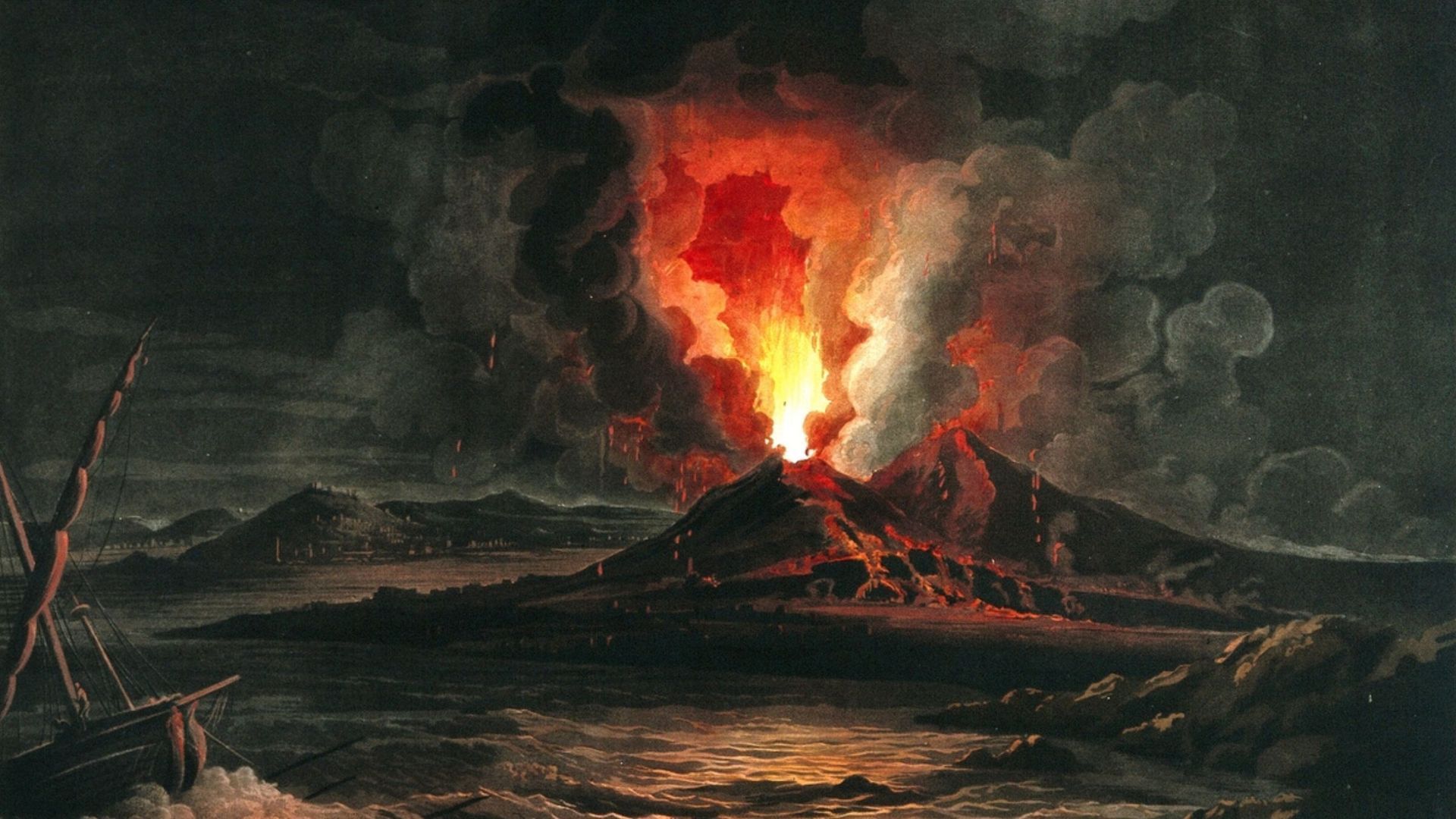
Like many other supernatural entities, the role of the fire demon in stories of the past was mostly to explain something humanity didn’t yet know too much about.
Although today, demons are commonly associated with the idea of fallen angels, in folklore from the past, the term was used much more broadly.
In this case, to understand the power - both good and bad - of fire and the sun.
While hunger demons were used to personify famine and wasting disease, fire demons represented a way to explain things like drought and wildfires.
Both types of demons of course had similar outcomes - illness, death and disaster.
Keep reading to learn more about some of the early beliefs and the key figures related to fire in folklore.
Published: 10th Nov 2026
Author: Mythfolks
What did people used to believe about fire demons?
In the early days of man, fire was seen as something bad because it literally “ate” things.
Having observed the way fire reacted in destroying physical matter, it was determined that the fire itself must be a demon or god, as the process of chemical combustion naturally wasn’t understood yet.
This observation was also said to have led to the widespread practice of sacrifices, which were originally intended to satisfy the physical hunger of these invisible entities so they wouldn’t become angry and cause harm.
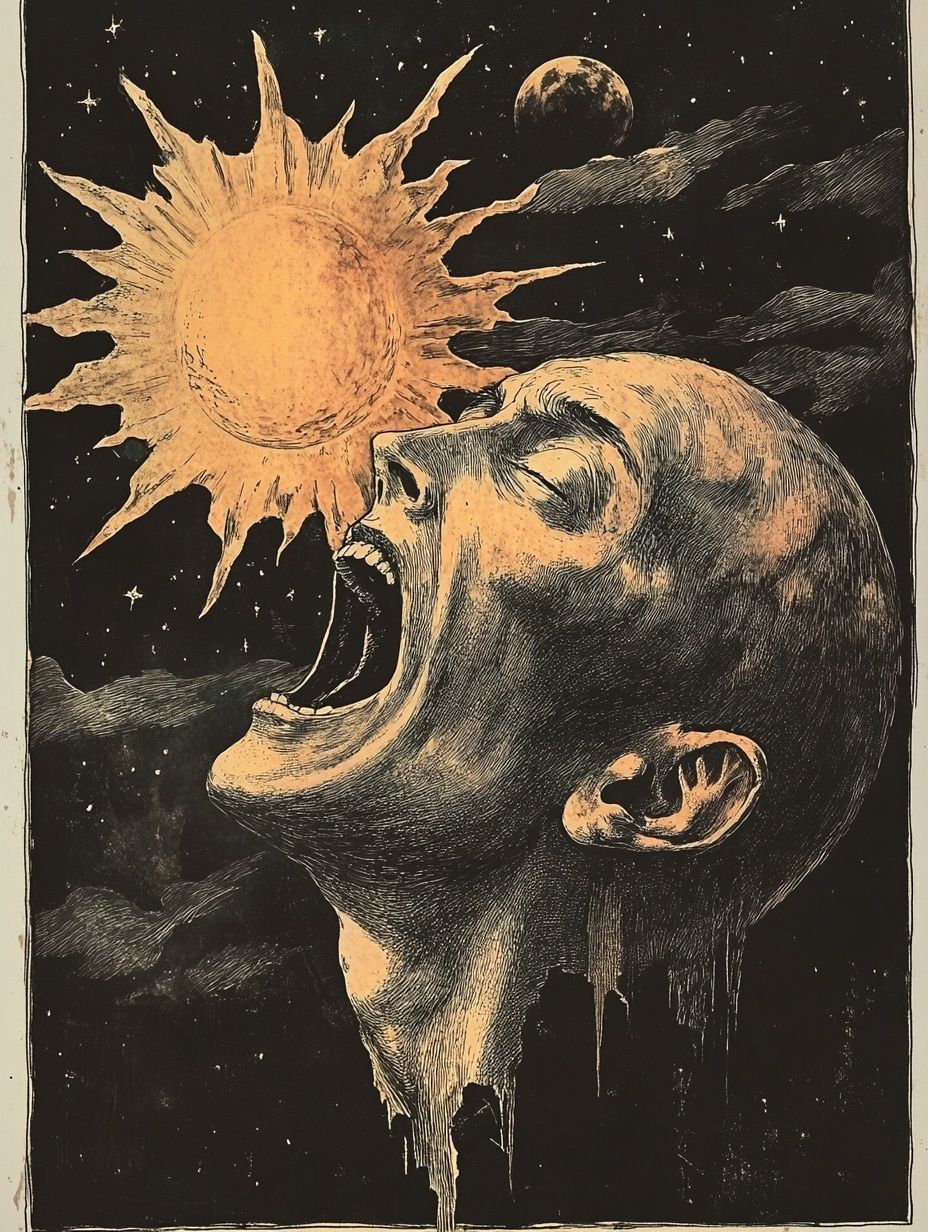
This perspective, that fire was an actual entity that consumed things, also gave rise to common descriptions of flames having tongues, imagining them as mouths that were constantly seeking nourishment to stay alive.
Even as religious traditions became more complex and shifted toward symbolic worship, the underlying theme of fire as a hungry force persisted in laws and rituals that treated burnt offerings as food specifically reserved for the divine flames.
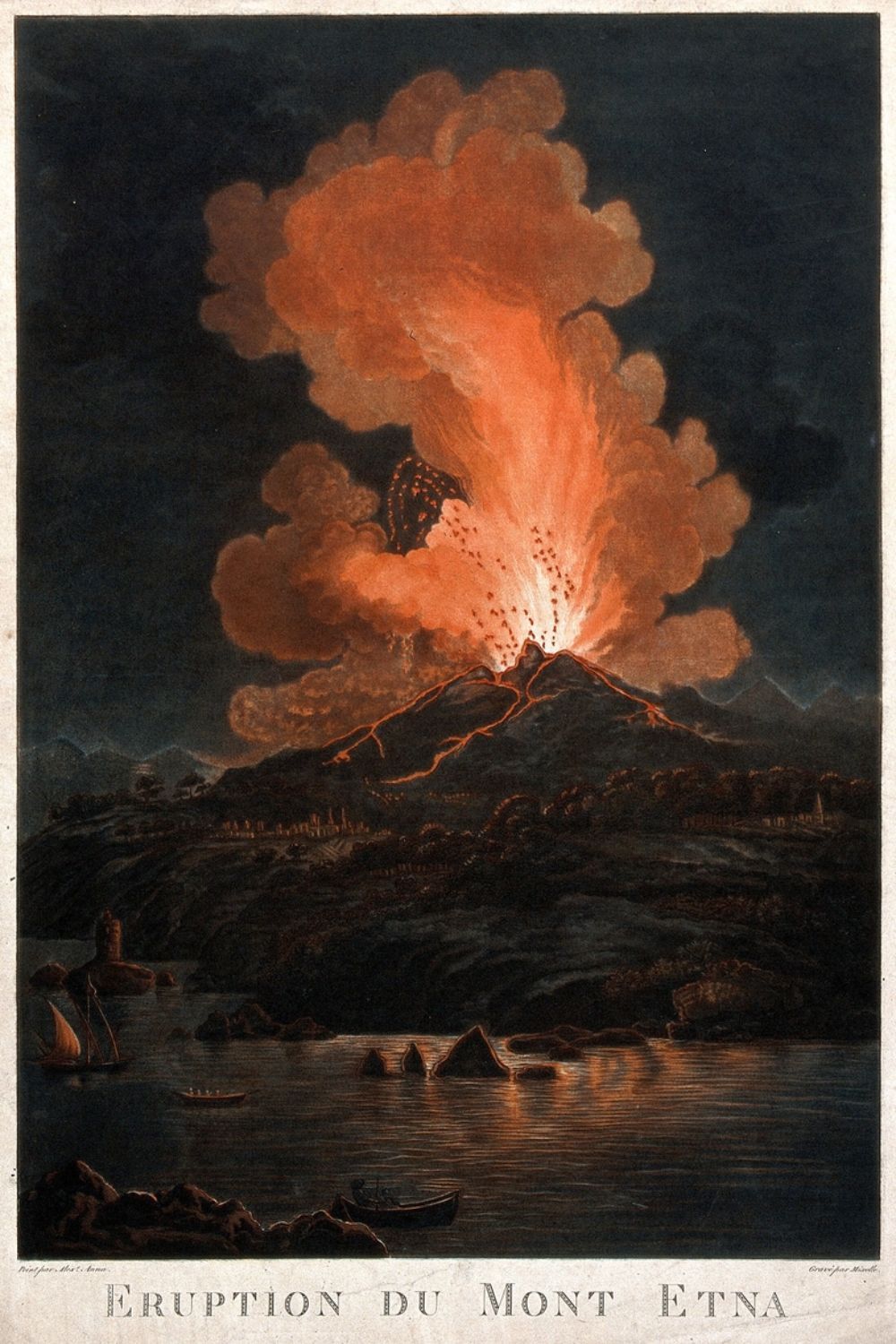
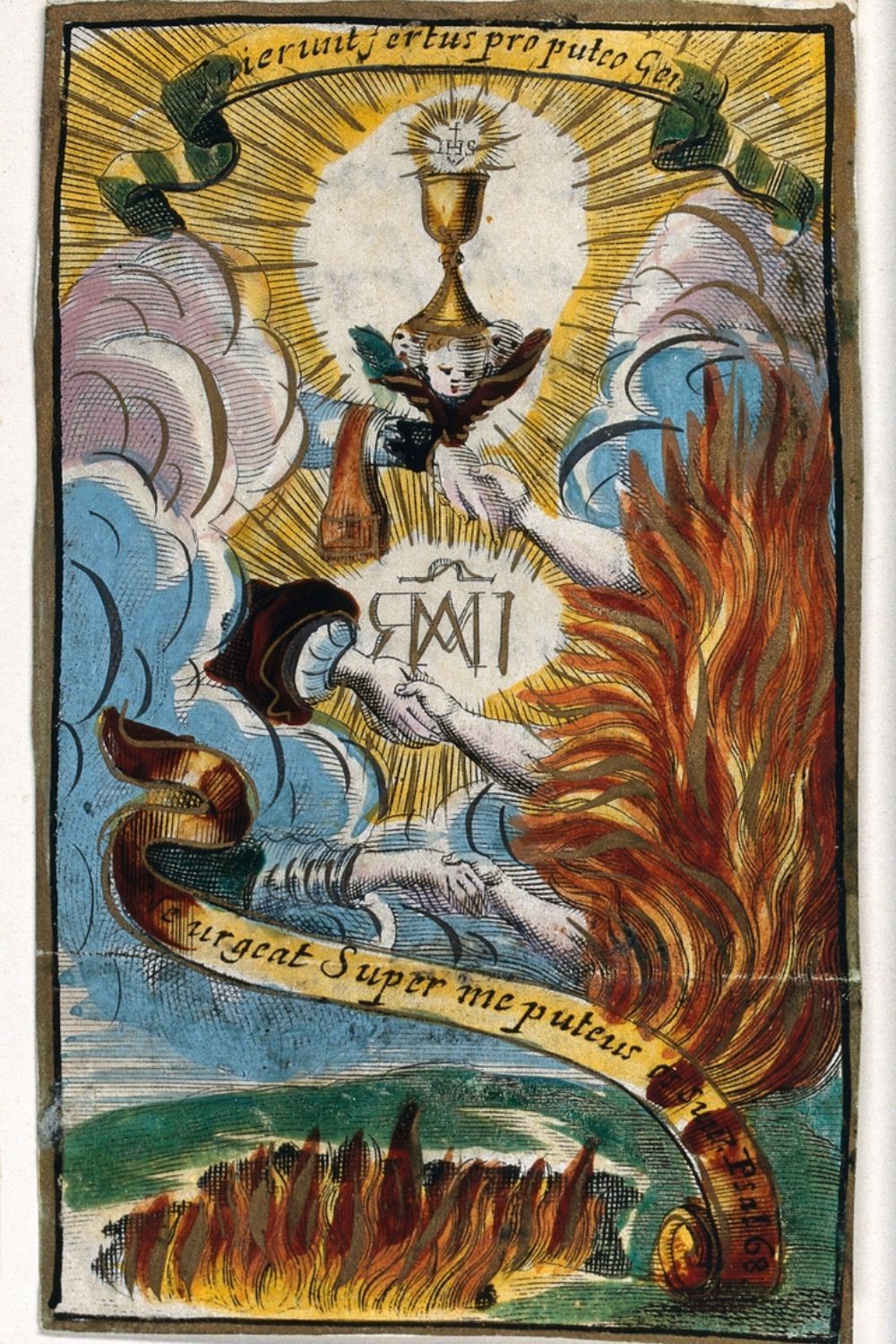
As religious systems became more advanced, they struggled to reconcile the fact that fire was both life-giving blessing and deadly.
In the Persian tradition, this was resolved by separating the sacred nature of fire from its harmful effects, relegating the painful heat to demonic figures while the purifying flames remained divine.
This dualism allowed people to worship the sun while blaming specific demons for disasters like drought or arson.
As humans gained technical mastery over fire for cooking and industry, these demons were eventually evicted from the domestic fireplace because the element had become a much more predictable tool.
Popular imagination then relocated these dangerous spirits to lethal places like volcanoes or boiling springs where the elemental forces still defied human control and eventually, the concept of heat shifted from a physical threat to a symbol for internal human passions like lust.
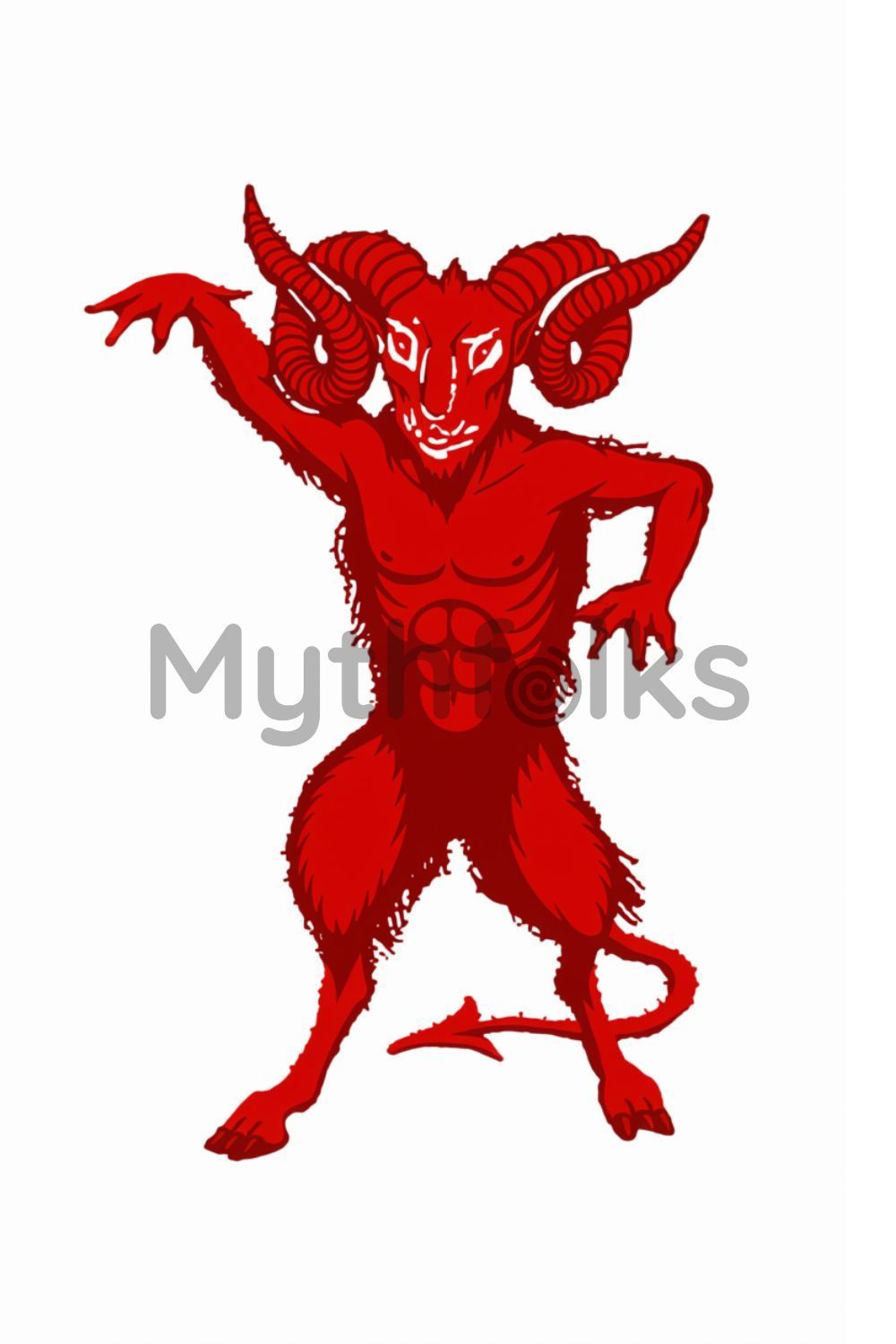
Fire demons in mythology
Agni (Hindu):
In ancient Hindu tradition, Agni is the god of fire and appears as both a comforting presence and a force of destruction.
Early Vedic hymns described him as radiant like gold, but also luminous, powerful and not to be trusted.
When fires spread across the countryside, early writers described him as an insatiable consumer, eating trees in the same way that livestock chews relentlessly through grass.
Born from wood and eating his parents…
One of the most famous legends of Agni's origin explained the physical process of fire through friction.
A flame that is generated by rubbing two wooden sticks together, immediately burns the wood that has produced it - a phenomenon described in early myth as a child devouring his own parents.
The battle against Vritra
Agni also played a central role in cosmic mythology. When the monster Vritra trapped the world's waters and caused a widespread drought, Agni joined forces with the storm god Indra (also his sibling).
Transforming into the burning edge of Indra's weapon, Agni helped to kill the monster and release water back to the earth.
In another legend, when darkness covered the universe, the gods prayed to Agni, who erupted as Tvashtri - a force of pure light that cleared the skies.
Symbol of marriage and ritual fire
As humans mastered fire for practical use, the friction used to ignite sparks also took on a symbolic meaning.
Agni came to represent internal human warmth and affection, becoming a patron of marriage and a guardian of the household hearth.
In traditional fire festivals, rituals such as walking across hot coals are linked to figures like Princess Draupadi, who passed through Agni's flames unharmed to demonstrate her purity and devotion.
Asmodeus (Persian):
Asmodeus is a fire demon that originated in ancient Persian and Jewish folklore, where he is portrayed as a demon with goat-like feet and eyes that glow like burning coals.
A defining feature of Asmodeus is his lameness, which forces him to walk on crutches. One Jewish myth explained his injury by claiming he broke his leg while on his way to meet King Solomon.
Another account attributed his limp to a fall from the sky, mirroring the story of the Greek fire-god Hephaestus being thrown down from the heavens. Early writers also noted a physical comparison, describing his limp as a visual representation of how a flame flickers and thins out at its highest point.
In the Book of Tobit and later European folklore, Asmodeus is known for targeting newlyweds and driving people to intense passion. Unlike figures who protected the household, he was cast as a spirit of disruptive desire.
In later literature, such as Alain-René Le Sage's The Devil on Two Sticks, he appeared as a limping figure who lifted the roofs off houses to expose people's private lives and hidden secrets.
Prometheus
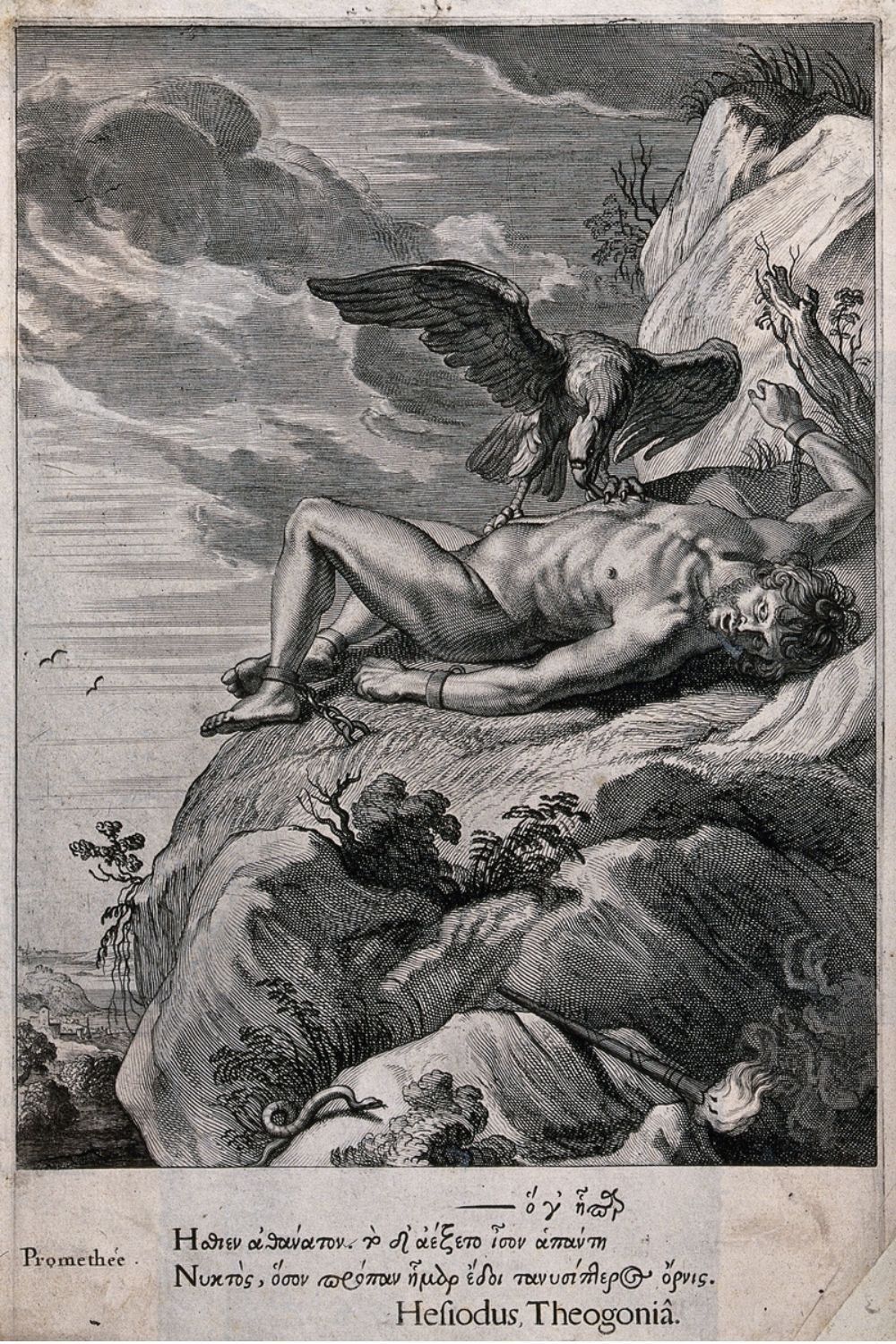
Prometheus is one of the most famous figures in Greek mythology and best known today as the champion of humanity who defied the gods to bring fire to the earth. Hence it was this framing, as a rebellious Titan, that gave him his "demonic" framing in some earlier folklore writing.
In older writings, Prometheus was tied directly to the physical labor of kindling fire. For a long time, his name was linked to pramantha, an ancient term for the wooden tool rubbed together to generate sparks through friction.
But modern language studies now translate his name as meaning "forethought,".
According to the myth, Prometheus hid a stolen ember of divine fire inside a hollow fennel stalk and carried it down to earth, granting humans an elemental power that forever changed their existence.
In early Greek storytelling, Zeus viewed this act as a dangerous disruption of the natural order.
To punish him, Zeus had Prometheus tied to a mountain rock, sending an eagle to feed on his regenerating liver every day (some old retellings described his tormentor as a vulture to emphasize the gruesome nature of the ordeal).
This harsh punishment reflected early anxieties about human technology, framing Zeus’s anger as nature striking back against human interference.
As fire became a daily tool, the fear that surrounded the myth faded, turning Prometheus into an enduring symbol of progress and resilience.
Want to read more about
demons in folklore?
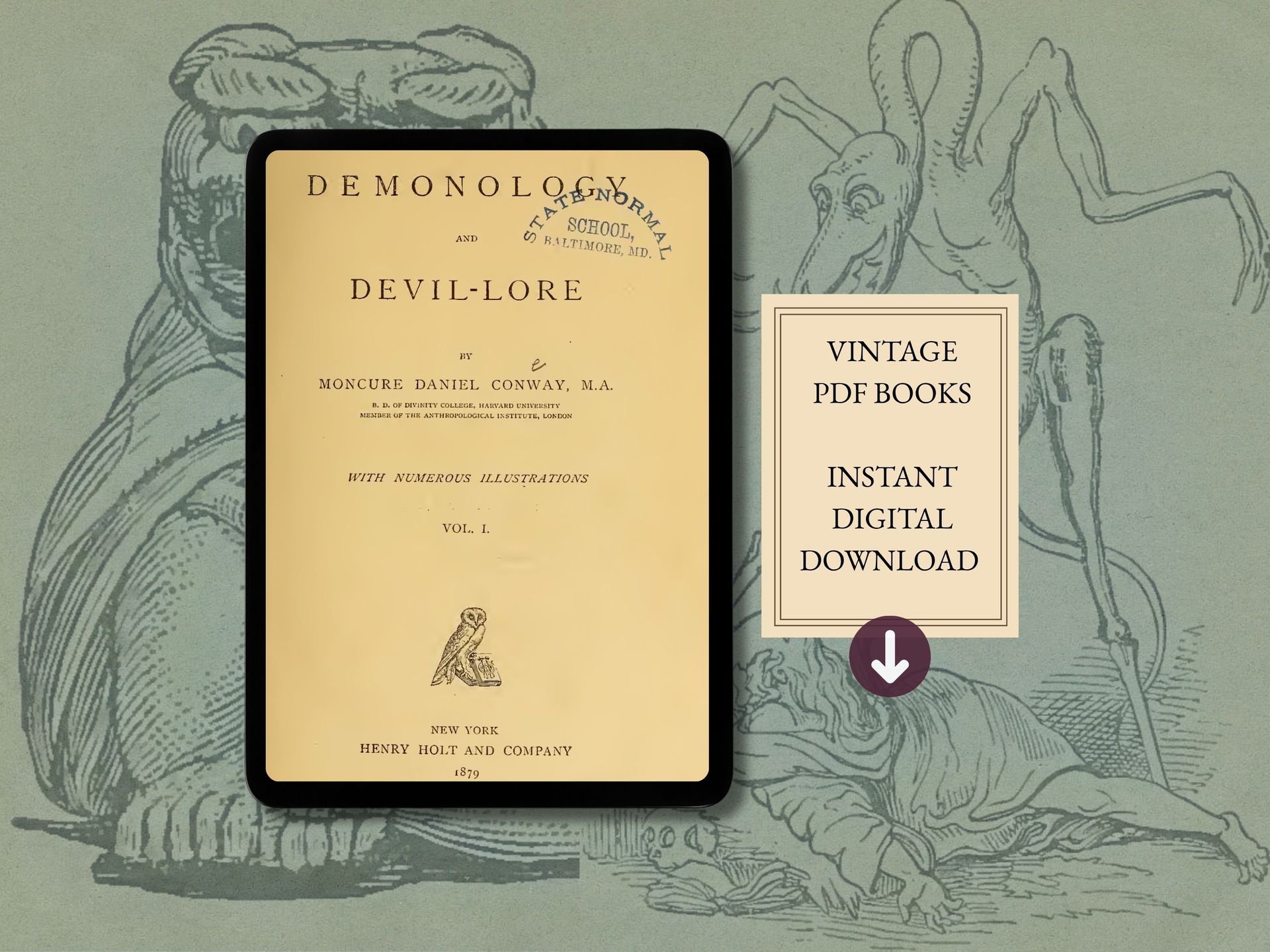
This comprehensive 1879 text offers a fascinating study of demons, devils, supernatural beings and the beliefs surrounding them across world mythology, religion and folklore.
(Clicking the link will open the Mythfolks Etsy shop in a new tab.)
Ahriman (Persian):
Another Persian mythological entity, in Zoroastrian tradition, Ahriman (also known as Angra Mainyu) is the spirit of darkness and destruction.
According to Parsee legend, when the prophet Zoroaster was an infant, Ahriman’s sorcerers attempted to destroy him before his divine mission could begin.
They kindled a massive fire in the desert and threw the baby into the flames. Instead of consuming him, divine intervention turned the roaring fire into a soothing, cool bath.
When Zoroaster's mother discovered him sleeping peacefully amid the glowing embers, his face was radiant and unharmed.
Persian prophecy also described the ultimate end of the world as a dramatic cosmic purification by fire.
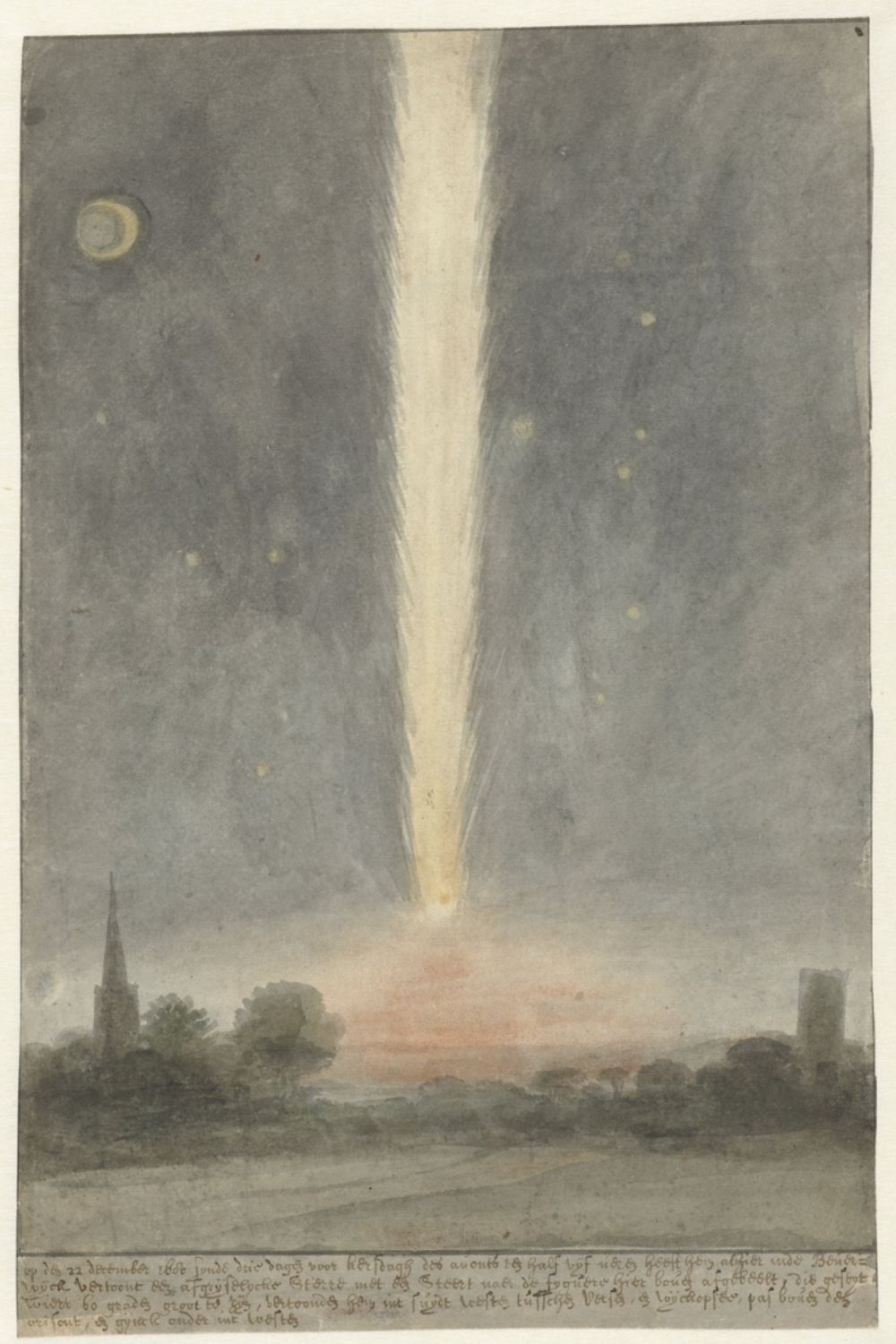
According to the myth, a comet will eventually strike the earth, igniting its minerals and melting whole mountain ranges into vast, flowing rivers of liquid metal.
Every soul - living and dead - must wade through these burning streams.
For the righteous, the glowing metal will feel like stepping into a bath of warm milk, whereas the wicked will suffer anintense cleansing pain.
In the final phase of the world’s renewal, even Ahriman himself must pass through the molten fire, burning away his evil nature so that the entire universe can be restored to absolute harmony.
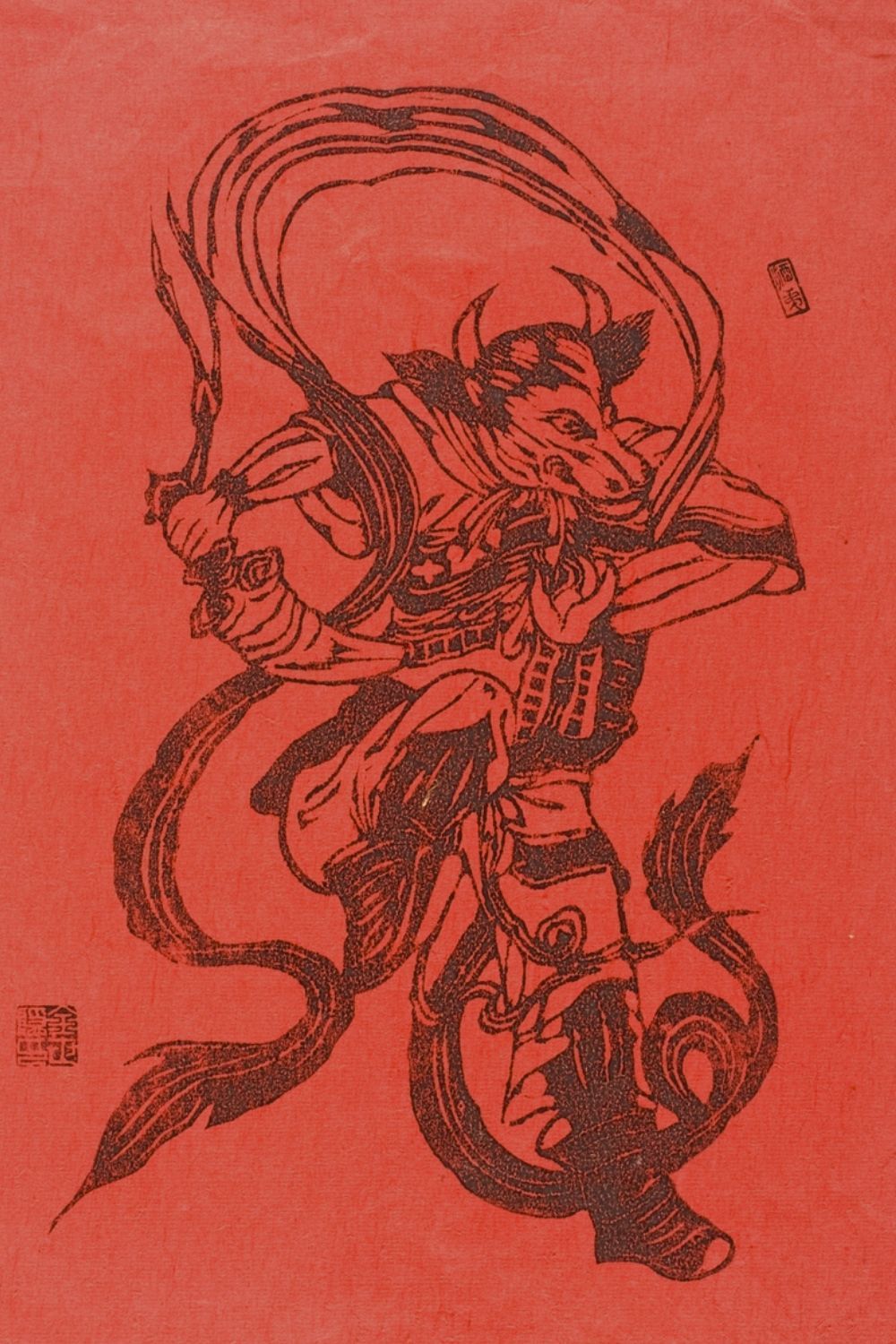
Moloch (Ammonite tradition):
In ancient Near Eastern (Middle Eastern) mythology, Moloch represented the all-consuming heat of the sun. Associated with the Ammonites and neighboring cultures, his lore is closely tied to the ancient practice of fire sacrifice.
Classical accounts and medieval traditions described Moloch as a massive idol made of brass, fashioned with the head of a calf wearing a royal crown. The inside of the statue served as a hollow furnace. During sacrifices, fire was stoked within its belly, heating the idol until its outstretched arms glowed. Sacrificial offerings were then placed into the fiery arms.
These rites took place outside Jerusalem in the Valley of Hinnom, at a location known as Tophet.
To put an end to these sacrifices, King Josiah transformed the Valley of Hinnom into a city dump for Jerusalem. Fires were kept burning day and night to burn away the rubbish. Over time, the relentless smoke and burning waste of this valley - known as Gehenna - became the main inspiration for traditional descriptions of Hell.
A linguistical side note about Tophet & Moloch
An ancient folk tradition explained the name Tophet as coming from toph - the Hebrew word for "drum" - claiming that priests beat heavy drums during the ceremony to drown out the sounds of the ritual. Modern language studies have since clarified that Tophet actually derives from an ancient root meaning "hearth" or "place of burning".
A similar debate surrounds the name Moloch itself. Ancient inscriptions show that molk was originally just a word for a fire sacrifice - but over centuries of retellings, people mistook molk (the ritual) for Moloch (the name of a bloodthirsty god).
However, other scholars argue that Moloch was indeed a real, ancient deity of the underworld. Whether the name started as a misread word for a sacrifice or an actual god remains an open question.
Other fire demons and spirits
Schedim (Jewish):
During the seven-week period between Passover and Pentecost, regional Jewish folklore in parts of Europe held that evil spirits known as Schedim were particularly active. Farmers believed these spirits would enter stables, mount livestock and turn cow and goat milk sour.
Traditional remedies advised shutting the suspected spirit in a room with a bowl of sour milk and beating the milk with a hazel wand; when blue flames appeared on the surface, the charm was believed to be broken. While classical Hebrew texts use Schedim as a general term for spirits or wilderness demons, this specific milk-souring legend is a local regional tradition.
Haborym (European):
In early modern grimoires and demonological texts, Haborym (also known as Aim) is portrayed as a demon of arson. He is described as possessing three heads - a man, a cat, and a serpent - while riding a viper and bearing a burning torch.
Writers of occult literature assigned him command over twenty-six legions of spirits and held him responsible for setting cities and great buildings on fire.
Raum (French/European):
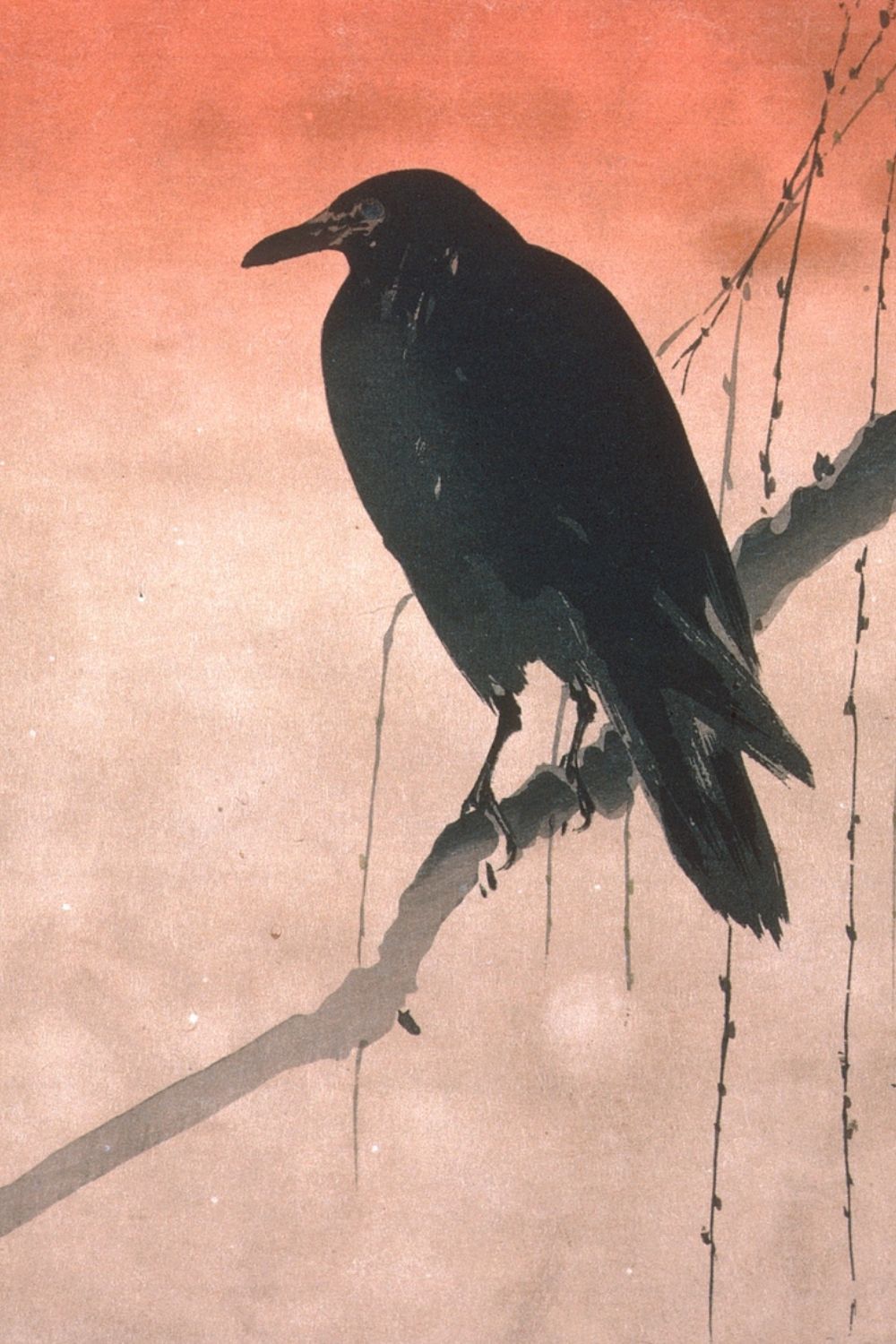
In medieval grimoire tradition, Raum was an infernal commander associated with the destruction of villages and the ruin of war.
He typically appeared in the shape of a crow (though also often referenced as a raven - see also Valravn in Danish folklore).
Older comparative folklore also linked Raum to the French legend of the "Little Red Man," a phantom rumored to haunt the Tuileries Palace and appear before figures like Napoleon prior to major disasters.
While Raum's corvid form is documented in classic grimoires, his connection to the Red Man was a 19th-century folk comparison rather than an original part of his myth.
Mauike (Mangaian - Cook Islands):
Mauike is the subterranean fire-demon of Mangaian legend in the Cook Islands.
In Polynesian myth, the hero Maui descended into the netherworld to learn the secret of kindling fire by rubbing wood together.
Maui tricked Mauike into handing over his flames, leading to a struggle in which Mauike's subterranean realm was consumed by his own fire, allowing Maui to bring heat and light to humanity.
Logi (Norse):
In the Prose Edda, during Thor and Loki's journey to the realm of the giants, Loki engaged in an eating contest against a rival named Logi.
While Loki ate all the meat off the bones, Logi consumed the meat, the bones, and the wooden trough itself. The contest was revealed to be an illusion: Logi was not a giant, but wild, devouring fire personified.
Kobolds (Germanic):
Less demonic in the modern sense than some of the previous creatures, the Kobold belongs to everyday local German folklore rather than mythology and a creature similar to the Scottish Brownie or English Boggart or Cornish Knockers.
In traditional European superstition, the Kobold was originally a domestic house-spirit (lar familiaris) tied directly to the household fire.
The spirit’s temper was believed to reveal itself in the behaviour of the hearth flame - whether it brought domestic comfort or caused destructive fires. The traditional red jacket worn by the Kobold came directly from this association with fire and common tools around the fireside - like shovels, tongs and brooms - were believed to be hiding places or mounts for these small imps.
As mining expanded in Germany, this fireside folklore moved from the chimney down under the ground, transforming the Kobold from a hearth spirit into a specialized stone-demon.
Miners believed Kobolds stole valuable silver veins from the rock and left behind useless, toxic substitute ores. In 1733, when Swedish chemist Georg Brandt isolated a new metal from these discarded ores, he named the element cobalt after the Kobolds - a linguistic origin shared by nickel, which was similarly named after the folk demon "Old Nick"
Ultimately, these figures are a fascinating look at how ancient communities (and beyond) tried to manage the unpredictable nature of fire. From fear to worship, one can only imagine what it was like to live - and manage threat - in a world before science.
Check out
more articles about demons in folklore here.
Article sources
- Boyce, Mary. Zoroastrians: Their Religious Beliefs and Practices. London: Routledge & Kegan Paul, 1979.
- Conway, Moncure Daniel. Demonology and Devil-lore. 2 vols. London: Chatto and Windus, 1879.
- Day, John. Molech: A God of Human Sacrifice in the Old Testament. Cambridge: Cambridge University Press, 1989.
- Grimm, Jacob. Teutonic Mythology. Translated by James Steven Stallybrass. 4 vols. London: George Bell & Sons, 1882–1888.
- Toorn, Karel van der, Bob Becking, and Pieter W. van der Horst, eds. Dictionary of Deities and Demons in the Bible. 2nd ed. Grand Rapids, MI: William B. Eerdmans Publishing Company, 1999.
Want to read more about
demons in folklore?
This comprehensive 1879 text offers a fascinating study of demons, devils, supernatural beings and the beliefs surrounding them across world mythology, religion and folklore.
(Clicking the link will open the Mythfolks Etsy shop in a new tab.)
You might also like