
Hunger demons & starving spirits from around the world
This article gives great authentic & obscure details for writers & storytellers in folk horror, body horror, monster horror, dark fantasy and other fantasy & horror genres.
Like death spirits and other dark entities like nightmare demons, hunger demons in authentic folklore were born as a way to explain a specific kind of threat - in this case, starvation.
Whether it was facing a failing harvest, cows that wouldn't produce milk or, in many cases, a wasting disease like tuberculosis consuming a family, people needed a physical cause to blame.
Even today, many cultures across the world continue to ascribe certain events to these unseen supernatural forces.
And so, the hunger demon emerged as the literal personification of starvation and depletion.
A lot of the creatures and stories in this article come from a late 19th century text that I used to get closer to the original sources.
Published: 3rd Mar 2026
Author: Sian H.
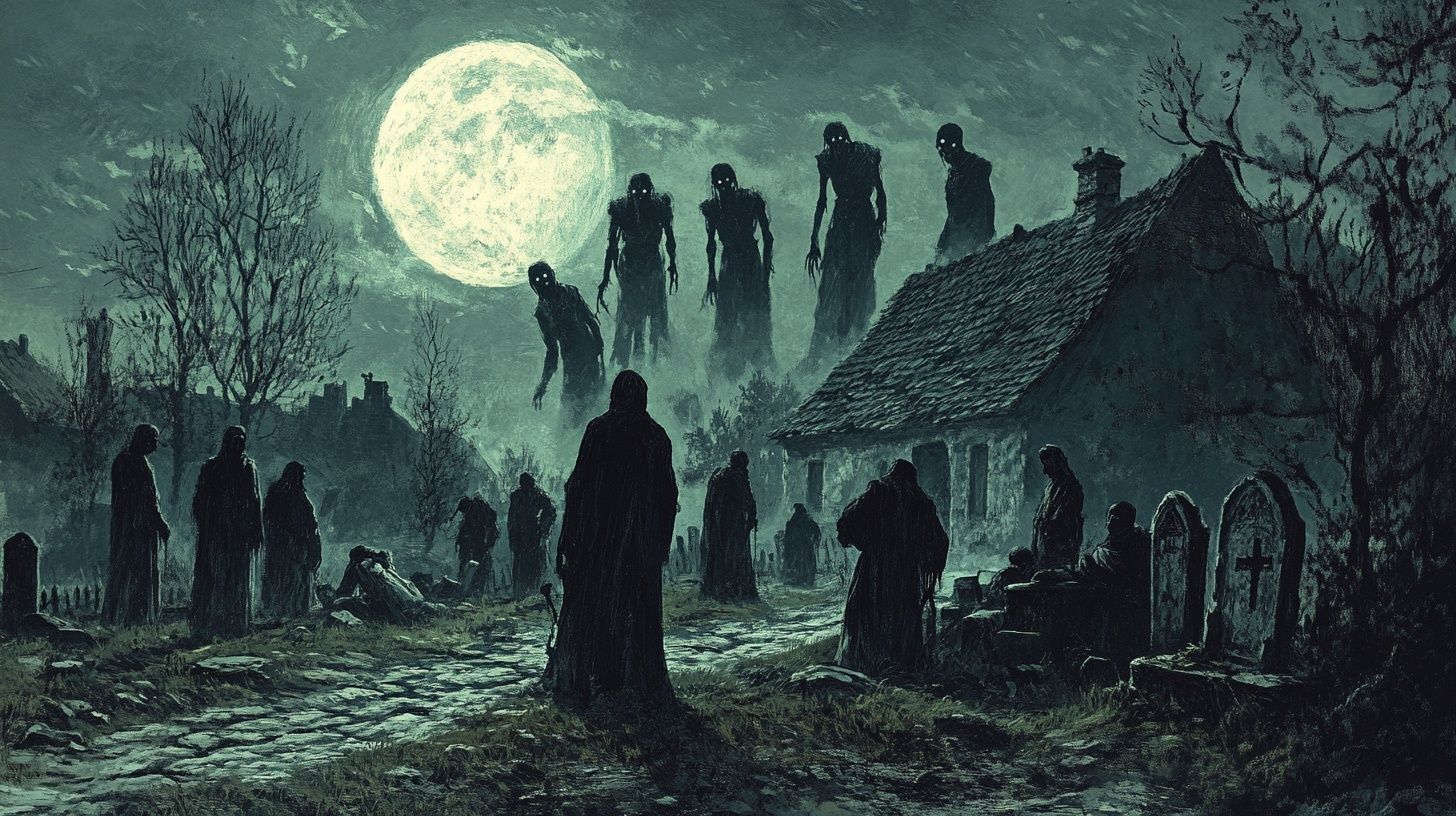
Graveyard hunger demons & authentic vampirism
Modern pop culture most often defines demons as religious adversaries or fallen angels. But as alluded to above, historical folklore takes a much broader approach and often categorizes supernatural entities by their function and the specific harm they caused.
In this older framework, any spirit or creature driven by an insatiable need to feed would be considered a hunger demon. So although vampires aren't typically defined as demons today, in these stories, their defining trait, a relentless drive to consume the living and cause them to waste away, gives them a place in hunger demon lore and reflects their authentic historical roots.
The Slavonic (Slavic) vampire
In Asia, the vampire was a horrible ghoul that was believed to eat dead bodies.
While in eastern Europe and Russia - where these stories really began - people believed in the more familiar version that a vampire was someone who would come back and drink the blood of the living.
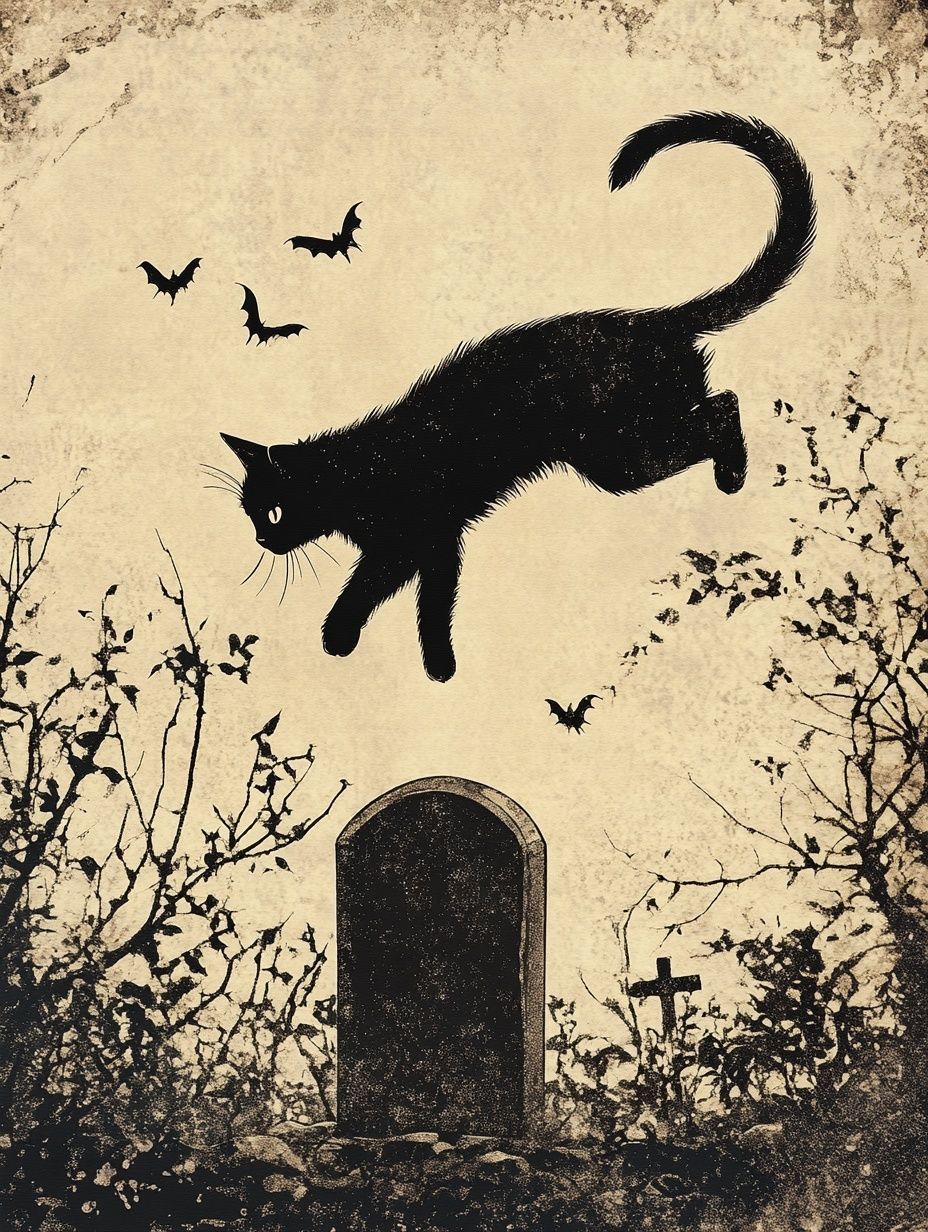
They also believed that anyone could become a vampire - in particular, an outcast, a heretic - or any corpse that had a cat jump or bird fly over it before it was buried!
Superstition also said you could find a potential vampire by leading a black horse through a graveyard and if the animal refused to step on a grave, that was a vampire.
Once discovered, the body was pulled out and destroyed with a single blow of a wooden stake (and this has been well-used in modern entertainment!).
The Heart-Devourers
In Mazovia (Poland), these demons were said to touch a victim with an aspen (tree) branch or a similar “magical twig” and doing so made the person's heart fall out. The demon would then replace it with a “lesser” heart.
In one story, the demon replaced the heart of a local hero with a hare's heart and he became timid and cowardly forever.
In another, a man who had his heart replaced with a cockerel’s heart crowed constantly from then on.
The Nachzehrer
In Germany, the Nachzehrer supposedly ate its own burial clothes while in the grave.
By doing this, it was believed to magically draw its surviving relatives down into the grave with it.
In Diesdorf (a municipality), it was thought a corpse would become a Nachzehrer if money wasn’t placed in its mouth or if the person’s name wasn’t cut from their shirt before burial.
The demon was also said to roam the area in the form of a pig.
To stop a corpse from transforming, villagers would break the dead body's neck, place a cross beside the grave or bury the body with food - or scatter corn and rice over it - to satisfy its hunger.
In one recorded instance, after several members of a single family died, a suspected corpse was exhumed and found to have actually eaten its own shroud (or at least, that’s how it was recorded!).
American Vampires
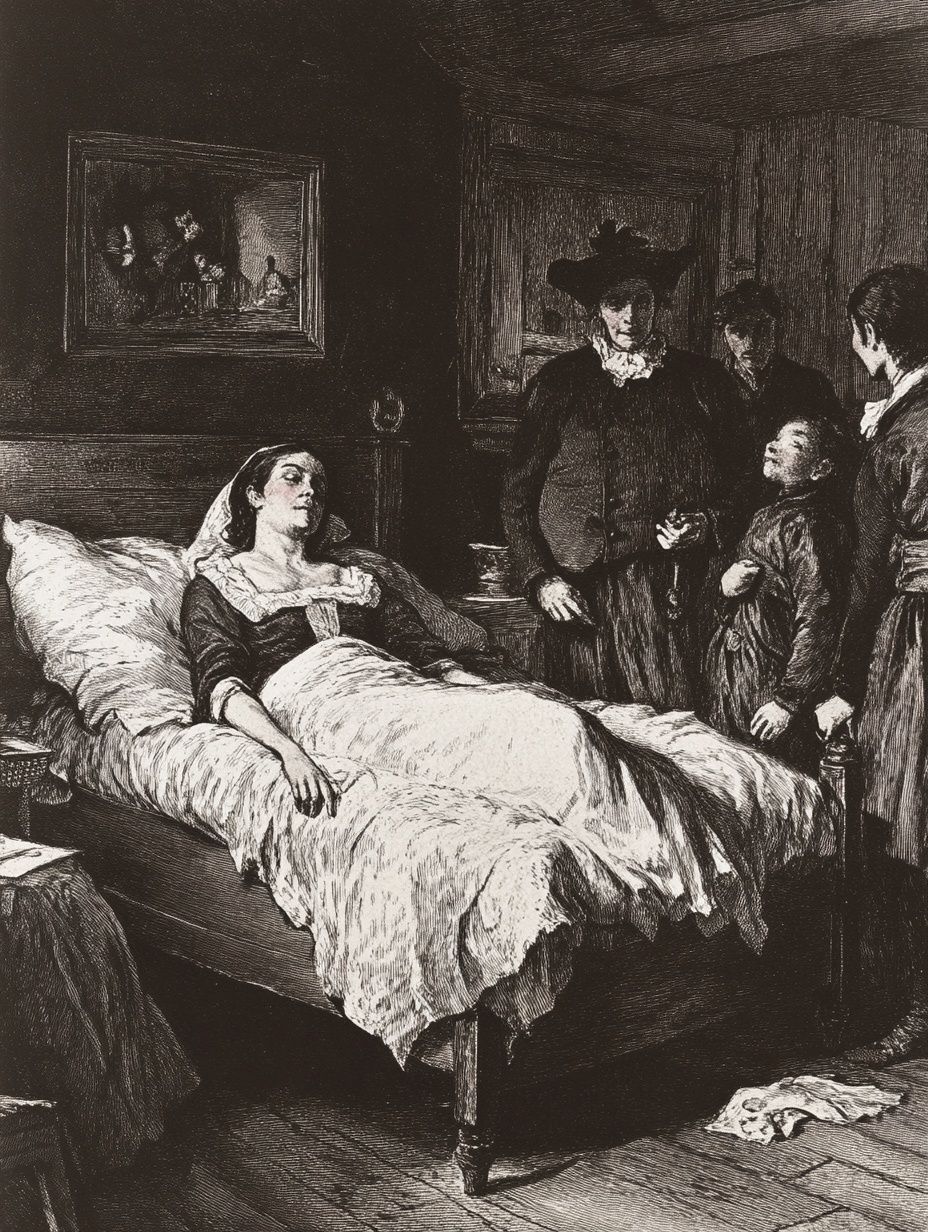
These old beliefs survived into nineteenth-century America during the widespread panics over tuberculosis.
In Chicago, the body of a woman who died of TB was taken out of her grave and her lungs were burned, because her family believed she was drawing her surviving relatives into the grave with her.
Another instance recorded in the village of Peacedale, Rhode Island, in 1874, told of a man who dug up the body of his dead daughter and burned her heart due to similar beliefs.
Disturbing & deformed hunger demons
While all hunger demons - and in fact most demons - are portrayed as unpleasant at best, these ones are particularly odd.
The Bone-Demon
Human sorcery was sometimes artificially used to create some hunger demons who would steal food.
In Finnish and Greenlandic folklore they believed in a large stomach-demon which could be called up to eat the herds of their enemies.
In Iceland, it was a superstition that sorcerers could build a similar demon out of animal bones and skins. This creature was sent out to suck the milk from cows and turn it into a supply of flesh and blood for its master.
The Pretas
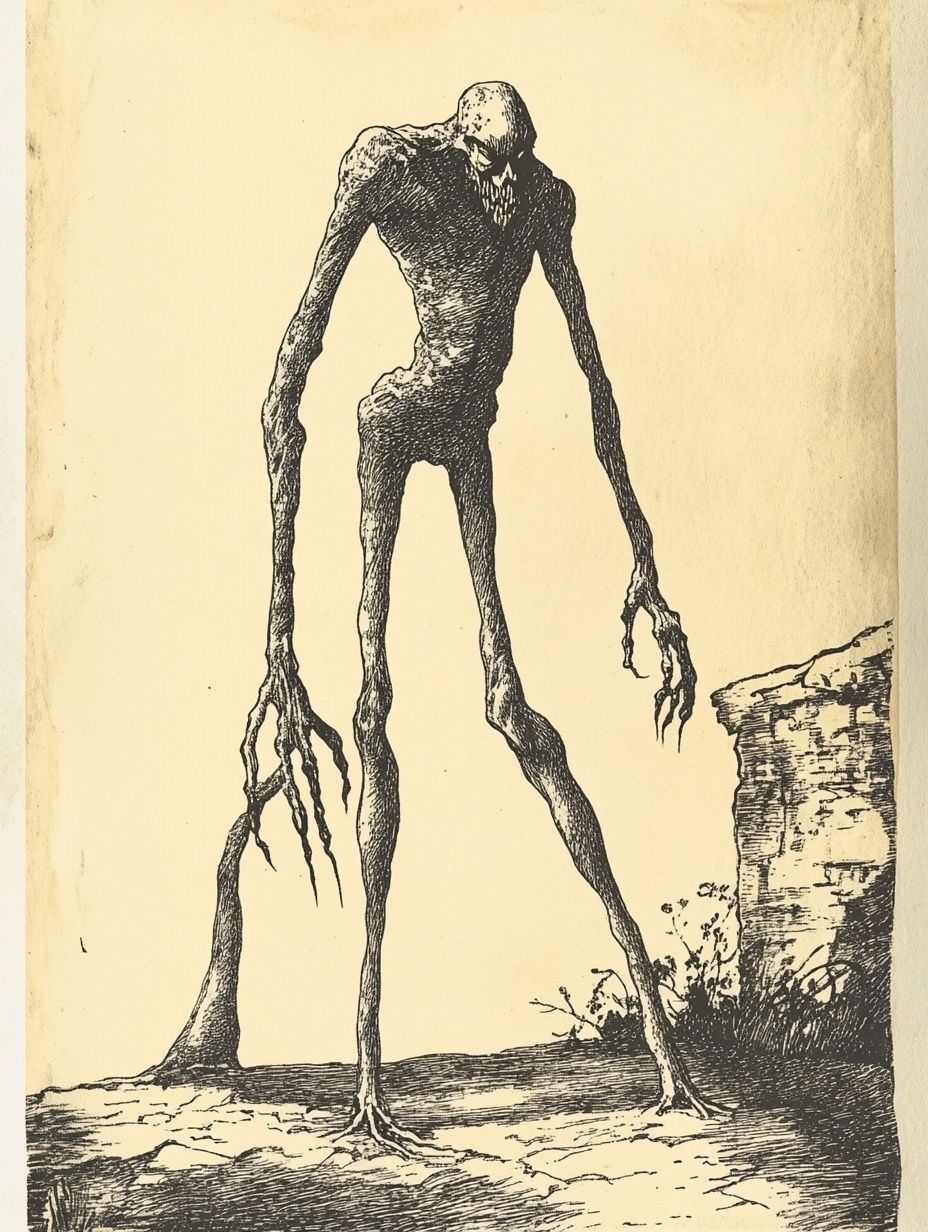
In Thailand, the hunger demon took the shape of the Preta, an invisible ghost believed to be twelve miles in height.
Despite this massive size, they were too thin to be seen and their mouths were so small that it was impossible for them to ever satisfy their hunger.
A similar phantom was feared in Sri Lanka. There they were considered harmless, starving ghosts who continually died of hunger only to revive and suffer again to atone for their past sins.
They were believed to be so common that a Buddhist text warned people not to throw stones in case they accidentally struck one of them.
Kephn
The Karen people of Southeast Asia imagined the hunger demon, named Kephn, simply as a huge stomach floating through the air. Lovely.
Enjoying this article? Check out my
NEW and exclusive mini-ebook packed with
authentic & obscure folk beliefs about illness, death & the macabre.
Hand-sourced from original vintage texts.
(Clicking the link will open the Mythfolks Etsy shop in a new tab.)
Earth & celestial hunger demons
Rahu
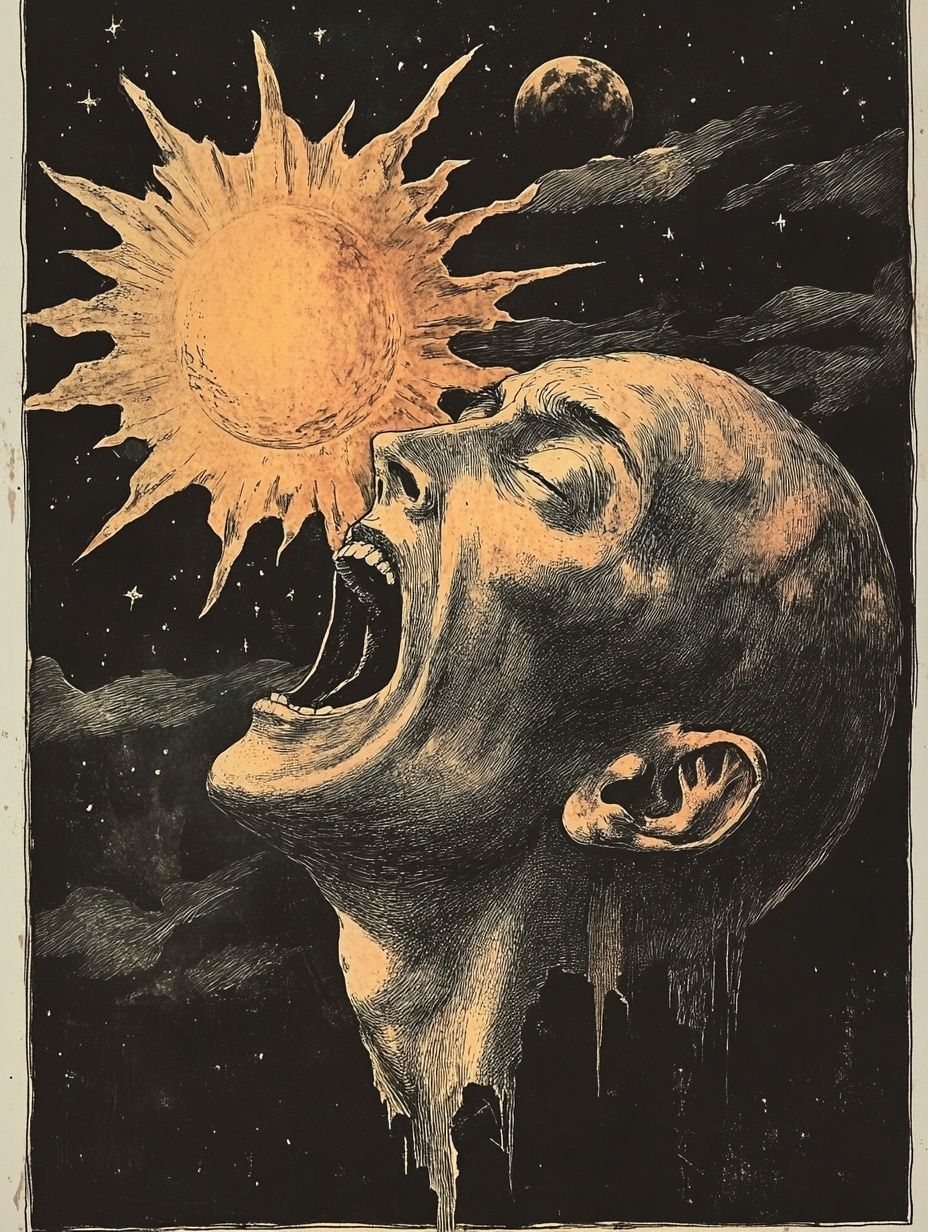
The Hindu demon Rahu features prominently in celestial folklore in a myth about lunar and solar eclipses.
When the gods and demons churned the ocean for the nectar of immortality, Rahu tasted it, but the sun and moon told on him.
His head had already become immortal before he was cut in two and this severed head constantly tried to eat the sun and moon out of revenge.
During an eclipse, the villagers believed the demon was actively swallowing the sun and moon.
To appease him, they prepared piles of brushwood and set them on fire, shouting and yelling as they danced around the flames.
They broke all their clay cooking pots and threw all the cooked food out of their houses, offering the demon alternative food so he might spare the heavenly bodies.
Maha Cola Sanni Yakseya
In Sri Lankan mythology, Maha Cola Sanni Yakseya was a demon of diseases. His father, a king, ordered his queen to be executed and her body cut in two because he believed she was unfaithful.
The queen, knowing she was innocent, prayed that her unborn child would become a demon and destroy the city. Immediately after the execution, the two halves of her body magically reunited and a demonic child was born.
His first act was to completely devour his mother's corpse. He then relocated to the local graveyard, where he lived and fattened himself on the dead bodies left there.
Eventually, his hunger turned toward the living and he nearly depopulated the city with mortal diseases before the gods Iswara and Sekkra intervened.
They forbade him to eat living men, but appeased his hunger by giving him the right to inflict disease to extort sacrificial offerings from the people
Miru
In the Pacific Islands, It was believed that when human souls left the body, they gathered on the branches of a mystic tree which then descended with them into the underworld. There, the slave of an eternally hungry demoness called Miru caught the ghosts in a net and washed them in a lake.
The victims were then brought before Miru, who gave them a bowl of kava (or piper methysticum - a plant with a sedative effect) to drink. The pliable souls were then carried to a huge oven, cooked and eaten by Miru and her household, who subsist entirely on human spirits. She was known in local song as "Miru-the-ruddy" because her face forever glowed from the heat of her ghostly oven and she used the skulls of her victims as drinking cups
When I research these types of personified demons, I always find it perfectly reasonable how our ancestors rationalised certain events through them. Even though it seems almost impossible to think like that today with our (much improved but always-growing) knowledge of medicine and science.
And yet, when so many things still happen for shocking and inexplicable reasons, that human need to give a physical shape to the unknown can bring a kind of comfort. Something to curse; something to be angry at. Because possibly more terrifying than an evil demon lurking in the dark, is the pure and absolute certainty that there was no reason for that bad thing happening at all.
Looking for more demons? Check out this deep dive on nightmare demons and sleep paralysis in folklore.
Article sources
- Conway, Moncure Daniel. Demonology and Devil-Lore. Vol. 1. New York: Henry Holt and Company, 1879
Enjoyed this article? Check out my
NEW and exclusive mini-ebook packed with
concise, authentic & obscure folk beliefs about illness, death & the macabre.
Hand-sourced from original vintage texts.
(Clicking the link will open the Mythfolks Etsy shop in a new tab.)
You might also like
Sleep paralysis & nightmare demons
These terrifying demons have been haunting people around the world since the dawn of time. Learn more here.
A history of witches in folklore
From ancient myths to the famous witch trials, take a step back in time and take a quick tour through witch folklore.